Bingyu Zhao's avatar

High Fees in Private Schools

Except for low-fee private schools, most private schools require much higher fees than public schools. Nevertheless, private education is becoming more and more popular, with the number of private schools all over the world. Now private schools have broad coverage of kindergartens, primary schools, middle schools and high schools. As more people are getting accepted into private schools, these schools are also accepting increasingly higher fees.

Although I am psychologically prepared and aware of the range of high tuition charged by private schools, I am still shocked by the 50 most expensive private high schools in the United States listed on this website. The tuition for day-time students in the top 1 school is $43,314 per year, and even the school which ranks 50 also requires $35,755 per year. [1] Obviously, the tuition is much higher than the cost of attending some universities and colleges.

Meanwhile, the same phenomenon happens in China. In Beijing, sending a child to a private kindergarten with bilingual programs costs about 9,000 RMB (about $1,500) per month, which is also much higher than the cost of universities and colleges. [2] To be honest, the extremely high tuition has gone beyond my ability to understand and accept it.

What kind of knowledge is worth such high tuition? After pondering this question initially, I thought that high tuition is simply ridiculous. But when I looked over the description of the top 50 expensive private schools, something else caught my attention. For example, some schools say that they have perks to top college destinations, including Yale, Harvard, Columbia, Princeton, Johns Hopkins and so on. [1] Among those schools on the list, some can provide opportunities for students to study abroad, and some have abundant extra-curricula activities for students. At that time, I realized that high teaching quality and superb facilities are not probably worth as much money as, these additional perks. Likewise, Chinese parents who send their children to receive bilingual (Chinese and English) education at a high cost may believe it would be a good start for their child’s bright future.

Moreover, there are some other reasons for parents sending children to private schools. Private schools have smaller class sizes than public schools, which is the reason for some parents choosing private schools. For those introverted kids, a too large class size is not adequate and may prevent children from developing their strengths. Meanwhile, a smaller class size will make them feel comfortable and develop their strengths. [3]

Interestingly, when parents talk about high tuition in private schools, most of them think it is worth it. Laura Dean, a mom living in Bay area, spends $40,000 a year for her two kids’ private school tuition. Although they live in one of top-rated school districts in California, Dean still thinks private schools are better than those public schools and the quality of education in private schools is “worth every penny”. [4] One of my aunts sends her son to a private middle school in China, which is far away from home, meaning she has to spend much time traveling, in addition to paying the high tuition cost. And she also thought it was worth it when I asked her.

For many parents, the main reasons for choosing private schools are the high teaching quality and superb facilities. However, many parents are struggling with the high fees of private schools. For example, in Beijing, it is almost impossible to find a reputable kindergarten with less than 1,000 RMB (about $150) per month, which is nearly a quarter of an average salary, putting much pressure on middle-class families.[5] Because of this, it is difficult for parents to afford high tuition. Xiao Zheng, a Chinese mother who has a three-month-old baby, said “my husband and I began to save money for our baby after our marriage.” [5] Along with this issue, it is not surprising that private schools have lost huge numbers of children because of the high fees. For those children whose parents cannot afford the cost, they choose state schools or public schools because were fees are lower.

Whether in China or in United States, many people still regard public schools as a second choice because of the lower teaching quality and facilities. Currently in China, high tuition in private schools is a problem for many families, while the lower teaching quality in public schools also needs improvements in order for students to receive high quality of education at little or no cost. To address this issue, the government needs to take more measures.

Reference

[1] http://www.businessinsider.com/most-expensive-private-schools-2012-9#50-the-taft-school-watertown-conn-1

[2] http://www.wantchinatimes.com/news-subclass-cnt.aspx?id=20121014000044&cid=1503

[3] http://theweek.com/article/index/244142/is-private-school-worth-ithttp://privateschool.about.com/od/secondaryschools/qt/reasonstogo.htm

[4] http://theweek.com/article/index/244142/is-private-school-worth-it

[5] http://www.csmonitor.com/World/Asia-Pacific/2010/0223/In-China-kindergarten-costs-more-than-college

Clayton Duong's avatar

Anti-corruption education: to be or not to be?

Since 2014, all high schools in Vietnam have been implementing the updated curriculum for civic education that includes anti-corruption content. This initiative by Vietnam’s Ministry of Education and Training attempts to tackle the problem of corruption in education. However, many people are skeptical, wondering whether this initiative will actually translate into behavior changes.

According to the Transparency International’s Corruption Perception Index (CPI 2013), Vietnam ranks 116 of 177 countries and territories. A survey published by the World Bank in the Vietnam Development Report (2010) reveals that 17 percent of service users say that corruption is serious or very serious in public university and college education. In a recent survey, Transparency International (TI) also found that 49% of Vietnamese respondents perceive their education sector to be “corrupt” or “highly corrupt”. The percentage was higher than that found in Thailand, Malaysia, Indonesia and Cambodia. In the words of Pascal Fabie, a regional director in Asia and the Pacific for TI, corruption in education is the “double jeopardy” for its adverse effects to the future generation.

In recent years, along with the issuance of the anti-corruption laws, a number of anti-corruption campaigns have been launched in Vietnam. Under the Government’s Project 137, high schools and some institutions have started incorporating anti-corruption education in school curricula since 2013. Receiving accolades by many people, this initiative is often critiqued for its practicality.

The opponents believe that teaching about anti-corruption is just a waste of time. It is only about theory, not practice. There is no guarantee that students who learn about anti-corruption will not be committed to corrupt behaviors in the future. Moreover, civic education has been repeatedly claimed to be one of the most unimportant and boring subjects at school. In fact, most students see it as a non-core subject. They have invested little in this subject as they believe it has no role in their academic success. Meanwhile, the subject’s contents and teachers’ lack of appropriate pedagogical strategy further contribute to making the subject ineffective. Obviously, with the old way of rote learning and lack of practical application, anti-corruption education might eventually become a redundancy in students’ study.

Though anti-corruption education may not equip students with any practical skills overnight, students would become better aware of what entails corruption. They will learn about which behaviors or practices are viewed as being corrupt. This understanding is important because perceptions of corruption vary greatly among different cultures. In addition, many popular practices (including cheating in exams or giving money to teachers) are too often taken for granted. Children who observe and then practice these acts may never perceive that they are doing something bad.

It can be a surprise even to those working in the field of education that corruption entails more than what they often assume. According to Vietnam’s Ministry of Education and Training (MOET), corruption in education is most evident in such behaviors as buying slots in an (elite) public school; buying grades; recruiting and promoting teachers; as well as cutting out budgets for school supplies and education projects. A great many other smaller scale, subtle forms of corruption are going unnoticed and not seriously challenged.

Through anti-corruption education and campaigns, more people will become aware about the varied forms of private tutoring, abuse of schooling fees, and textbook monopoly as corrupt practices.

It is this very fact that makes the skeptics concerned. Rampant cheating and dishonest practices in the society can in effect negate anti-corruption education. A survey by TI found that 95% Vietnamese students admitted that they cheated at least once during their school time; many teachers and education administrators received grafts for improving a student’s score or as a guarantee for university acceptance. In a more subtle form of corruption, many teachers are found to hold extra tuitions with fees in the name of improving students’ academic performance. More and more parents come to believe that their children are either coerced to take the extra classes or put into a disadvantageous position in the mainstream class.

In this context, it is effective to teach moral lessons while what is learned is sharply contradicting the reality? Is it effective for teachers whose overall image is ruined by such corrupt practices to teach about morality? Is it possible for the youngsters to learn how to fight corruption caused by the adults?

In a broader context, while several high profile corruption trials are being executed as part of a crackdown on graft, the overall picture of a corrupt society with loose legal framework seems unable to convince the public that the government is truly tackling corruption. Anti-corruption education would then turn to a dogmatic and theoretic class; and worse, students would end up becoming either cynics, dissidents, or indifferent citizens. This is definitely not the expected outcome of any anti-corruption education.

Undoubtedly, anti-corruption education has its merits. However, for it to be effective, a sea of changes in the legal and political system is badly needed. At the very least, anti-corruption education shouldn’t be a “stand-alone” subject. First, it should be incorporated in the whole curriculum towards the common goal of equipping students with solid understanding about law and general code of conduct. Importantly, teachers play a crucial role as both an instructor and a role model in instilling in students the significance of integrity. To me, poor working conditions or any social impacts should never be a justification for teacher corruption. When the law on anti-corruption has not been complete, teachers’ own conduct and equal treatment of students are genuine lessons on anti-corruption.

Second, anti-corruption education should be accompanied by different extra curricular activities that aim to develop rounded citizens who are honest and respect the laws. Together with anti-corruption campaigns supported by TI or World Bank, these activities are necessary to get students involved in activism promoting integrity and honesty in study and their own life.

Vietnamese youth will expect and definitely learn a lot from these activities beyond the mainstream anti-corruption education.

gibsocg11's avatar

Study Abroad…But Get Off the Veranda

When a student studies abroad, there is an assumption that interaction with their new community and cultural immersion will just…happen. While every student who studies abroad does experience some type of immersion, true cultural immersion requires that students ‘get off the veranda.’ For a great definition of what true cultural immersion can be, see this article by Karen Rodriguez from TransitionsAbroad.com.

This phrase, ‘getting off the veranda’, comes from an article written by Anthony C. Ogden comparing today’s study abroad student with colonials from history. Ogden points out that many colonials maintained their distance from their colonized communities “interacting only as needed and often in an objective and disassociated manner” (The View from the Veranda: Understanding Today’s Colonial Student). Many travelers, whether vacationers, business travelers or study abroad students, don’t leave the Sheraton or Four Seasons enough or at all, says David Livermore in his article The Right Sort of Travel Can Boost your Career. Even worse, some travelers can’t turn off Facebook or stop texting Mom and boyfriend/girlfriend long enough to truly immerse themselves and build intercultural skills. I am hesitant to compare study abroad with colonialism, but there are certainly similar attitudes and experiences that students can have if they aren’t careful to step off the veranda. (And if program administrators aren’t careful to design programming that allows for true immersion.)

Ogden explains that while he is supportive of the growth of programs and students abroad, students can not be allowed to “observe their host community from a safe and unchallenging distance”. This safe and unchallenging distance is called the veranda. One reason that students are prone to staying on the veranda is that study abroad programs have become increasingly personalized to the student’s wants and needs (just like higher education in general, perhaps). Students have become the customer, study abroad is the product they’re buying, and study abroad educators and program administrators and advisors are expected to provide them with excellent customer service. Students are used to picking and choosing exactly what they want to participate in and study abroad is no different. Students pick which courses they take, if they want an internship or not (how many days a week they want to work), will they perform research or not, will they travel or not, do they want classwork in the the local language or not….And lost in all of those choices is the real reason for why they are abroad: not to control or customize an experience based on what they like, but to immerse themselves in a culture different from their own (different from their normal wants and likes). Students are used to choosing which parts of education they want to participate in, and whether or not they engage in experiences that promote true cultural immersion (or not) becomes yet another choice over their 4-year college experience. This customization and control allows for the experience to stay student-centered, rather than location-centered.

Study abroad experiences can then turn into a glorified vacation if the experience lacks true cultural immersion. I have seen this with friends’ study abroad experiences and I have also witnessed this when speaking with study abroad returners about their experiences. Some students can even identify certain study abroad programs and locations that can act as ‘vacation centers’ and pass that information onto prospective students looking for programs. Program locations then become attractive to students looking for an experience that is heavy on fun and travel, and light on true cultural immersion. There is even a satire going around social media right now that captures these students and experiences in a Tumblr called Gurl Goes to Africa. This site essentially trolls the Internet for and accepts submissions of photos, videos, and blogs from white study abroad students’ experiences in Africa. And while the students who have taken the photos or written the blogs believe their photos really capture a deep immersive experience, Gurl Goes to Africa points out that their day trip to a that idyllic village in Africa only provided the student with a photo and nothing else. Another excellent explanation of this can be found in The Problem with Little White Girls (and Boys).

This is dangerous for the obvious reason that the study abroad student leaves their experience with the same level of understanding of their host location and culture as they did when arrived. But Sasha Gronsdahl explains other harmful effects of these experiences in her blog “White Girl Goes to Africa: Am I anything more than a cliche?” She points out that some abroad experiences, especially in developing countries, are not about anything other than ourselves. We gain the resume-building experiences and never reflect on why mostly Westerners are in the financial and ‘knowledge’ position to travel to developing communities. Most importantly, Sasha writes:

“The second argument is that volunteers don’t build formative relationships with people in their host countries, and thus the “Other” remains just that: a group of people who are different, unknowable, and strange, open to our interventions because they are not really fully developed like us. That’s why we can pick up cute African babies for pictures in ways we would never do with children at home. We expect the people we visit to speak English to us and we fail to learn their language; we spend our time with other expats and remain separate from the local community at large. In the workplace, we exercise our privilege without recognizing it: we perhaps make demands on our host organization’s time and resources while our local colleagues have no equivalent access. Our voices are always the ones heard at meetings.”

Now, I am a study abroad and travel advocate. I believe a day trip across town and a year-long study abroad experience can hold similar values. However, study abroad programs must push students off of that veranda so that students can get to know their locations and host communities deeper than a tourist would. Students must be open to experiences that will get them into their host communities and program leaders must design activities and lessons that allow students to think critically not only about their host communities, but also think critically about their home cultures and why they studied abroad.

Angel Oi Yee Cheng's avatar

Blossoming Demand of International Schools in Hong Kong


internationalization in education


The blossoming of international schools in Hong Kong is an interesting topic to discuss within the context of privatization of education. Although parents need to pay a fortune to secure a seat, they are still very much willing to do so. There is a long list of international schools ranging from preschools all the way to upper secondary level where they adopt the British, American, Canadian, and International Baccalaureate (IB) programs accordingly.[1] Recently, Harrow International School, an elite boarding school that originated in Britain, has opened in Hong Kong.  While fees are high, long waiting lists still exist for international schools.[2] Why is there such a huge demand in this city? I have some insights about it after working in an international school for some time.

First of all, parents who send their children to international schools are highly educated and better off financially. They have realized the uncertainty about the future of Hong Kong’s local education system, which has undergone a series of reforms since the handover in 1997. The major ones included changing the medium of instruction from English to our mother-tongue language, introducing community colleges, transiting from the British to American model, and introducing civic education. So, what will be the next one? Parents may be afraid that their kids are only the experiments of the HKSAR government. Many parents believe that studying at international schools will ensure more stable growth and development of their children without interruptions by constant policy changes. Paradoxically, senior education officials often praise the excellence of Hong Kong local public education. In reality, only a few of them let their own children matriculate locally while most of them would like to send their children to study abroad or in international schools.

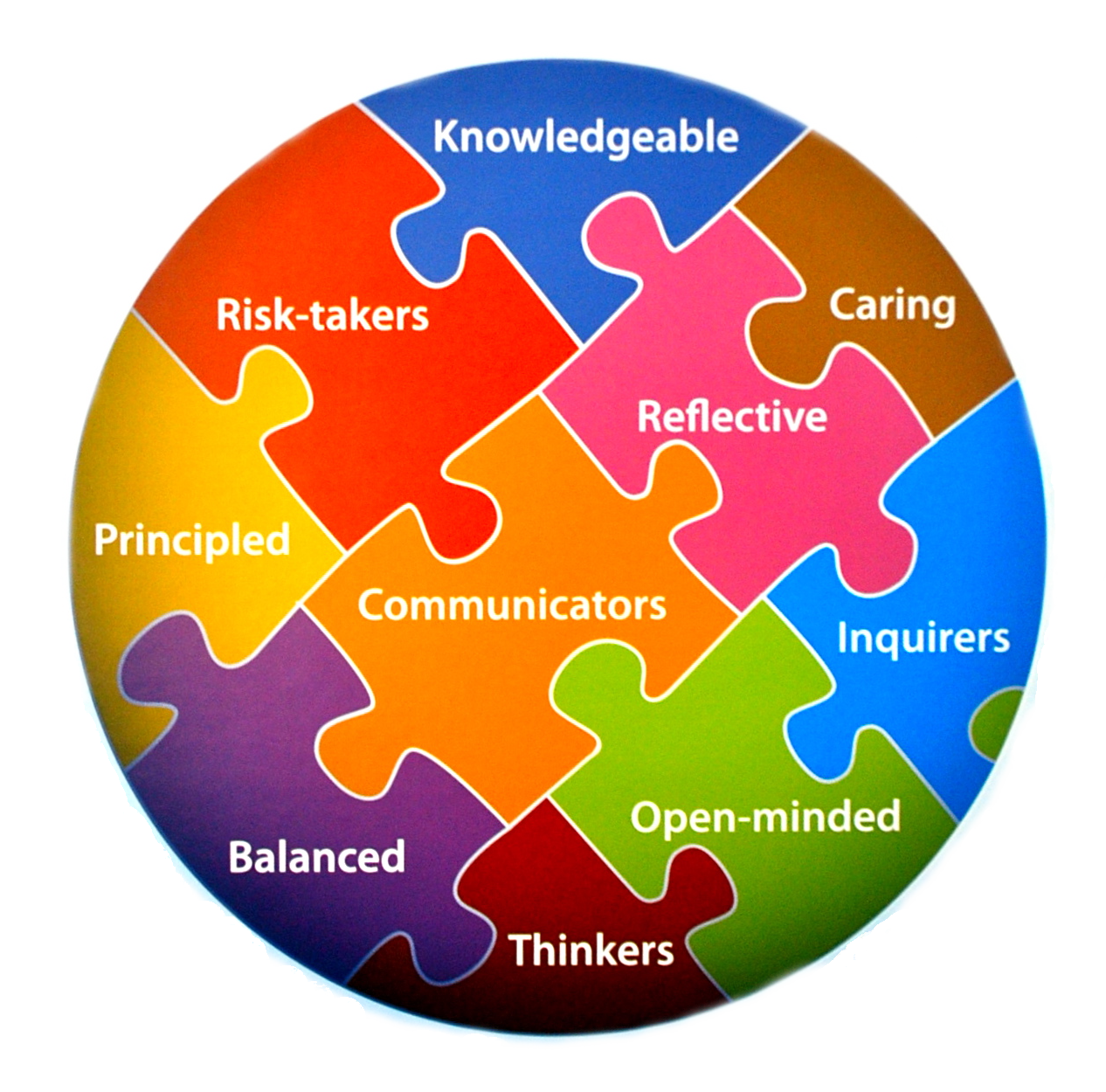
Second, the curriculum of international schools can provide a lot more than that of local schools. For example, the core of an International Baccalaureate Diploma Program comprises of “The Extended Essay”, “Theory of Knowledge”, and “Creativity, Action, and Service (CAS)”. The first one gives students a chance to examine topics of global significance through their independent research and in-depth study. The second one allows students to develop their critical thinking and coherent approach to unify and articulate various academic disciplines. The third one encourages students to engage in art for creativity, physical activity for healthy lifestyle, and service to community for having universal values. [3] The main focus of IB Program is to cultivate the global mindedness and international competence of the next generation to become all-rounded individuals who are prepared to tackle emerging unknown worldwide problems in the 21st century. These elements are what the local education system lacks.

IB learner profile

Third, with the considerable amount of money that parents invest in their children, international schools are able to offer more resources than local public schools. Most importantly, there are at least full-time university guidance counselors for mentoring senior high school students to make the right decision about choosing the most suitable university according to their ability, character, and interest. In addition, international school students have more exposure to universities worldwide as many of them would visit their schools to set up booths for giving out brochures and answering queries. It could have an overarching effect on their career paths as well. In addition, there are numerous enrichment programs for students to select, like intensive English programs in America or England, short-term overseas trips to different continents, or musical performances, which also enhance their capacity of multicultural communication with classmates from various backgrounds.

Fourth, the growing numbers of expatriate communities increase the demand for international schools to accommodate their children.  The laissez faire economic market of Hong Kong attracts many foreign investors to come for business in this free-port metropolis with low taxation. Some of them move there as senior management executives in multi-national corporations or scholars in well-known tertiary education intuitions. According to the survey conducted by Employment Conditions Abroad Limited, expatriates in Hong Kong obtain the fourth highest compensation packages in Asia. [4] In order to attract more of them to move to Hong Kong, the companies usually pay the expatriates rewarding salaries, housing allowances, plus tuition fees for international schools for their kids.

internationalization in edu

After taking the course of “International Education Policy” this semester, I see the different sides of privatization of education clearly by having more profound knowledge about its advantages and disadvantages. What’s your opinion about the international schools then? Do they distort the original meaning of education? At the very least, international schools have given the “consumers” more choice in the education “market”. At the end of the day, however, who can afford it? Obviously, international schools will keep marginalizing students from lower socio-economic status. The gap between rich and poor will just be more visualized in the field of education. People generally have a stereotype that those who can receive “quality education” are from rich backgrounds. If this kind of “privileged education” can be enjoyed by all of the children, what will our future society be like? This leaves us a lot of room to rethink the above questions and strike a balance in the global context.


[1] Yan, C. (2014). Guide to Hong Kong Schools and Education. The Wall Street Journal. Retrieved on       April 19, 2014, from http://guides.wsj.com/hong-kong/guide-to-hong-kong/education/

[2] Hunt, K. (2012, September 3). Elite Schools head east as Asia’s education market booms. Cable News Network. Retrieved on April 19, 2014, from http://www.cnn.com/2012/09/03/world/asia/asia-education/

[3] International Baccalaureate Organization (2014). The IB Diploma Program. Retrieved on April 19, 2014, from http://www.ibo.org/diploma/

[4] Employment Conditions Abroad Limited (2012). Expatriates in Hong Kong enjoy Asia’s fourth-highest pay packages. Retrieved on April 19, 2014, from http://www.eca-international.com/news/press_releases/7706/Expatriates_in_Hong_Kong_enjoy_Asia_s_fourth_highest_pay_packages#.U1MApPldWFU 


Nikolai Artemev's avatar

Nomadic Schools in Yakutia (Russia)

Being simultaneously an Asian, Sakha (Yakut), and a citizen of Russia, I face unhidden interest about my homeland and my origin. Influenced by centuries-long stereotypes about Russia, many people do not know how diverse Russia is. It’s almost my daily, unpaid duty to reveal the diversity of Russia to others. When my international friends talk about my country, they use terms “Russia”, “Russians”, “Russian language”, “Russian culture”, imagining one notion instead of many. For instance, not many people use the country’s official name – the Russian Federation. However, only Federation embraces multinational, multicultural, and multilingual Russia. The Russian Constitution starts with: “We, the multinational people of the Russian Federation, united by a common fate on our land, establishing human rights and freedoms, civic peace and accord, preserving the historically established state unity…” However, this diversity often remain invisible.

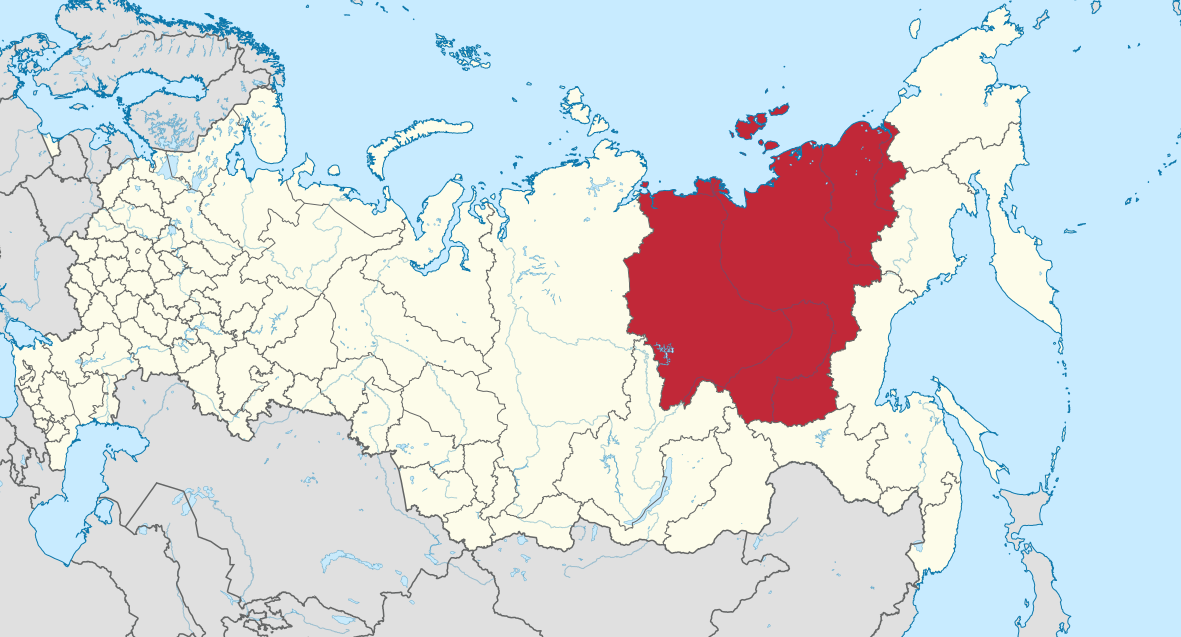
The Sakha Republic (Yakutia) is a unique and special in every way. First of all, Yakutia is the largest federal subject of Russia by its territory and covers three time zones (1/5 of Russian territory, the Sakha Republic territory equal to five times of France territory). Yakutia is a home to several indigenous ethnic groups of Siberian north with their traditional lifestyle, culture, and education.

1181px-Sakha_in_Russia.svg

from wikipedia.org

According to 2010 Census results, 403 nomadic families with 782 children live in the Sakha Republic. Reindeer husbandry is the main occupancy of nomadic families. In addition to traditional family education, there are 13 nomadic schools covering 180 children.

In extreme conditions of the Russian north, nomadic schools are designed to follow reindeer migration routes and provide access to education for children of native Siberians. For reindeer winter routes nomadic schools have buildings, for summer routes they use tents. These schools are supplied with compact computer, chemistry, physics, and biology labs. The curriculum includes classes of native language, Russian, national history, national culture, traditional ways of hunting, fishing, reindeer husbandry, environment protection, etc. Learning of the native language is one of the important goals since all languages of northern peoples are included in the UNESCO Atlas of the World’s Endangered Languages. UNESCO and local government play key roles in nomadic schools development.

index.php

from ysia.ru

A teacher of the nomadic school is required to speak a native language, to be able to teach several subjects for children of various ages, to know traditional nomadic way of life, and be ready to face severe life of the Arctic. In 2006, the Yakutia Teacher Training Institute has introduced a special two-year program (with an option of distant education) to train teachers of natural sciences and mathematics.

Some northern children of Russia attend boarding schools in towns away from their families and traditional way of life. Children have access to the radio, television, and, in some places, to Internet. Not all of these children would like to return and continue traditions. Some of them dream to live in town, to get a university degree, to travel, etc.

Today, an International Arctic School project is being developed by a group of experts from Yakutia and it is undergoing a process of discussion. The international arctic school is expected to provide a university level degree with international standards to students of arctic regions. It is proposed to build an environment-friendly school in close proximity to the native populations.

Notwithstanding many positive outcomes, Russia’s indigenous people continue to face serious issues, including transport, healthcare, etc. I believe that all native indigenous people of the north should be granted a special status; laws and programs shaping this status should be designed together with representatives of Evenk, Even, Chukchi, Dolgan, Yukagir and others to ensure their survival and development in the future.

imgresize.php

from news.iltumen.ru


http://insch.ru/stati/article_post/efimova-d.g.

http://www.wunrn.com/news/2009/05_09/05_18_09/051809_nomadic_files/Nomadic%20Schools%20in%20Siberia-Following%20the%20Reindeer.pdf

http://www.nlib.sakha.ru/knigakan/tematicheskie-kollektsii/kochevaya-shkola.html

http://sakha.gov.ru/node/133389

Bingyu Zhao's avatar

Public school district system in China: Realizing a real equity or bringing a new threat to Chinese education?

In February 2014, Chinese Ministry of Education issued a scheme of school district system, which allows that students to attend neighboring schools without passing examinations. This policy aims at allocating student resources more equably. [1] Since China passed the first compulsory education law in 1986, Chinese education has experienced a lot of reforms, especially in public education. At the beginning, the compulsory education was only defined as “required” education; Chinese students still had to pay certain tuition and miscellaneous fees (including books and school uniforms). To help more students receive education, the revised 2006 education law stipulates explicitly that students will receive a nine-year compulsory education without any tuition and miscellaneous fees in public schools. This education policy ensures that more students attend schools, while also giving students a right to choose their desired schools. This creates a phenomenon of more students choosing to go to key schools [2] instead of regular schools, especially in urban areas. It is common that many key schools set up entrance examinations to select best students, and even ask for higher education fees for students with lower examination scores [3]. On the contrary, regular schools are facing a shortage of student resources, creating a serious imbalance between key and regular schools. In this context, the school district system has been put forward to alleviate this imbalance.

Interestingly, in the development of Chinese education, “advocating for students to go to neighboring schools” is not new. To illustrate it, the China Education Online (CEO) has published a diagram to show the whole process of Chinese education [4]:

— In 1986, the Chinese first compulsory education law states: local governments set up elementary schools and middle schools to ensure that children can receive education in their neighborhood.

— In 2006, the revised compulsory education law states: local governments should guarantee school-aged children can receive education in schools which are near to the places of their official residence.

— In 2010, the “National Long-term Plan for Education Reform and Development” states: to adapt to the urban and rural development, local governments should regulate the school distribution to make it convenient for students to attend neighboring schools.

All the relevant educational laws and regulations mention that students should choose neighboring schools to receive education.

This new school district system emphasizes that students can attend neighboring schools without examinations, which would release pressure on students. At the same time, for those students whose homes are near key schools, they don’t need to compete with other students any more. Moreover, to avoid losing student resources, local governments will also strengthen the efforts to increase the quality of schools in order to balance the school facilities and quality of teachers in different schools. [1] It is hoped that, as a result, parents won’t try to send their children to key schools; and children won’t have to experience the intense competition in their early ages. To some degree, this policy creates a relatively equitable and healthy educational environment.

However, under the schools district system, one of the problems has caught people’s attention. The revised 2006 compulsory education law mentions that students can attend schools near their official residence, which means that students can attend any schools near their homes. The problem is two-prong. First, rich families may want to guarantee that their children receive best possible education and do not hesitate to spend plenty of money in order to buy houses near key schools. [6][7] In Chinese newspapers, news about “extremely high-priced school district housing” has been reported frequently and it is very common that parents buy school district houses in order to send their children to good schools. Second, poor families may be renting houses, which may prevent their children from attending neighboring schools. In other words, equitable access to quality education is still a problem. When children are rejected by schools because of the residential status, the educational system is not equitable any longer and has lost its own original intention. This problem may become a threat for Chinese education unless the government makes some measures to change it.

U472P886T1D101890F12DT20140221150501

Unlike other countries where school district system has been used for years, China still needs better implementation mechanisms. Nevertheless, this system is a good attempt to reform Chinese education and it does bring certain advantages. Will it bring the real equity on public education? Or will it become a new threat? I believe we can find answers in the future.


References

[1] http://xiaoxue.eol.cn/zxrd_9631/20140218/t20140218_1074810_1.shtml

[2] Key schools:  Usually those with records of past educational accomplishment – were given priority in the assignment of teachers, equipment, and funds. They also were allowed to recruit the best students for special training to compete for admission to top schools at the next level. (Wikipedia) 

[3] Tsang, C.M. (2001). School choice in the People’s Republic of China.

[4] http://www.eol.cn/html/jijiao/xiao/msrx/index.shtml

[5] http://www.cbpp.org/cms/?fa=view&id=2783

[6] Wu, X., (2011). The household registration system and rural-urban educational inequity in contemporary China. Population Studies Center.

[7] http://english.people.com.cn/business/8578128.html


coe406's avatar

Senior Year Reflections on Teach for America

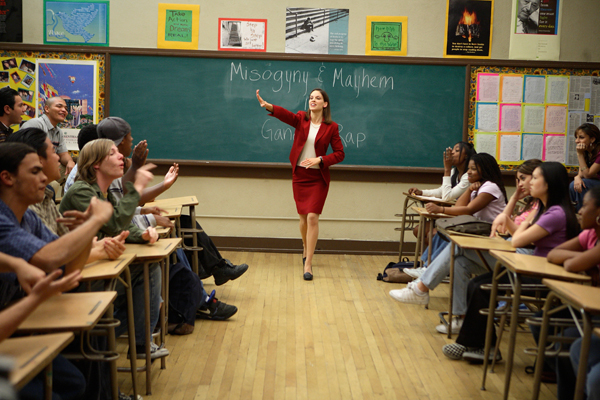
Ever since I first learned about Teach for America, I knew I wanted to participate. Social action, teaching, working with underprivileged kids…I wanted to be Hillary Swank from Freedom Writers. I thought this could be my chance at sculpting young minds through education, which I already know is a powerful socialization tool.

It was not until this year that my praise and glory of TFA shifted. After receiving countless emails from TFA recruits on campus, I decided to meet with one. She, of course, represented everything that is positive and optimistic about TFA: someone whose life was changed by the amazing and talented group of kids and staff that she worked with for two years. Clearly this program changed her so much that she is continuing to work for TFA as a recruiter. But getting multiple emails a week was a bit much, and made TFA seem more commercialized and less competitive.

Throughout this year I have continued to hear more and more criticisms of the TFA program. I’m sure they have always been out there, but I think that I turned a blind eye so that my idealistic program could live on as a part of my future. Recently at Macalester College in Minnesota, a TFA Truth Tour presentation took place with a panel of teachers and former Corps members exposing the truth about TFA’s educational policy. According to Neja Singhal, a former corps member, “…if more college students actually knew what TFA was doing at the policy level, they would not be applying to be a corps member. They would never want to be a part of this organization.” TFA seems to equate student leadership skills with teaching skills – a very sellable message to high achieving students, but not necessarily the reality. During Singhal’s experience, many of the teachers in her assigned school were laid off as TFA teachers were entering, possibly due to the high turnover rate for TFA members.

“They know that we are basically being told by TFA ‘do not rock the boat, smile, be good, do your work, get the tests scores up, be good with admin, but don’t cause any issues because then you’re going to mess up TFA’s name.” (Singhal)

Many news articles disagree with these criticisms, highlighting the powerful impact that TFA can have on teachers and students alike. In the past month, a group of observers from various media outlets observed Nicholas Boatwright’s class: a TFA corps member teaching mathematics. The observers were astounded with Boatwright’s teaching abilities, noting how much these kids respected him, looked up to him, and were improving their scores. Boatwright admitted that he had never thought about being a teacher before getting into this program, despite the amazing experience that he is having.

Why would someone enter into a teaching program if they did not intend to be a teacher?

It is certainly true that Corps members do not receive as much training as certified teachers. In the article and study, Does Teacher Preparation Matter by Linda Darling-Hammond, Deborah J. Holtzman, Su Jin Gatlin and Julian Vasquez Heiling of Stanford Univeristy, findings suggest that teachers “consistently produce significantly stronger student achievement gains than do uncertified teachers.” There is a clear relationship between teacher education and teacher effectiveness – one that I am not convinced TFA is committed to understanding.

In Teach for America and the Politics of Progressive Neoliberalism by Randall Lahann and Emilie Mitescu Reagan, TFA is categorized as an example of “progressive neoliberalism,” holding all of the criticisms of neoliberal education. This article also presents the concern over whether TFA “can truly operate as a corrective agent to the market, given that corps members only receive five weeks of pre-service teacher preparation before entering the classroom as full time teachers.” Though I am not a mathematician, I do not think that those five weeks are equivalent to the amount of weeks required to get an actual teacher certification.

If you had asked me a year ago to describe Teach For America, I would have made you watch Freedom Writers and told you what an inspirational, motivational, and life changing program it is. It used to be a dream of mine to participate in this program. However, as a senior witnessing so many of my classmates applying to this program for all of the wrong reasons and being accepted, my perception has changed. It seems as though TFA has turned into a program that students apply to if they have no other job prospects. Rather than commit because of a love and attraction to teaching, many of my friends have applied simply because they do not know what else to do with themselves next year.

I do think that TFA has great intentions and attracts some of the best students nation-wide. But those are the students who are natural-born teachers. And since I am not certain that I want to become a teacher, the critiques of this program are clouding what I once thought was idealistic.

gibsocg11's avatar

Study Abroad… BUT Why?

Welcome to my blog series on study abroad! Study abroad is becoming an increasingly important and valued part of a college education. This series will first look at why study abroad is important for personal development and success in the job market, then will move on to ‘getting off the veranda’ (or the importance of true immersion during a study abroad experience), and finish with how students can make their experience ‘work for them’ by providing tips on how to showcase their international experiences. Enjoy!

Fellow blogger and colleague Sarah Spiegel wrote an important blog a few days ago called “Generation Study Abroad: The Quest to Become “Citizen Diplomats.” In her post, Sarah discussed the very real boundaries that exist for students who want to study abroad. But as someone who has studied abroad, worked abroad and now works in study abroad, I believe more needs to be said on why students should go abroad and why institutions of higher education should work harder to get their students abroad through outreach and funding opportunities.

While it is true that only about 10% of American undergraduates are studying abroad, these 10% (about 300,000 students) are quickly becoming much more competitive in the job market than their peers without international experience. Stacie Nevadomski Berdan, an international careers’ expert who helped do research for the popular study abroad guide A Student Guide to Study Abroad, found that employers across many industries hire students who have studied abroad for very specific skills sets: ability to solve problems in complex, unfamiliar situations; adaptability with culturally diverse situations; excellent communication skills; and practical, useful knowledge of languages and cultures (Why Study Abroad).

Students often develop these ‘soft skills’ while they are studying abroad. However, these skills are not developed through chance while abroad; they are the direct result of interacting with local classmates and professors, interning or volunteering abroad with local companies and groups, and studying abroad on programs that enhance students’ academic programs (programs that aren’t just travel abroad but STUDY abroad).

Students who return from study abroad are certainly reporting these changes. IES Abroad, a large study abroad provider, recently polled its program alumni from 1950-1999 on the value of study abroad. 3,400 of their alumni responded, saying that study abroad mature more than they did during their whole on-campus career. They gained intercultural communication skills that not only gave them appreciation for other cultures, but also prepared them to be leaders in global workplaces. Many alumni also said that specific classes, internships or relationships helped them move into jobs that advanced their careers. Also, 42% of students who lived in a homestay report that they now use a language other than English on a regular basis (IES, The Benefits of Study Abroad).

These sentiments are being echoed all over right now from the New York Times Room for Debate: Study Abroad is Essential, where international experts debated the value of study abroad, to a recent RAND study of HR managers, which states intercultural competence was the 5th most desired attribute of an employee, to the Generation Study Abroad developed by the Institute for International Education (IIE- the group that also brings us the Fulbright program) that aims to double the number of Americans studying abroad by 2020. Colleges and universities around the country are signing on and pledging to increase the number of students going abroad on their campuses.

Generation Study Abroad has also been noticed by the White House, particularly by the First Lady who has become a very vocal supporter of study abroad. Mrs. Obama spoke with CNN on April 4 stating that

“the benefits of studying abroad are almost endless. First of all, it is going to make you more marketable in the United States. More and more companies are realizing that they need people with experience around the world.”

There is a noticeable trend of employers desiring more globally aware employees with international experience coupled with the trend of colleges and advocacy groups around the country pushing their students to go abroad more than ever is creating a supply and demand like never before. Employers are demanding candidates with international experience and colleges and universities are supplying more graduates than ever who have studied, interned, volunteered, taught and lived abroad. Now, institutions of higher education and study abroad program providers must also create funding sources and (or) create study abroad programs that maximize the experiences the students can have abroad while minimizing the price the students must pay. Colleges and providers must strive to make programming affordable so that all students can have the opportunity to go abroad, not just the students who can afford it.

Stay tuned for the next blog in the series, Study Abroad, BUT Get Off the Veranda!

Fauzia Nouristani's avatar

Afghanistan’s Education Post Taliban

Post 9/11/2001, Afghanistan’s education system has been as convoluted as its politics. There have been many internal struggles as well as external players. As soon as Karzai’s government was placed in power it began to reform education in order to differentiate itself from the Taliban, hoping to appear progressive. In the political context where power is fragmented across the nation, the Afghan government inherited a completely defunct education system, which has been placed in a state of dependency with the United States and its allies who influence both policy-making and the new regime. According to Afghanistan’s Ministry of Education, the Taliban era has left the educational system the following legacies:

  • Less than one million students, 20,000 teachers with almost no female participation.
  • 34, 00 schools–majority with unusable buildings.
  • No standard national curriculum or textbooks.
  • Only four Teacher Training Colleges with 400 students.
  • Only 1500 boys enrolled in Technical and Vocational Schools, and
  • 220 unregulated Madrassas without any formal curriculum.

After 13 years, how substantial is the change? How meaningful is education and what is the quality of education? These questions are difficult to answer and, while Afghanistan continues to face many challenges such as basic safety and security, it also has (according to the UNDP) a literacy rate that is “one of the lowest in the world.” While primary completion rates have gradually improved, the statistics show that in 2012:

  • 8.6 millions of children and youth are attending schools (over 5.29 million boys, and over 3.35 million girls).
  • Hundreds of thousands attend universities, and similarly tens of thousands are accessing literacy classes and vocational training.
  • While gender gaps and disparity still persist, access to education for girls and women has significantly improved over the years.

Again, though the numbers show quite an improvement, there is still a long road ahead. Some of these challenges, such as Afghanistan’s gender divide, continue to persist: “While 66 percent of girls attend primary school, compared with 92 percent of boys, the share of girls attending secondary school drops to 26 percent. Across the country, the growth in enrollment rates has been uneven. For example, over the past decade, nearly 350,000 girls have completed high school. In Kandahar, the country’s fifth-most-populous province, there are only 4,027 female high school graduates” (Mashal 2014).

Other challenges include poverty, health, lack of teachers and teacher training facilities and most importantly lack of security. While “more than 30% of primary school-aged children are still out of school… even children who attend school still struggle to read and perform basic math” (Albright 2013). Despite all the odds, Afghans continue to struggle. Recently I had a chance to interview an Afghan Fulbright student, Hamid Akbary,  who is currently pursuing his graduate studies in Sociology. He seems quite optimistic and reminds me that the youth of Afghanistan are hopeful.

Hamid states that just during his years he has seen a significant growth in children’s access to school. Many universities and colleges that were closed during the Taliban era have reopened, allowing greater freedom of thought. He states that students have the freedom to “express their ideas and use creativity in their skills and expression of new ideas and intellectual discussions.” He continues that this freedom of thought is the key for young Afghans to “play a role in moving the country forward to a free society through media, student organizations, and other democratic ways.” Although he does acknowledge the aforementioned challenges, his optimism seems to be contagious!

Image

References:
Albright, A. In Afghanistan, Teachers and Children Go to School Despite Real Danger
Baiza, Y. (2013) Education in Afghanistan, Developments, Influences and Legacies Since 1901. Routledge, Routledge Studies in Middle Eastern Society, United Kingdom
Islamic Republic of Afghanistan, Ministry of Education website http://moe.gov.af/en/page/2021
Mashal, M. (2014) An Afghan Town Gets its First Female High-School Graduates. http://america.aljazeera.com/articles/2014/2/8/even-at-graduationtimeafghangirlsovershadowedbyboys.html
United Nations Millennium Development Goals for Afghanistan http://www.us.undp.org/content/afghanistan/en/home/mdgoverview/overview/mdg2/