Michael C. Russell's avatar

Educational Rankings and Economic Success: How Clear is the Connection?

Screen Shot 2013-03-08 at 10.49.35 AM

Following the release of the PISA 2009 scores, United States Secretary of Education Arne Duncan said:

The findings, I have to admit, show that the United States needs to urgently accelerate student learning to try to remain competitive in the knowledge economy of the 21st century. Americans need to wake up to this educational reality, instead of napping at the wheel while emerging competitors prepare their students for economic leadership.

Similarly, in this short video advocating for the Common Core Standards, the Hunt Institute makes reference to the U.S.’s PISA rankings and says:

Out students need better knowledge and tools to prepare them to compete in the global economy.

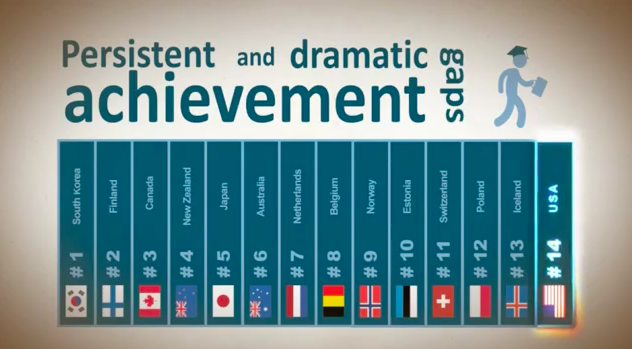
This is not a new argument, nor is it one restricted to the U.S. context. Advocates and detractors of education reform continually make reference to international competition, often using PISA and TIMSS rankings to bolster their argument. They draw an explicit link between these rankings and economic performance.

So, let’s take this argument at face value and test it on it’s own merit.

Using IMF data, here are the ten largest economies as measured by GDP PPP:

  1. United States
  2. China
  3. India
  4. Japan
  5. Germany
  6. Russia
  7. Brazil
  8. United Kingdom
  9. France
  10. Italy

Based on the arguments commonly heard from politicians, interest groups, and in the popular press, we may expect to see a significant overlap between this list and the 2009 PISA rankings. Here are the top ten performing nations and cities from that exam:

  1. Shanghai, China
  2. South Korea
  3. Finland
  4. Hong Kong
  5. Singapore
  6. Canada
  7. New Zealand
  8. Japan
  9. Australia
  10. The Netherlands

One nation appears on both lists: Japan.

Of course, one could argue that education is a lagging variable. That those educated today will not have meaningful participation in the global economy until years later. To test this, let’s look at the 1995 TIMSS 8th grade Math rankings:

  1. Singapore
  2. South Korea
  3. Japan
  4. Hong Kong
  5. Flanders (Belgium used disaggregated data)
  6. Czech Republic
  7. Slovakia
  8. Switzerland
  9. The Netherlands
  10. Slovenia

Again, only Japan appears on this list and the list of largest economies as determined by GDP PPP. Here one could argue that GDP PPP is a simplistic measure that fails to take population into account. As our final exercise, let’s look at GDP PPP per capita:

  1. Luxembourg
  2. Norway
  3. Qatar
  4. Switzerland
  5. Macao SAR, China
  6. Kuwait
  7. Australia
  8. Denmark
  9. Sweden
  10. Canada

This is even more problematic, not one nation (or region in the case of Macao) that ranked in the top ten in 1995 appears on the per capita list.

It should go without saying there are a number of problems with the simplistic analysis used in public policy debates.

For starters, although we often say “Nation so-and-so is ranked Xth in the world,” the reality is that the majority of the nations in the world don’t participate in TIMSS or PISA. Luxembourg, Qatar, and China did not take part in the 1995 TIMSS. We can hardly expect nations that didn’t take the test to appear on our top-performers list. In fact, only 43 nations in the world participated in that exam in 1995. That number has increased over the past eighteen years; sixty-four nations, cities and regions took the most recent PISA exam in 2012. However, we are still working with an incomplete dataset.

In addition, we’re not even using simple linear regression analysis in this blog post. We’re just comparing top-ten lists and looking for commonalities. Scholars studying comparative education know this is an invalid way on measuring the effect of education on economic growth. The link between a nation’s education system and its economy is a complex relationship between two adaptive, emergent systems. A relationship that can’t be measured by comparing GDP and PISA scores. We know this.

However, outside of the universities, think tanks, and multilateral development banks it is a different story. Politicians are not making complex arguments that take many variables into account. They are saying better rankings equals better a economy. President Obama:

It is an undeniable fact that countries who out-educate us today will out-compete us tomorrow.

The weaknesses in our argument above should serve to reveal the weakness in the president’s argument. Politicians define educational success with league tables and make ill-defined linkages to the nation’s economic rankings every day. Just by looking at the rankings it should be clear that this argument fails to hold up by its own logic.

UPDATE 03-09-13 0554AM – A reader asked why I said “nations” before the PISA rankings with Shanghai taking the top spot. I misspoke, that should have read “nations and cities” and has been fixed. This does point to another problem with the way the league tables are discussed in the popular discourse, as mixing up nation and city results is a common mistake. When the 2009 results were announced, many commentators reported that “China” had top the world rankings. Here’s Time Magazine:

China Beats Out Finland for Top Marks in Education

James Harding's avatar

Education: Cost or Quality?

Like most searching for an answer, I started by looking at PISA results and commonalities between high performing nations.

My first search: National Curriculums.

It seemed to work well for Japan and New Zealand but not for the UK and Portugal. Time to look for another explanation.

PISA tries to avoid supporting rote memorization by measuring “How well can students nearing the end of compulsory schooling apply their knowledge to real-life situations?”  So, maybe countries with strong links to high stakes/standardized testing will reveal poor scores.

No dice. Finland and the Republic of Korea (ROK) are at opposing ends of the testing spectrum. Finland has very little standardizing testing and ROK works towards solely standardized testing. PISA shows both countries in the highest echelon on national education. Next.

Maybe countries with the highest spending on education skyrocket the PISA rankings? Nope…another dead end. The USA ranked the fourth highest in public expenditure on primary, secondary and tertiary education per student by the OECD.  Much higher than ALL front runners.

How could this be?

“Currently only 59 cents of every education dollar reaches the classroom. Fewer than half of Washington’s 101,700 public school employees are classroom teachers. Spokane Public Schools employs 3,087 people, one for every nine students, but only 41 percent of them are classroom teachers.”

–Washington Policy Center

So, maybe it’s cultural or political?

“Finnish schools are funded based on a formula guaranteeing equal allocation of resources to each school regardless of location or wealth of its community.

“All children in Finland have, by law, access to childcare, comprehensive health care, and pre-school in their own communities. Every school must have a welfare team to advance child happiness in school.”

“ All education from preschool to university is free of charge for anybody living in Finland. This makes higher education affordable and accessible for all.”

-Washington Post

Now we’re getting somewhere!

One of the most emphasized points in the Finnish system is the social status of teachers and its impact on education.

The OECD states Finnish teachers hold an extremely high social status and one of the most sought after professions.  Teachers are taken from the top 10% of gradates to earn a masters in education before being able to teach in public schools.

Conversely, consider the U.S. stigma of teaching: “Those you can’t do, teach.” “Easy job, short hours with major vacation time” isn’t the reality. Again in OECD comparisons:

-Finnish teachers are paid substantially lower than their American counterparts.

-U.S. teachers put in 1051 hours of direct teaching with Finland, a mere 550.

In Hidden Markets (2007), Patricia Burch shows the further decline of the status of American teachers showing a cultural shift towards online learning. Public state funds are already being used as an alternative to public schools. In some states it is even possible for virtual schools to hire non-certified and non-full time staff.

To me it needs to be a ‘one problem at a time’ approach. The initial focus needs to be on providing an education as opposed to the cost cutting measures limiting it. The Federal and State governments haven’t mastered the application before attempting to sell it off as a commodity and stripping it of the biggest strengths. Teachers.

U.S. teachers are paid a low salary comparative to other college graduates, are readily being replaced by computers and online classrooms, work longer than teachers in other countries, are forced to submit to standardized testing in a very non standardized environment and with society assuming ‘they have it easy.’

Maybe a consultant will suggest we ‘stop trying and fail for free?!?’

Image

fatih aktas's avatar

The Boom of International Branch Campuses: Western Universities and the Export of Knowledge

Image

In recent years, the number of international branch campuses has increased enormously, particularly in the Middle East and the Asia-Pacific region. According to the Observatory on Borderless Higher Education, which is an independent institution conducting research and examining policy frameworks and emerging trends in higher education, there were 162 international branch campuses (IBCs) across the world in 2009. The United States, Australia, and the United Kingdom are among the most prominent IBCs providers. In fact, U.S. universities constituted 48% of all IBCs in 2009. While IBCs are a relatively new trend in higher education, it is not clear whether exporting international campuses abroad will help host countries  strengthen their higher education systems and keep up with current global trends. Perhaps, the main drive for the establishment of IBCs is not public service, but rather increased revenue and reputation of home institutions.

To better understand the boom of IBCs, it is necessary to take a look at the context of host countries where these international branch campuses operate. Currently, the most popular destinations include the United Arab Emirates, China, Singapore, and Qatar. For example, Qatar’s Education City hosts such well-known U.S. universities as Carnegie Mellon University in Qatar and Georgetown University School of Foreign Service in Qatar. Likewise, the United Arab Emirates, which has the highest number of international branch campuses in the world, hosts such highly reputable universities as New York University and Sorbonne University.

From the perspective of host countries, particularly oil-rich Middle Eastern countries, the main goal is to make “prestigious” (Western)  education accessible globally. The expectation is that international branch campuses will prepare youth in the Middle East (and other regions) for the global labor market, thus decreasing host countries’ dependency on natural resources. In addition, it is believed that these IBCs would increase innovation, research, and development activities in host countries, thus contributing to the emerging knowledge-based economy in the Middle East.

Theoretically, all this sounds good. Yet, many questions arise when carefully examine the implementation of IBCs abroad.

First, IBCs offer very limited undergraduate programs in host countries compared to their home institutions. One of the reasons is a lack of academic freedom in host countries, which may compromise the liberal arts curriculum and discourage many professors from teaching in IBCs. In fact, American universities that have established branch campuses in the Middle East and Asia have faced an ongoing criticism for collaborating with authoritarian governments.

Second, business, management, and engineering programs seem to prevail over liberal arts programs offered by many IBCs. IBCs thus primarily function as producers of business leaders rather than supporters of innovative research initiatives in host countries. Even though some IBCs prioritize research activities in host countries by strengthening their relations with policy-makers, their number is not very high. Without introducing rigorous research programs, IBCs are unlikely to produce innovative solutions for the knowledge-based economy or help local governments.

Third, many IBCs were established in hopes of potential new revenues, yet many have been shut down for financial reasons. For example, Michigan State University expected to enroll 100-150 students per year, but there were just 10-20 students in MSU Dubai’s programs. Therefore, some international branch campuses already start to pull away from host countries. For example, Michigan State closed all of its undergraduate programs in Dubai in 2010. Not surprisingly, many families prefer to send their children to Western universities rather than enrolling their children in IBCs. The legitimacy of degrees offered by IBCs thus remains in question.

Clearly, IBCs struggle with many problems in host countries. Some of these problems arise due to the specificity of the local context of host countries, while others stem from the contradiction between universities’ financial interest in the region and the public demand for the academic programs. As a relatively new phenomenon in the higher education marketplace, IBCs will need to carefully address these academic, financial, and ethical issues as they establish their place in the education world.

Marina Kudasova's avatar

Commercialization of Public Education in Russia Hits School Curriculum and Family Budget

Federal Law N-83 FZ activated the process of commercialization of public education that brought so far only uncertainty and frustration for Russian society. Certainly, there are more questions surrounding the reform than answers. Yet, it is becoming clear that the reform will have a major impact on school curriculum and family budget.

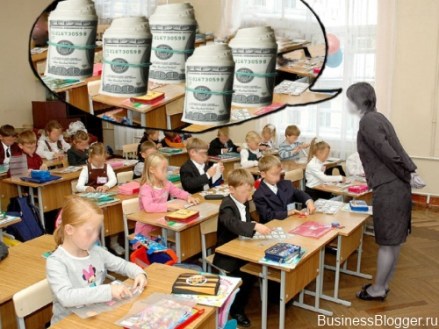
The law guarantees to provide basic education for free. However, people express fears that fee-free curriculum will be cut down to a bare minimum. One concerned parent explained that experimentation with the new law in her child’s school has resulted in narrowing down of the fee-free educational program to the following subjects: two hours of math, two hours of Russian language, three hours of physical training, and three hours of religious studies weekly. The “free program” is so basic that students have no choice but to attend fee-based courses in order to gain the necessary knowledge.  Some reports suggest that teachers force their students to attend fee-based courses and give low grades to those students who do not obey.

However, not all families can afford to pay for the courses. A price list posted on one of the Internet discussion forums states that parents have to pay a monthly fee of 500 rubles (15$) for general subjects (e.g., chemistry, biology, literature) and 1000 rubles (30$) for foreign language lessons. Parents are in panic since they believe the reform will hit their family budgets dramatically. Given the fact that average monthly salary in Russia is about 500-800$ (and many earn considerably less), allocating extra 200$ for a “proper” education is a significant burden on families (these 200$ do not include additional expenses, such as school uniforms, textbook materials, school repairs, and so forth). Clearly, the low-income families will be the ones to suffer the most.

Surprisingly, the government has not yet attempted to clarify this chaos of opinions. Although the official website of the Ministry of Education has devoted a separate page to the new reform, it only includes the text of the law and some additional normative documents.  Only three news and press releases are devoted to the reform and they all date back to 2012 or earlier. It seems that government is not ready to take an affirmative stand on the issue and is only observing the evolving situation from a distance.

Meanwhile, some activists are beginning to unite their efforts in opposing the reform. For example, there is a public initiative of concerned individuals called “Civil Initiative for Free Education” that boycotts the new law and regularly organizes demonstrations. There are also those who collect signatures and write petitions to stop the reform, as well as many others who are creating their smaller Internet communities. Their main concern is that the new law will lead to raising “a generation of dummies” and “grey masses that can only read and write, but not think.” Therefore, the negative impact of the reform is predicted to go far beyond the curriculum and family finances. It is believed that in a longer term the law will have a severe affect on the overall education level in the country.

Government official against Federal Law N-83 FZ (in Russian language):

Fauzia Nouristani's avatar

Children are More than Test Scores!

Last week I was at my son’s elementary school for a meeting with his teacher.  She began to talk about how important it was for him to be ready for the PSSAs (Pennsylvania System of School Assessment tests). I told her that not only did I find this type of assessment irrelevant to his education, but also inaccurate.  I even suggested I’d rather he didn’t participate in taking them. A look of confusion came across her face, like she hadn’t even thought about having a choice in this matter.

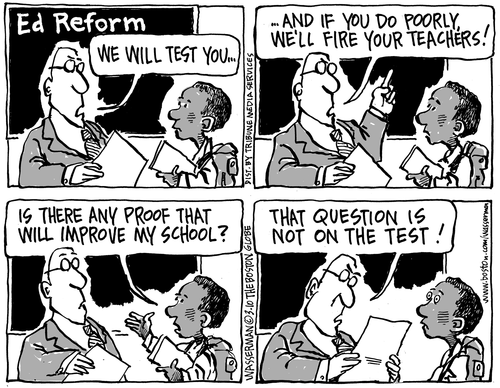
Standardized testing has been a crucial aspect of the No Child Left Behind act that has been introduced by the George W. Bush administration in 2002. Each state is required to create assessment tests and yearly progress reports in order to receive federal funding. This has been a top down policy that was decided in Washington with little to no involvement of students, teachers, and parents that have been affected by it.  Supposedly, such standardized tests were expected to not only provide accurate assessments of student achievement but also measure the effectiveness of teachers as well.  But a decade after the policy’s implementation, there has been no proof of its effectiveness.  Rather, standardized testing has reduced education to acquiring skills that merely prep for the test.

Comparing U.S. students to those from such high-achieving countries as Finland, Korea, UK, and Singapore, Linda Darling-Hammond argues that American students are “the most tested” in the world. She finds that not only are students in these countries minimally tested but they also rarely take multiple-choice exams.  She further claims that spending so much time on improving test taking skills takes away time from effective teaching and critical thinking skills that cannot be measured by such tests.

Yet, public protests against standardized testing are rare. Many teachers find themselves in a difficult position if they seriously contest the system that promotes “teaching to the test.” Should they refuse to participate in the standardized tests imposed by the state, they risk poor evaluations, charges of insubordination, possible suspension, and even loss of their jobs. To a certain extent, then, many teachers—perhaps even a majority—are forced to implement standardized tests and teaching practices that they not only despise but know are against common sense and the real educational needs of their students.

While many teachers may be discouraged from actively protesting the standardized testing movement, the teachers of Garfield High School in Seattle are just doing that…by not participating in the mandated standardized tests called MAPS (Measures of Academic Progress) and they are not the only ones. Over 130 professors and researchers from various universities, including Harvard, Tuft, and Brandeis, have spoken out publicly against standardized testing. From New York City to Texas and Florida, parents, teachers, and elementary and middle school students are beginning to express their frustration with slogans like “KIDS ARE NOT A TEST SCORE.” Garfield High’s defiance of this policy clearly shows the rest of us that we do have a voice in education policy as stakeholders especially in a nation that we call a democracy.

Marina Kudasova's avatar

The Reform of the Century in Russian Secondary Education: Monetization of Public Education

scoolmoney1

On May 8, 2010 Dmitriy Medvedev signed Federal Law N-83 FZ, which aims to introduce a major reform in the secondary education system in Russia.

Unofficially this law is known as “a reform of monetization of public education.” The law includes provisions for granting autonomy to schools to raise their own funds. As the official version of the law states, schools have the right to introduce new subjects to school curriculum on the commercial basis and provide private tutoring for students wishing to improve their knowledge in a particular subject.  The law, according to the government officials, aims to improve the quality of education and encourage schools to become more competitive and innovative. The law has been in power since January 2012, and it is now in its implementation period.

While commercialization and privatization of public education are common in the so called “Western world,” these policies are becoming increasingly widespread globally (Rizvi & Lingard, 2010; Ball, 2012). Russia is no longer an exception. With the collapse of the Soviet Union in 1991, privatization has become one of the central features of post-Soviet transformation in Russia and the N-83 FZ Law has extended privatization reforms to the public education sector.

Given the fact that schools were entirely state-funded throughout the Soviet history, the new reform is quite unprecedented. In fact, it has evoked huge resonance in the Russian society. First, the majority of the public does not completely understand what the law implies. Some critics call the reform “the end of free education,” while others blame the law as a “means to justify the decrease in public spending on education.” Parents are also hesitant since they believe they will have to pay for the reform out of their own pockets. In response, government is trying to convince people that education will continue to be free. However, the key message here is that only the standard (basic) curriculum will be available for free. And the critics question whether or not this standard will be enough for students to pass the national examinations in order to be admitted to the university. Also, it is likely that only children from wealthy families would benefit from the commercial services in schools, which in turn would further contribute to growing social inequality.

By and large, there is a great deal of controversy surrounding the reform.  The text of the law itself is overly complicated and difficult to comprehend, which further contributes to fears among the broader public. Thus, it seems unclear what this reform will bring for the Russian society. Are schools prepared for self-governance? Will the reform in the end raise the quality of education? Or will it lead to shutting down of rural schools, which without doubt will be struggling to raise funds? What will this push for privatization of public education finally bring?

Iveta Silova's avatar

Cornel West on “Shameful Silence” about American Obsession with Privatization of Public Education

“Public education is predicated on the notion you are focused on other kids — you have to be concerned about all children….not any longer — all this privatizing profit obsession, this preoccupation with this short-term gain as opposed to long-term integrity, is being pushed to the side.” Watch him talk on C-SPAN:

http://www.c-spanvideo.org/clip/4322638&updatedclip

internationaleducationplc's avatar

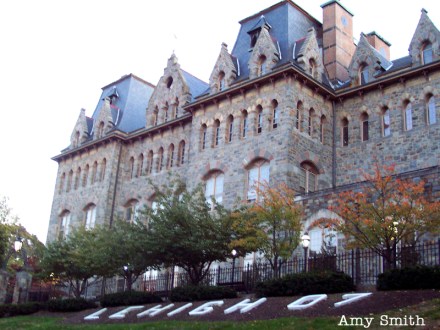
Lehigh University

Lehigh is a premier residential research university, ranked in the top tier of national research universities each year. We are a coeducational, nondenominational, private university that offers a distinct academic environment of undergraduate and graduate students from across the globe.

Our university offers majors and programs in four colleges: The College of Arts and Sciences, The College of Business and Economics, The College of Education and The P.C. Rossin College of Engineering and Applied Science.

More than 4,700 undergraduate and 2,000 graduate students call Lehigh “home.” Located in Pennsylvania’s scenic Lehigh Valley, the campus is in close proximity to both New York City and Philadelphia. Lehigh is comprised of 2,358 acres, making it one of the largest private universities in the country. The Asa Packer Campus, Mountaintop Campus, and Murray H. Goodman Campus are contiguous. In 2012, the university received a Stabler Foundation gift of 755 acres in nearby Upper Saucon Township.

Since 1865, generations of students have chosen Lehigh for their educational experience. They know Lehigh is a place where they can make strong personal connections with faculty, conduct research in diverse fields of study, thrive in a dynamic campus community, form lasting bonds with Lehigh alumni, and learn from their own life experiences.

Information is taken from: http://www4.lehigh.edu/about/default.aspx