Xiaoran Yu's avatar

Bilingual Education in Tibet: Promises and Problems

Education equity has become a hot topic worldwide. As a country consisting of Han majority and 55 minorities, China has made efforts to ensure education equity between the Han majority and the ethnic minorities. China’s minority education gained momentum since 1980s. In Tibet, for example, dropout rate decreased, literacy rate increased, and more Tibetan students went to colleges. As a part of minority education, bilingual education policy for minority students has been in effect for decades. I have been curious about what bilingual education looks like in Tibetan-speaking areas. My conversations with a friend made me reflect on this issue again.


At a friend’s party I met a guy. He was a third year Ph.D. student studying engineering in the United States. I was so exited when I learned that he was from rural Tibet. He was the first person I know who was born and raised in a Tibetan ethnic autonomous region. I had millions of questions to ask him. When the topic came to education, to my surprise he did not talk about of the lack of facilities or poor teacher quality. Instead, the first issue he brought up was how bilingual education in his village hindered the potential of the kids.
blog 1 image

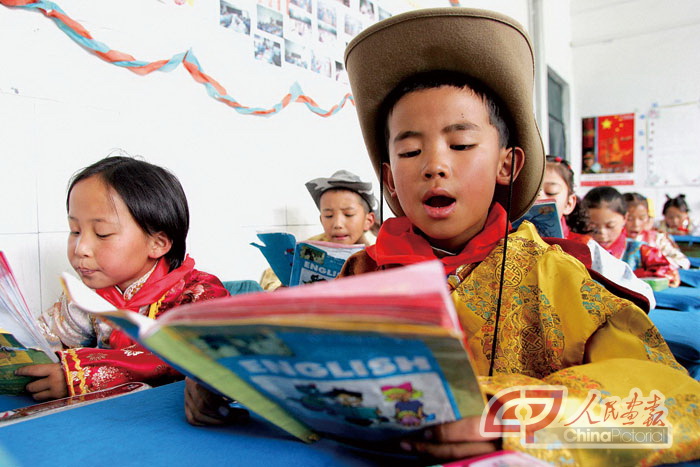
“In my village, bilingual education is not as glorious as one usually imagines”, he said, “Tibetan is the medium of instruction in primary schools, but all of a sudden, the language of instruction switches to Chinese when it comes to middle school. It caused a lot of problems for me”. According to him, both of his parents were Tibetans, so neither of them could help him learn Chinese. He also considered language as part of culture. “I really appreciate my culture. Tibetan identity and language means a lot to me. I cannot throw them away. As I know, some of my friends chose to attend schools in India where we can use Tibetan throughout schooling”.


My friend’s case is not uncommon in ethnic autonomous areas. For example, the program for educational development of Qinghai (2010-2010) promulgates bilingual education—Chinese is the main and instructional language, and Tibetan a supplementary language. However, people have different notions about the relationship between the Chinese language and the Tibetan language teaching in school. The sudden switch from minority language to Chinese causes much problem for minority students. Although in lower grades Chinese is taught as a second language, many minority students do not have the Chinese proficiency to attend Chinese-language-only schools. The same situation is in Tibet. Although most primary schools still use Tibetan as a medium of instruction, Chinese is the language of secondary school and the ticket to non-farm sector employment. This causes high dropouts rates in junior secondary school, which decreases the learning potential of many students (Postiglione, 2008).


Chinese policy attempts to popularize Chinese and minority language. There was a significant commitment to minority language maintenance and bilingual education in China’s language laws from 1905 to 2005 (Ross, 2006). However, problems exist. Even though bilingualism promotes Chinese as well as minority languages, the focus is always Chinese. In addition, although minorities are granted equal status with the Han language by law, Chinese is the official language that has legitimacy. Furthermore, reward mechanisms favor Han speakers, because it is easy for Han speakers to find better education and lucrative jobs. For example, most Chinese universities have Chinese language exams for minority students.


Like my friend said, many Tibetans believe that their indigenous language should be the medium of instruction as Tibetan language is integral to Tibetan culture. As a result, as my friend witnessed, many Tibetan families send their children to India where Tibetan can be used as a medium of instruction. Contrary to indigenous people’s beliefs, policymakers believe in their own cultural superiority, which includes their language. Bilingualism has become uni-dimensional, instead of multi-dimensional. That is, minorities adjust to the majority by learning mandarin Chinese. The other way around, there is no learning of minority languages on the part of Han majority. It seems to me that the minority education policy tries to help the minorities, to patronize them. Policymakers think there is nothing for the minority groups to give back in terms of education—what policy does is help the minorities. With such a patronizing attitude, I don’t think educational equity can be achieved.


Right now I think the minority policy aims to serve Han people in Tibet. Most officials in Tibet are Han. If children of Tibetan officials learn good Chinese, they get the ticket to a bright future, such as government jobs. Nevertheless, for Tibetan students, Chinese is not as important as Tibetan language. Thus I think the current bilingual policy favors just one group instead of both. Bilingual education policy in China has produced positive educational results, as proved by many educators, but to my mind, there is still room of improvement.


References

Nima, B. (2001). Problems related to bilingual education in Tibet. Chinese Education and Society, 34, 91-102.


Postiglione, G. A. (2008). Making Tibetans in China: the Educational challenges of harmonious multiculturalism. Educational Review, 60, 1-20.


Ross, H. (2006). Where and who are the world’s illiterates: China. UNESCO Global Monitoring Report China Country Study (June 20), 65 pages

Bingyu Zhao's avatar

High Fees in Private Schools

Except for low-fee private schools, most private schools require much higher fees than public schools. Nevertheless, private education is becoming more and more popular, with the number of private schools all over the world. Now private schools have broad coverage of kindergartens, primary schools, middle schools and high schools. As more people are getting accepted into private schools, these schools are also accepting increasingly higher fees.

Although I am psychologically prepared and aware of the range of high tuition charged by private schools, I am still shocked by the 50 most expensive private high schools in the United States listed on this website. The tuition for day-time students in the top 1 school is $43,314 per year, and even the school which ranks 50 also requires $35,755 per year. [1] Obviously, the tuition is much higher than the cost of attending some universities and colleges.

Meanwhile, the same phenomenon happens in China. In Beijing, sending a child to a private kindergarten with bilingual programs costs about 9,000 RMB (about $1,500) per month, which is also much higher than the cost of universities and colleges. [2] To be honest, the extremely high tuition has gone beyond my ability to understand and accept it.

What kind of knowledge is worth such high tuition? After pondering this question initially, I thought that high tuition is simply ridiculous. But when I looked over the description of the top 50 expensive private schools, something else caught my attention. For example, some schools say that they have perks to top college destinations, including Yale, Harvard, Columbia, Princeton, Johns Hopkins and so on. [1] Among those schools on the list, some can provide opportunities for students to study abroad, and some have abundant extra-curricula activities for students. At that time, I realized that high teaching quality and superb facilities are not probably worth as much money as, these additional perks. Likewise, Chinese parents who send their children to receive bilingual (Chinese and English) education at a high cost may believe it would be a good start for their child’s bright future.

Moreover, there are some other reasons for parents sending children to private schools. Private schools have smaller class sizes than public schools, which is the reason for some parents choosing private schools. For those introverted kids, a too large class size is not adequate and may prevent children from developing their strengths. Meanwhile, a smaller class size will make them feel comfortable and develop their strengths. [3]

Interestingly, when parents talk about high tuition in private schools, most of them think it is worth it. Laura Dean, a mom living in Bay area, spends $40,000 a year for her two kids’ private school tuition. Although they live in one of top-rated school districts in California, Dean still thinks private schools are better than those public schools and the quality of education in private schools is “worth every penny”. [4] One of my aunts sends her son to a private middle school in China, which is far away from home, meaning she has to spend much time traveling, in addition to paying the high tuition cost. And she also thought it was worth it when I asked her.

For many parents, the main reasons for choosing private schools are the high teaching quality and superb facilities. However, many parents are struggling with the high fees of private schools. For example, in Beijing, it is almost impossible to find a reputable kindergarten with less than 1,000 RMB (about $150) per month, which is nearly a quarter of an average salary, putting much pressure on middle-class families.[5] Because of this, it is difficult for parents to afford high tuition. Xiao Zheng, a Chinese mother who has a three-month-old baby, said “my husband and I began to save money for our baby after our marriage.” [5] Along with this issue, it is not surprising that private schools have lost huge numbers of children because of the high fees. For those children whose parents cannot afford the cost, they choose state schools or public schools because were fees are lower.

Whether in China or in United States, many people still regard public schools as a second choice because of the lower teaching quality and facilities. Currently in China, high tuition in private schools is a problem for many families, while the lower teaching quality in public schools also needs improvements in order for students to receive high quality of education at little or no cost. To address this issue, the government needs to take more measures.

Reference

[1] http://www.businessinsider.com/most-expensive-private-schools-2012-9#50-the-taft-school-watertown-conn-1

[2] http://www.wantchinatimes.com/news-subclass-cnt.aspx?id=20121014000044&cid=1503

[3] http://theweek.com/article/index/244142/is-private-school-worth-ithttp://privateschool.about.com/od/secondaryschools/qt/reasonstogo.htm

[4] http://theweek.com/article/index/244142/is-private-school-worth-it

[5] http://www.csmonitor.com/World/Asia-Pacific/2010/0223/In-China-kindergarten-costs-more-than-college

Clayton Duong's avatar

Anti-corruption education: to be or not to be?

Since 2014, all high schools in Vietnam have been implementing the updated curriculum for civic education that includes anti-corruption content. This initiative by Vietnam’s Ministry of Education and Training attempts to tackle the problem of corruption in education. However, many people are skeptical, wondering whether this initiative will actually translate into behavior changes.

According to the Transparency International’s Corruption Perception Index (CPI 2013), Vietnam ranks 116 of 177 countries and territories. A survey published by the World Bank in the Vietnam Development Report (2010) reveals that 17 percent of service users say that corruption is serious or very serious in public university and college education. In a recent survey, Transparency International (TI) also found that 49% of Vietnamese respondents perceive their education sector to be “corrupt” or “highly corrupt”. The percentage was higher than that found in Thailand, Malaysia, Indonesia and Cambodia. In the words of Pascal Fabie, a regional director in Asia and the Pacific for TI, corruption in education is the “double jeopardy” for its adverse effects to the future generation.

In recent years, along with the issuance of the anti-corruption laws, a number of anti-corruption campaigns have been launched in Vietnam. Under the Government’s Project 137, high schools and some institutions have started incorporating anti-corruption education in school curricula since 2013. Receiving accolades by many people, this initiative is often critiqued for its practicality.

The opponents believe that teaching about anti-corruption is just a waste of time. It is only about theory, not practice. There is no guarantee that students who learn about anti-corruption will not be committed to corrupt behaviors in the future. Moreover, civic education has been repeatedly claimed to be one of the most unimportant and boring subjects at school. In fact, most students see it as a non-core subject. They have invested little in this subject as they believe it has no role in their academic success. Meanwhile, the subject’s contents and teachers’ lack of appropriate pedagogical strategy further contribute to making the subject ineffective. Obviously, with the old way of rote learning and lack of practical application, anti-corruption education might eventually become a redundancy in students’ study.

Though anti-corruption education may not equip students with any practical skills overnight, students would become better aware of what entails corruption. They will learn about which behaviors or practices are viewed as being corrupt. This understanding is important because perceptions of corruption vary greatly among different cultures. In addition, many popular practices (including cheating in exams or giving money to teachers) are too often taken for granted. Children who observe and then practice these acts may never perceive that they are doing something bad.

It can be a surprise even to those working in the field of education that corruption entails more than what they often assume. According to Vietnam’s Ministry of Education and Training (MOET), corruption in education is most evident in such behaviors as buying slots in an (elite) public school; buying grades; recruiting and promoting teachers; as well as cutting out budgets for school supplies and education projects. A great many other smaller scale, subtle forms of corruption are going unnoticed and not seriously challenged.

Through anti-corruption education and campaigns, more people will become aware about the varied forms of private tutoring, abuse of schooling fees, and textbook monopoly as corrupt practices.

It is this very fact that makes the skeptics concerned. Rampant cheating and dishonest practices in the society can in effect negate anti-corruption education. A survey by TI found that 95% Vietnamese students admitted that they cheated at least once during their school time; many teachers and education administrators received grafts for improving a student’s score or as a guarantee for university acceptance. In a more subtle form of corruption, many teachers are found to hold extra tuitions with fees in the name of improving students’ academic performance. More and more parents come to believe that their children are either coerced to take the extra classes or put into a disadvantageous position in the mainstream class.

In this context, it is effective to teach moral lessons while what is learned is sharply contradicting the reality? Is it effective for teachers whose overall image is ruined by such corrupt practices to teach about morality? Is it possible for the youngsters to learn how to fight corruption caused by the adults?

In a broader context, while several high profile corruption trials are being executed as part of a crackdown on graft, the overall picture of a corrupt society with loose legal framework seems unable to convince the public that the government is truly tackling corruption. Anti-corruption education would then turn to a dogmatic and theoretic class; and worse, students would end up becoming either cynics, dissidents, or indifferent citizens. This is definitely not the expected outcome of any anti-corruption education.

Undoubtedly, anti-corruption education has its merits. However, for it to be effective, a sea of changes in the legal and political system is badly needed. At the very least, anti-corruption education shouldn’t be a “stand-alone” subject. First, it should be incorporated in the whole curriculum towards the common goal of equipping students with solid understanding about law and general code of conduct. Importantly, teachers play a crucial role as both an instructor and a role model in instilling in students the significance of integrity. To me, poor working conditions or any social impacts should never be a justification for teacher corruption. When the law on anti-corruption has not been complete, teachers’ own conduct and equal treatment of students are genuine lessons on anti-corruption.

Second, anti-corruption education should be accompanied by different extra curricular activities that aim to develop rounded citizens who are honest and respect the laws. Together with anti-corruption campaigns supported by TI or World Bank, these activities are necessary to get students involved in activism promoting integrity and honesty in study and their own life.

Vietnamese youth will expect and definitely learn a lot from these activities beyond the mainstream anti-corruption education.

Nikolai Artemev's avatar

Snow, Freeze, and School: Knowledge or Health?

My first academic year at Lehigh University is coming to an end. During the first semester, I was adjusting from Russian system of education to an American one. I was introduced to many new things. For example, I received all course plans with lists of reading material and assignments on the first day of classes, which is different from the Russian higher education system. It was new for me to have online classmates who study from other parts of the world and never see them physically in class. I learned that an online class method could be beneficial both for students and professors. If one of them is sick, he or she can join online and participate in class discussions.

However, perhaps the biggest surprise of being in an American education system was school closure regulations related to weather. I enjoyed winter in Pennsylvania. It was not as cold as in Yakutsk. Usual winter temperature in Yakutsk is -49F. Due to extreme cold temperatures, we have Schools Closing Days regulations. According to Yakutsk Department of Education, secondary schools shut down with the following order: students of 1-5 grades don’t have classes if temperature is -49F, students of 1-8 grades – -54.4F, students of 1-12 grades – -58F. These regulations refer only to students of secondary education. University students have classes in any weather. Other federal subjects of Russian northeast also have similar regulations for secondary schools, but may differ in temperatures.

from pikabu.ru

from pikabu.ru

From Yakutia.info

from Yakutia.info

I was surprised when higher education institutions got closed because of the snowfall. It wasn’t cold – it was just snowing. Even flights got cancelled or delayed because of the snow. Meanwhile, snow can’t stop Yakutia airlines pilots! For the first school shut down, I found it weird, but I enjoyed spending the day in my room. For the 4th time, students could start thinking about costs of each snow day since most of them pay for their education, particularly, about the price of each lost class (See more in post by Sarah Glickstein https://educationpolicytalk.com/2014/02/15/snow-days-not-snooze-days/).

from news.ykt.ru

from news.ykt.ru

Winter in Yakutia is a real challenge. Adults and children catch a cold very easily, which can last for several weeks. Some think that if you are from Russian northeast cold temperatures are nothing to you. I understand that peoples of Siberia got used to cold and learned how to survive in these extreme conditions. However, this doesn’t make us different. We are still people with the same rights. Winter in Yakutia is hard (cold weather, short sunny hours, wearing a lot of clothing, high-cost fruit and vegetables, 15-minutes-bus-wait when its -50F) and risky (e.g. a heating system is out, a broken car on way to other village, days without hot water, etc.). Farmers collect natural ice from lakes and rivers for domestic consumption and keep it under ground for summer use (ground is filled with permafrost).

yakutsk_the_coldest_city_in_the_world_earth_russia_01

by Bolot Bochkarev from visitYakutia.com

Some American states have school closures due to extreme heat and humidity. Heat or cold, it happens annually and teachers develop their own ways of dealing with harsh weather conditions. Some turn to online education, while others adjust school schedules. In the case of Russian northeast, it would make sense to reform the academic year by moving the two-month holidays from summer to winter, while developing curriculum for the whole summer with one-month-holidays. This also can be applied to higher education and other areas. The reform must be widely discussed, but during winter, it could prevent catching colds, families might travel to warmer places like Sochi, and nomadic schools can have specific benefits as well.


http://якутск.рф/news/education/1690

http://www.valleynewslive.com/story/23251603/high-heat-closes-several-area-schools

gibsocg11's avatar

Study Abroad…But Get Off the Veranda

When a student studies abroad, there is an assumption that interaction with their new community and cultural immersion will just…happen. While every student who studies abroad does experience some type of immersion, true cultural immersion requires that students ‘get off the veranda.’ For a great definition of what true cultural immersion can be, see this article by Karen Rodriguez from TransitionsAbroad.com.

This phrase, ‘getting off the veranda’, comes from an article written by Anthony C. Ogden comparing today’s study abroad student with colonials from history. Ogden points out that many colonials maintained their distance from their colonized communities “interacting only as needed and often in an objective and disassociated manner” (The View from the Veranda: Understanding Today’s Colonial Student). Many travelers, whether vacationers, business travelers or study abroad students, don’t leave the Sheraton or Four Seasons enough or at all, says David Livermore in his article The Right Sort of Travel Can Boost your Career. Even worse, some travelers can’t turn off Facebook or stop texting Mom and boyfriend/girlfriend long enough to truly immerse themselves and build intercultural skills. I am hesitant to compare study abroad with colonialism, but there are certainly similar attitudes and experiences that students can have if they aren’t careful to step off the veranda. (And if program administrators aren’t careful to design programming that allows for true immersion.)

Ogden explains that while he is supportive of the growth of programs and students abroad, students can not be allowed to “observe their host community from a safe and unchallenging distance”. This safe and unchallenging distance is called the veranda. One reason that students are prone to staying on the veranda is that study abroad programs have become increasingly personalized to the student’s wants and needs (just like higher education in general, perhaps). Students have become the customer, study abroad is the product they’re buying, and study abroad educators and program administrators and advisors are expected to provide them with excellent customer service. Students are used to picking and choosing exactly what they want to participate in and study abroad is no different. Students pick which courses they take, if they want an internship or not (how many days a week they want to work), will they perform research or not, will they travel or not, do they want classwork in the the local language or not….And lost in all of those choices is the real reason for why they are abroad: not to control or customize an experience based on what they like, but to immerse themselves in a culture different from their own (different from their normal wants and likes). Students are used to choosing which parts of education they want to participate in, and whether or not they engage in experiences that promote true cultural immersion (or not) becomes yet another choice over their 4-year college experience. This customization and control allows for the experience to stay student-centered, rather than location-centered.

Study abroad experiences can then turn into a glorified vacation if the experience lacks true cultural immersion. I have seen this with friends’ study abroad experiences and I have also witnessed this when speaking with study abroad returners about their experiences. Some students can even identify certain study abroad programs and locations that can act as ‘vacation centers’ and pass that information onto prospective students looking for programs. Program locations then become attractive to students looking for an experience that is heavy on fun and travel, and light on true cultural immersion. There is even a satire going around social media right now that captures these students and experiences in a Tumblr called Gurl Goes to Africa. This site essentially trolls the Internet for and accepts submissions of photos, videos, and blogs from white study abroad students’ experiences in Africa. And while the students who have taken the photos or written the blogs believe their photos really capture a deep immersive experience, Gurl Goes to Africa points out that their day trip to a that idyllic village in Africa only provided the student with a photo and nothing else. Another excellent explanation of this can be found in The Problem with Little White Girls (and Boys).

This is dangerous for the obvious reason that the study abroad student leaves their experience with the same level of understanding of their host location and culture as they did when arrived. But Sasha Gronsdahl explains other harmful effects of these experiences in her blog “White Girl Goes to Africa: Am I anything more than a cliche?” She points out that some abroad experiences, especially in developing countries, are not about anything other than ourselves. We gain the resume-building experiences and never reflect on why mostly Westerners are in the financial and ‘knowledge’ position to travel to developing communities. Most importantly, Sasha writes:

“The second argument is that volunteers don’t build formative relationships with people in their host countries, and thus the “Other” remains just that: a group of people who are different, unknowable, and strange, open to our interventions because they are not really fully developed like us. That’s why we can pick up cute African babies for pictures in ways we would never do with children at home. We expect the people we visit to speak English to us and we fail to learn their language; we spend our time with other expats and remain separate from the local community at large. In the workplace, we exercise our privilege without recognizing it: we perhaps make demands on our host organization’s time and resources while our local colleagues have no equivalent access. Our voices are always the ones heard at meetings.”

Now, I am a study abroad and travel advocate. I believe a day trip across town and a year-long study abroad experience can hold similar values. However, study abroad programs must push students off of that veranda so that students can get to know their locations and host communities deeper than a tourist would. Students must be open to experiences that will get them into their host communities and program leaders must design activities and lessons that allow students to think critically not only about their host communities, but also think critically about their home cultures and why they studied abroad.

Clayton Duong's avatar

The effects of privatization of education on teacher professionalism: evidence from the UK

If universities continue to heed the call of corporatisation, the role of the academic will become extinct.’

Recently I read an interesting blog post on theguardian.com. By comparing oneself with a ‘precious bird’ who is struggling among the ‘bustling sale of cheap, plastic imitation bird-objects around it’, the anonymous author sadly predicts that this bird may face extinction, leaving only its exotic feathers as relics of rapidly fading ideals. The post argues how a ‘wholesale corporatisation’ of the British higher education sector creates inequalities and adversely affects teacher professionalism. In addition to the increases in tuition fees due to the marketisation of higher education, the author argues that unfair pay between senior representatives and junior academics, particularly university support staff, will inevitably lead to more inequality. In an environment where private sector ideals are thriving, the author also feels that students are drawn more to the issues of ‘customer satisfaction’ rather than their commitment to study and academic aspirations. The blog points to the fact that as academics are being asked to undertake more administrative tasks, they have less time to undertake scholarship. Most importantly, academics find the private sector-style environments unsupportive to sustain their professionalism, being treated simply as information providers or sellers of their expertise.

I believe that the author is not the only ‘bird’ who has such a gloomy feeling. In fact, 2013 was seen as the year of marketisation of UK higher education with the government’s complete removal of student number controls. Although the sector is still far from a fully functioning market, a great number of academics in the UK have been expressing their increasing concerns about the consequences of extending market competition in universities’ activities of teaching and research.

In a large-scale strike, which broke out across the UK last year and early this year (2014), many interviewed academics held that education should not be seen as a commodity and be left to the fluctuations of the market. It is true that when education is increasingly viewed in instrumental terms, serving the ultimate for-profit goal of the private sector, the universities are trying hard to squeeze all the costs including the salaries of academics and staff. Meanwhile, the academics are required to work more and more, leading to their overall low morale and satisfaction with their jobs.

Indeed, privatisation of education is a growing worldwide trend, which continues to spread in the context of globalization. The problems it creates remain unaddressed, even in the countries like the UK where marketisation was originally traced back in the 1980s. In the eye of many academics, private, for-profit education in the UK seem to become a big business, causing public universities to reduce the value of a higher education to the laws of supply and demand to compete in the marketplace. As a result, British academics feel a growing sense of frustration and demoralization in a career that they might choose because of their interest instead of the pay it offers.

The impact of privatization of education on teacher morale has also long been documented in different contexts. For example, teachers in New Zealand with the rising administrative functions reported high levels of stress, declining job satisfaction and the desire to leave the profession [1]. In Australia, teachers were found demoralized and deprofessionalized by crude performance indicators such as research output and teaching performance in neoliberal education reforms [2]. In the same vein, the expansion of market principles in education also has negative effects on Chinese professionals in terms of their workload, payment, wellbeing, social status and teaching and living conditions [3].

In addition, it is no surprise that in many for-profit higher institutions, the professionals are not required to engage in advanced research. This is simply because the institutions only hire the faculty on the part-time basis, which can help them drive down the cost and better deal with the changes in the market’s demand. Without doubt, academics in these private, for-profit universities also do not have many opportunities for professional development offered by universities. This is most evident in newly marketised higher education systems in many Asian countries like China, Vietnam, and Cambodia.

Where is my professionalism?

I believe that privatization of public services has certain advantage of injecting competition into a market-based playing field. But when it is seen as the primary approach to education reform without proper supervision and outcome evaluation, this playing field turns out to be not at all level and equal, causing great many problems, including adverse impact on teacher morale and professionalism. To me, teaching academics hold a very important and special position in maintaining the goals and values of education as a public good in their communities. When market position places more pressure on them to pursue and construct academic identities in line with corporate identities, education has more negative consequences than positive outcomes.

References

[1] Power, S. 1997. “Managing the State and the Market: ‘New’ education management in five

countries.” British Journal of Educational Studies 45 (4): 342-362.

[2] WELCH, A. (1996) Australian Education: reform or crisis? (Sydney, Allen & Unwin), cited in Chan, D., & Mok, K. H. (2001). Educational reforms and coping strategies under the tidal wave of marketisation: A comparative study of Hong Kong and the mainland. Comparative Education, 37(1), 21-41.

[3] Guo, S., Guo, Y., Beckett, G., Li, Q., & Guo, L. (2013). Changes in Chinese education under globalisation and market economy: emerging issues and debates.Compare: A Journal of Comparative and International Education, 43(2), 244-264


Bingyu Zhao's avatar

“Merit Pay” in Education

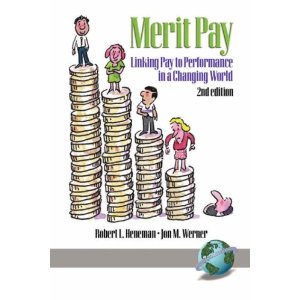
Recent blogs by Alyssa and Hang on teacher salaries made me think of the merit pay system, a term which appears frequently in the context of education reform. Originally, merit pay was defined as “an approach to compensation that rewards the higher performing employees with additional pay or incentive pay” in business. [1] Since the mid-1980s, merit pay has been used to connect teachers’ performance with salaries in the United States schools. [2] Currently, it has been in use in some other countries such as United Kingdom and China.

First, merit pay is performance-related pay which means a bonus for a good teachers’ performance. And teachers’ performance is measured by “students test scores”. [3] It is understandable that people may be motivated by higher salaries, and teachers are not an exception. In other words, merit pay system aims to motivate teachers to improve themselves and put more efforts into teaching. At the same time, merit pay system can create a competitive environment among teachers, whereby teachers compete with each other through students’ grades. With this system, the most ideal outcome would for students to have good grades and for teachers to teach efficiently.

However, while merit pay is increasingly used in schools in different countries, it also receives some criticism. Joe Bower, a teacher from Canada, explains why he thinks merit pay is a bad idea for education systems. One of his main arguments is that merit pay requires the education systems to pursue measurements such as standardized testing, and additionally encourages teachers who have chosen a career of public-service to focus on extra rewards such as pay. [4] Meanwhile, he thinks that merit pay will change teachers’ attitudes towards students, which means teachers will regard students as test scores increasers instead of real students. [4]

512iUx1k-9L._SL500_AA300_

Merit pay transforms education into business and it is difficult to imagine how teachers work in a business environment.Schools are not like companies which can make much profit to support the merit pay plan; on the contrary, the financial budget is a problem for the education system. In some Texas school districts, the merit pay system disappeared because of the financial budget. It is not difficult for teachers to increase students’ test scores because of the motivation of rewards, meaning that plenty of money is necessary to continue. At the same time, Angeles Davis, president of NEA-Dallas, thinks “Some teachers wind up being punished for reasons beyond their control because not all students are good test takers.” [6] The Texas example illustrates that completely putting merit pay system into education is still questionable and needs more consideration.

I agree with these criticisms to some degree. I am from China, I have seen a lot about how students fight for their continuous examinations. Chinese students receive too much pressure from the standardized tests, although it is true that the tests are necessary in current Chinese education system to select excellent students from a large population.

The research shows that merit pay was first introduced into Chinese educational system in 2009, which only has a five-year history. [5] For a Lehigh graduate level class Self and Groupswhich I took in 2013 fall semester, I was required to do a research project related to education change. I chose a Chinese middle school where my mother teaches as my focus, and did some research on changes in the last decade. During that research, I found out that merit pay is closely related to teachers’ salaries, which interested and surprised me much. The situation of merit pay system in China is quite different from other countries. In the middle school which I researched, the merit pay system was not based on teachers’ performance or students’ grades too much. The main determinant of merit pay is the longer the teacher has taught, the more pay he or she will receive.

In the Chinese case, the merit pay is not a “real” merit pay. Rather, it has been modified to fit the particular Chinese education environment. According to the exam-oriented education system, Chinese students and teachers are always facing intense examinations.in this contest, students care much about their grades and rankings, and teachers care much about the class rankings. For both students and teachers, there is so much pressure that additional (financial) stimulation is perhaps not needed.

I also think that merit pay has become an excuse in order to attract public attention to education, motivating more people to become teachers. Gradually, teacher is becoming a desired job in China. Nevertheless, I also think it will cause some conflicts among old teachers and new teachers in the future if no changes happen to the merit pay system. Currently, teachers receive merit pay according to their teaching experience, which means older teachers would receive more money than new teachers, although new teachers may have good teaching performances. It seems unfair to those new teachers who perform well in their teaching, which is a potential threat for the merit pay plan in China.

While introducing merit pay into education system may have some benefits. We have to admit that it creates many problems, such as the increasing pressure on teachers and students and the financial burden on the educational system. Whether the merit pay in China will continue or disappear (like in Texas) in the future remains unknown.


References

[1] Healthfield, M. S. Merit pay rewards performance. Revived from http://humanresources.about.com/od/salaryandbenefits/g/merit-pay.htm

[2] Morrison, N. (2013). Merit pay for teachers is only fair. Revived from http://www.forbes.com/sites/nickmorrison/2013/11/26/merit-pay-for-teachers-is-only-fair/

[3] http://en.wikipedia.org/wiki/Merit_pay

[4] http://nepc.colorado.edu/blog/merit-pay-bad-idea-won’t-die

[5] http://english.people.com.cn/90001/90776/90785/6746707.html

[6]http://www.dallasnews.com/news/local-news/20131013-texas-merit-pay-plan-for-teachers-quietly-disappears.ece


Angel Oi Yee Cheng's avatar

Blossoming Demand of International Schools in Hong Kong


internationalization in education


The blossoming of international schools in Hong Kong is an interesting topic to discuss within the context of privatization of education. Although parents need to pay a fortune to secure a seat, they are still very much willing to do so. There is a long list of international schools ranging from preschools all the way to upper secondary level where they adopt the British, American, Canadian, and International Baccalaureate (IB) programs accordingly.[1] Recently, Harrow International School, an elite boarding school that originated in Britain, has opened in Hong Kong.  While fees are high, long waiting lists still exist for international schools.[2] Why is there such a huge demand in this city? I have some insights about it after working in an international school for some time.

First of all, parents who send their children to international schools are highly educated and better off financially. They have realized the uncertainty about the future of Hong Kong’s local education system, which has undergone a series of reforms since the handover in 1997. The major ones included changing the medium of instruction from English to our mother-tongue language, introducing community colleges, transiting from the British to American model, and introducing civic education. So, what will be the next one? Parents may be afraid that their kids are only the experiments of the HKSAR government. Many parents believe that studying at international schools will ensure more stable growth and development of their children without interruptions by constant policy changes. Paradoxically, senior education officials often praise the excellence of Hong Kong local public education. In reality, only a few of them let their own children matriculate locally while most of them would like to send their children to study abroad or in international schools.

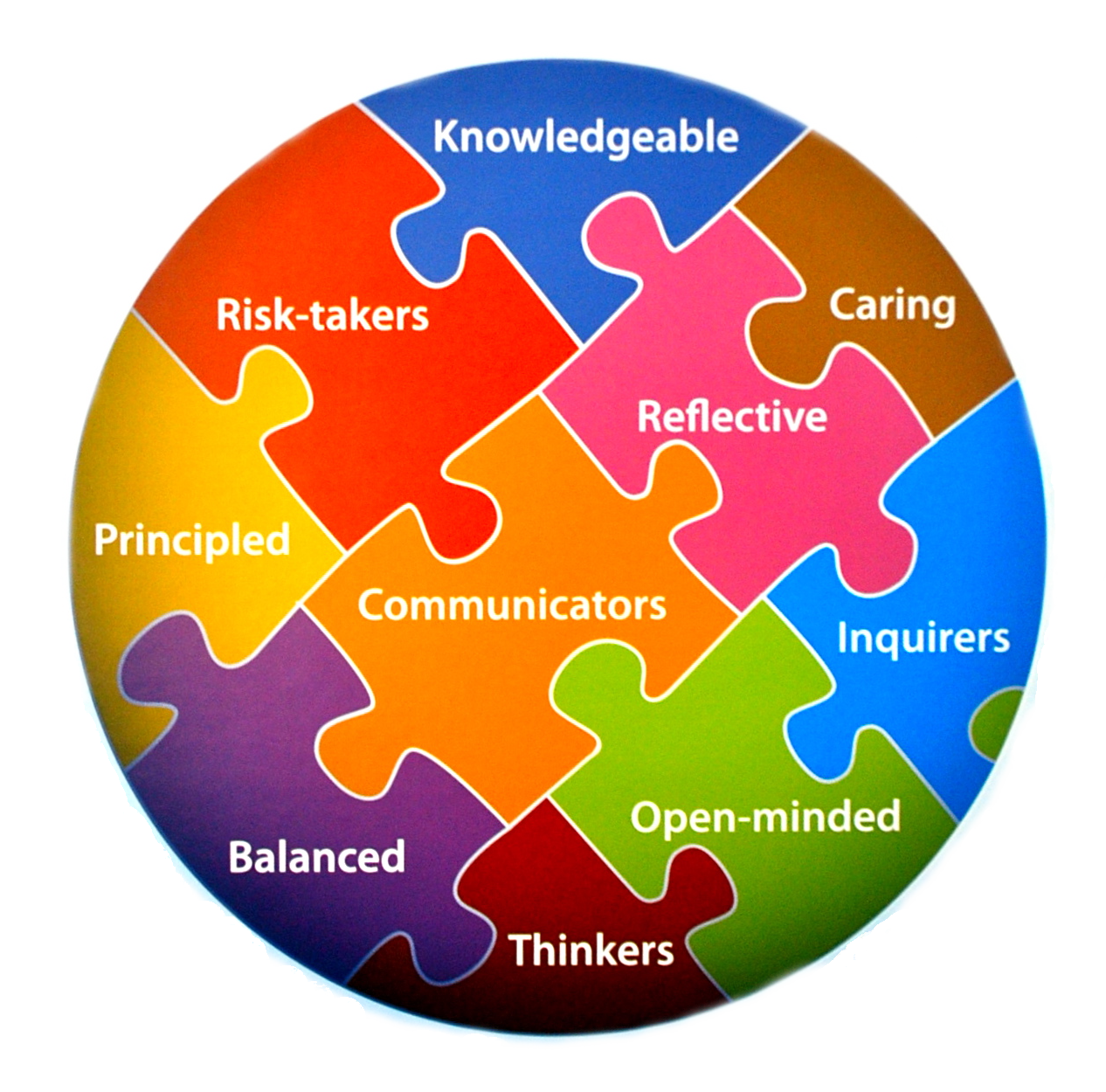
Second, the curriculum of international schools can provide a lot more than that of local schools. For example, the core of an International Baccalaureate Diploma Program comprises of “The Extended Essay”, “Theory of Knowledge”, and “Creativity, Action, and Service (CAS)”. The first one gives students a chance to examine topics of global significance through their independent research and in-depth study. The second one allows students to develop their critical thinking and coherent approach to unify and articulate various academic disciplines. The third one encourages students to engage in art for creativity, physical activity for healthy lifestyle, and service to community for having universal values. [3] The main focus of IB Program is to cultivate the global mindedness and international competence of the next generation to become all-rounded individuals who are prepared to tackle emerging unknown worldwide problems in the 21st century. These elements are what the local education system lacks.

IB learner profile

Third, with the considerable amount of money that parents invest in their children, international schools are able to offer more resources than local public schools. Most importantly, there are at least full-time university guidance counselors for mentoring senior high school students to make the right decision about choosing the most suitable university according to their ability, character, and interest. In addition, international school students have more exposure to universities worldwide as many of them would visit their schools to set up booths for giving out brochures and answering queries. It could have an overarching effect on their career paths as well. In addition, there are numerous enrichment programs for students to select, like intensive English programs in America or England, short-term overseas trips to different continents, or musical performances, which also enhance their capacity of multicultural communication with classmates from various backgrounds.

Fourth, the growing numbers of expatriate communities increase the demand for international schools to accommodate their children.  The laissez faire economic market of Hong Kong attracts many foreign investors to come for business in this free-port metropolis with low taxation. Some of them move there as senior management executives in multi-national corporations or scholars in well-known tertiary education intuitions. According to the survey conducted by Employment Conditions Abroad Limited, expatriates in Hong Kong obtain the fourth highest compensation packages in Asia. [4] In order to attract more of them to move to Hong Kong, the companies usually pay the expatriates rewarding salaries, housing allowances, plus tuition fees for international schools for their kids.

internationalization in edu

After taking the course of “International Education Policy” this semester, I see the different sides of privatization of education clearly by having more profound knowledge about its advantages and disadvantages. What’s your opinion about the international schools then? Do they distort the original meaning of education? At the very least, international schools have given the “consumers” more choice in the education “market”. At the end of the day, however, who can afford it? Obviously, international schools will keep marginalizing students from lower socio-economic status. The gap between rich and poor will just be more visualized in the field of education. People generally have a stereotype that those who can receive “quality education” are from rich backgrounds. If this kind of “privileged education” can be enjoyed by all of the children, what will our future society be like? This leaves us a lot of room to rethink the above questions and strike a balance in the global context.


[1] Yan, C. (2014). Guide to Hong Kong Schools and Education. The Wall Street Journal. Retrieved on       April 19, 2014, from http://guides.wsj.com/hong-kong/guide-to-hong-kong/education/

[2] Hunt, K. (2012, September 3). Elite Schools head east as Asia’s education market booms. Cable News Network. Retrieved on April 19, 2014, from http://www.cnn.com/2012/09/03/world/asia/asia-education/

[3] International Baccalaureate Organization (2014). The IB Diploma Program. Retrieved on April 19, 2014, from http://www.ibo.org/diploma/

[4] Employment Conditions Abroad Limited (2012). Expatriates in Hong Kong enjoy Asia’s fourth-highest pay packages. Retrieved on April 19, 2014, from http://www.eca-international.com/news/press_releases/7706/Expatriates_in_Hong_Kong_enjoy_Asia_s_fourth_highest_pay_packages#.U1MApPldWFU 


Sarah Spiegel's avatar

Gap Year Series, Part 3: Global Citizen Year

In the first two posts of this series I discussed how gap years are beneficial to students and how universities are putting programs in place to encourage them to take advantage of these opportunities. In this post I will focus on an outside organization that is aiming to make gap years universal in the US.

Global Citizen Year (GCY) does not consider itself a gap year program. Gap years have the stigma I have already discussed, so they call themselves a Bridge Year. This way, it is framed not as falling into a gap, but as crossing a bridge that will transport students from the life stage of high school to the life stage of college. GCY prides itself on preparing kids for success in college, careers, and our global economy. They see the American education system as failing to prepare students to succeed in facing global challenges—“High school graduates are entering college underprepared, families are questioning their return on investment, and colleges are facing growing concerns about relevance and retention.”

Why join GCY? Their arguments are convincing. They say being a Fellow helps develop leadership in the form of undergoing training in the US and abroad, becoming fluent in a new language and culture, and learning alongside global experts. They also market themselves as helping students uncover their passions on their own time and terms as well as finding meaningful ways to have an impact through their work. It also allows those who participate to be at the forefront of a movement that GCY sees as reimagining education and leadership in America.

They see themselves as being a step apart from other bridge year programs in several main ways: total immersion, personalized apprenticeships, a diverse cohort, intensive training, and a lifelong network. The Fellows work in community apprenticeships alongside local people where they can learn a language, form lasting relationships, and gain firsthand insight into the issues that shape their hosts’ lives. Fellows come together with staff to participate in monthly training seminars to amplify their learning and to come together as a country cohort to process their experience.

Many people question how a bridge year can more adequately prepare students for college. GCY addresses these concerns by saying that their program is uniquely designed to bridge the high school and college experience through a combination of immersive learning and world-class training in areas directly relevant to the higher education environment. They focus on three main learning spheres: entrepreneurial leadership, global skills, and college and career readiness. Their curriculum is unique, rigorous, and involves two-week departure training, ongoing training blocks, and a one-week re-entry training to tie together the year’s learning. They actually train the Fellows before they leave on Stanford’s campus, which exposes them to the college setting. They also ensure that all Fellows develop intentional learning plans for their year abroad and for their college experience after which allows them to test their interests and define their passions.

They also have a Capstone phase to their year in which Fellows must reflect, analyze, and express their learning and growth. There is a final presentation in their country about the work they’ve done and the lessons they learned over the year as an apprentice and member of the community. Once they are back home they deliver a product of presentation that encapsulates their experience to “instill the power of global citizenship in their friends, family, and home community.” They leave the way they can do this wide open, so Fellows can choose how they want to present their experience.

This all sounds too good to be true, right? Well it is unless you can come up with the money to pay for it. According to their website, all fees for GCY are determined on a sliding scale based on the Fellow’s family’s ability to pay. Over 80% of Fellows have taken advantage of their financial aid packages, including a third whom who have had their year fully funded. Aside from tuition, each Fellow is responsible for any passport and visas, vaccinations, or early withdrawals from the program, but airfare is provided by GCY. Students submit the FAFSA for aid like they would for any college and their aid is determined based on that. Fellows are admitted without looking at their financial situation and any aid awarded is determined after acceptance. If a family was getting no aid the full tuition price would be $30,950, which is roughly around the same average price of tuition and fees for a private university in the US for the 2013-2014 school year.

Fellows are also required to raise $2,500 in the summer before they leave for the fund that supplies their financial aid as well as sign on 50 blog subscribers to follow their year. The website is very vague about how students are supposed to succeed in this summer campaign besides that staff will provide them with guidance and tools to do so. This is something students need to consider before applying for this program as it will require extra time and effort on their part. They also don’t mention anything about what happens if they don’t raise the money. Do students then have to make up the difference themselves?

Despite this, GCY seems like a good option for students who want an organized program to follow on their gap year that gives them tangible results, like a Capstone project. Currently GCY only has programs in Brazil, Ecuador, and Senegal, but they are looking to expand. Programs like this, along with the university initiatives mentioned in my last post, have the potential to change the views on gap years in the US, but there is a long way to go with reversing the negative stigma associated.

Alyssa Buccella's avatar

“Opportunities to Reinvent and Redesign”: The Druk White Lotus School

“Design at its best is not only sustainable, it is holistic.  It considers future needs as well and supports ancient traditions.”

            –The Druk White Lotus School

After watching another documentary for the final meeting of my graduate level class Globalization and Curriculum Implications, I wanted to write a follow-up piece in response to an original blog post of mine: “‘Schooling the World’: The Myth of Progress?” This original posting grappled with many difficult questions and some subsequent feelings of turmoil and sadness regarding the way in which the ever greater spread of a formal, mass, and an essentially western style education system is destroying the last independent and sustainable indigenous cultures all over the world.  The second documentary assigned to my class was a short piece on The Druk White Lotus School in Ladakh, India.  As a graduate student in the field of education, and more specifically Comparative and International Education, it was incredible to watch this piece and see an example of how tradition and modernity can co-exist in harmony, and an education system can contribute to supporting an indigenous community to thrive.

As stated in the documentary, the vision of The Druk White Lotus School is that it will serve as a model of “appropriate modernization.”  What this means more concretely is that the founders of this school and those who have designed and developed it believe it is critical to educate youth in Ladakh about the modern, but also about the merits of their own culture. Underlying the establishment of this school is the belief that one must know their foundation, their past and traditions, to responsibly move forward into a more modern future. [1]

Wonderfully stated by one of the environmental engineers on the project, Francesca Galeazzi, “the school is a product of merging the traditions and the culture of the society with the needs of modern education,” and this is done in a number of ways. [1] Tashi Tsering, the principal of the school and also a teacher, on one hand acknowledges that there is “no option other than providing a modern education” for these children.  They prepare the youth in this school for a challenging future locally or abroad by providing a curriculum based in the English language from kindergarten.  On the other hand, however, there is also a passionate commitment to the premise that these children do not forget where they came from and what their roots are.  They also learn their own language and once every week an instructor visits the school to teach the students moral education and to give them Buddhist mantras to recite. [1]

Buddhist traditions are widespread and strong throughout this culture and this is further reflected in the design of the school buildings and their layout.  It is noted both on the school website and in the film that the vision for the school was inspired by a spiritual leader in the community, His Holiness Gyalwang Drukpa. [1][2] For example, the school assembly courtyard is designed after a dharma wheel in its cylindrical shape with eight pavilions organized out and around a central space and this represents Buddhist teachings.  The way in which these spiritual elements are incorporated into the design of the buildings is remarkable. [1] As noted by Jonathan Rose, one of the architects of the project, the school is a “project planned around a scarcity of resources and the desire to do as little harm to the earth as possible.  Both are Buddhist principles but also, not coincidentally, basic tenants of sustainable design.” [1]

It is this loss of a sustainable relationship with the Earth due to Western education that was emphasized in the documentary Schooling the World: The White Man’s Last Burden.  In contrast, to see the sustainable practices used to develop modern education in this rural area was encouraging.  All of the building for this school is done by hand with little tools and little power.  Importing materials from outside Ladakh puts a tremendous strain on the surrounding Himalayan Mountains, so a commitment was made to using materials locally available.  This would ultimately mean that what was built would be appropriate for the community, would support the local economy, and would utilize the knowledge and labor of local people who knew how to work with the materials being used with techniques developed in India for centuries.  The buildings themselves are designed to capitalize on the use of daylight and ventilation so that they don’t rely on electricity at all for lighting or heating, and in the context of a high altitude desert scare of water, water conservation was essential as was the incorporation of ventilated improved pit latrines. [1]

It was interesting to watch and listen about how, about 25 years ago, the addition of an airfield to the area opened this environment and culture up to tourism.  This was a huge draw for people in the rural communities to come and work serving the tourists and in turn making money, but this also put a tremendous amount of pressure on a traditionally subsistence economy.  The even bigger question from an educational standpoint was about the pressure this put on the youth in the area about how they should learn and develop. [1]

Arup Corporation, the company involved in designing the school buildings, is a large consultancy that is involved in projects all over the world.  While this does mean that there is some foreign influence on this community and their vision for education, both parties talked about the process as one of mutual collaboration, exchange, and learning.  On one hand, Arup was committed to linking very closely with the local community to obtain an intimate understanding of their needs and expectations, rather than just coming in and imposing some fancy Western design.  On the other hand, those from the local community in no way wanted to shut out modern education or ways of life, but rather, wanted to embrace the best of the old as well as the new. [1]

Hopefully, the total of ten awards that have been given to this school thus far is an indication of recognition that this is the type of model that we need to be paying more attention to and replicating. [2] Not just in “developing” communities that are grappling with questions of how to modernize responsibly, but also in “modern” communities all over the world that undoubtedly need to exist more harmoniously with our environment.


References

[1]http://vimeo.com/37135957

[2]http://www.dwls.org/awards.html