Fauzia Nouristani's avatar

Art Education

10-Expressionism-Marc-Stables (1913)
Recently while having lunch with a friend, she showed me a painting that her daughter had done. I asked her if she were studying art and my friend laughed and said something like, “No she knows that won’t get her anywhere, she’s studying engineering.” This statement hit a nerve with me, someone who feels saved by art. But my friend is not the only one with this sentiment. The neoliberal philosophy of education being for the market has been transformed into policy leading to cuts in the art programs all over the country. And these cuts in funds, which result in diminishing value of the arts, have left many students who would want to pursue the arts feeling “less than” the ones who are studying science and math.
With cuts in the school budgets at the federal level, and with education reform emphasizing core subjects and meeting the pressures of high-stakes testing, schools often make the decision to cut the arts out of the curriculum. These cuts may not affect affluent families who are able to compensate with private lessons, but according to a report by National Center for Education Statistics (2012), “economically disadvantaged students, many of whom do not have access to arts education anywhere but in public schools, have suffered a 20 percent reduction in arts education offerings, from 100 percent of schools offering such programs in 1999-2000 to only 80 percent in 2009-2010.”
But the main question that remains is why is art not considered valuable by the education reformers who promote a neoliberal agenda, while art continues to be a necessity for humans.
As Herbert Marcuse (1977), a German-American philosopher, states:
The radical qualities of art, that is to say, its indictment of the established reality and its invocation of the beautiful image (schoner Schein) of liberation are grounded precisely in the dimensions where art transcends its social determination and emancipates the given universe of discourse and behavior while preserving its overwhelming presence.

This quality of the arts that cannot be quantified in tests and measured by standards is the same quality that allows humans to use it as an intangible expression of the innate self. More and more education is geared towards the needs of the market and people are seen as human capital to produce economic value. As a consequence, art educators and art schools scramble to make themselves relevant by arguing for “STEAM not STEM.” Placing the arts in that mix, they hope, will guarantee continual survival. But that comes with a price. Art must transform itself into the image of the mechanistic marketplace. It exists, as STEAM boosters argue, to foster “creativity” and lead to “innovation.” What’s lost in the process, of course, is anything that makes art worthwhile. STEAM turns art into design.
The idea of focusing art education specifically on design is nothing new, of course. Since the Bauhaus seeded American universities like Yale in the middle of the twentieth century, the concept of art as industrial design has permeated art education at all levels. While there is nothing inherently wrong with learning principals of good design, art teachers inadvertently lose track of what art really is. Art and design are not synonymous. Every good work of art exhibits good design, but not every good design can be called art. A pizza box and a Picasso painting are both designed. One of them expresses the human heart. The other one simply leads to heartburn.
As it stands now in American art education, students are often taught the principles of design but not given any particular skill in a medium—traditionally the sign of being a “good” artist. One of the pitfalls of the Bauhaus conception of art was its focus on mechanical reproduction and the alienation of those who made the products from those who designed them. Thus, students are encouraged to learn principles that can enrich their employers. They are not educated to use those same principles to enrich their inner lives. Many, many art students are thus channeled into design programs that function as adjuncts of the advertising industry. But art education in the public schools need not be tailored to the market, since the public system itself is not–despite neoliberals’ best efforts–a market institution. Art education, like the schools themselves as a whole, has a schizoid tendency to cater to the whims of capitalism while at the same time catering to the intellectual, emotional, and creative growth of individuals.
And so it’s up to art teachers themselves to recover and reclaim art for self-expression and meaning-making. Since all that administrators care about is skills, art teachers should see to it that those skills are used in the service of discovering truths about the self and one’s relationship to society and world as a whole. They need to join in the struggle not only against neoliberal education reform but also neoliberalism itself and see themselves and what they teach as the path to emancipation from it.

Reference:
Emma, L. Budget Cuts to Art Programs in Schools http://education.seattlepi.com/budget-cuts-art-programs-schools-1558.html
http://sitemaker.umich.edu/356.burba/education_budgets_for_art_education
Marcuse, H.(1977) Aesthetic Dimension.

Click to access aesthetic-dimension-_-marcuse.pdf

http://nces.ed.gov/pubsearch/pubsinfo.asp?pubid=2012014rev

Sarah Spiegel's avatar

Gap Year Series, Part 2: How Universities are helping

In the first post of this series, I talked about how gap years are not commonplace in the US, but can be very beneficial for students as well as American society as a whole. In this post I will talk about what universities are doing to encourage students to take a gap year before entering college and in the next post I will look at one specific example of an organization whose goal is to make gap years universal.

As mentioned in the previous post, gap years have negative associations in the US, but some colleges are taking strides to reverse this stigma. University of North Carolina, Princeton, Tufts, and others have instituted programs to encourage students to take a gap year for travelling and volunteering around the world before they come to college. Even though the program at Princeton covers almost all costs, American students still “struggle with the idea of separating from the education fast track that parents and educators expect.” It is the norm to go straight into college from high school and it’s hard for students who have worked their whole lives to get into a good school to see a gap year as a viable option. There are many benefits of doing so, as already explained, but combating the negative view of not going straight to college will take a lot of effort on the part of universities.

Princeton’s program aims to start small and then eventually send a tenth or more of its incoming students to a year of social service work in a foreign country before they set foot on campus as freshmen. They see this program as giving students a more international perspective, adding to their maturity and giving them a break from academic pressures. The president of Princeton called it a year of “cleansing the palate of high school and giving them a year to regroup.” They plan not to charge tuition for the year abroad and offer financial assistance to those who need it. Proponents of the program say it allows students to discover themselves and the world before they enter college. Some say they enter college too young and immature and this would be a way to combat that while doing something constructive for the world.

Even college counselors, whose job it is to get high school students into good colleges, tell their clients to take a year off before they go back to school. One such counselor said she had previously only recommended gap years to students who needed to mature, but now is telling most of her students to follow this path. She says she sees students never slow down and breathe and think about the person they want to become before going to college. A psychiatrist at Duke says that freshmen who delay college for a year tend to be more altruistic and empathetic because their brain continues to develop over this time period. He says taking a gap year is beneficial as long as students have a mentor, a plan for intellectual growth, and a commitment to do public service. When they finally come to campus the next fall they will be better prepared to succeed at the college level after living free from parents and the school environment for a while. They will also have a unique perspective on themselves and the world we live in that they would not have gained had they not taken a gap year.

Students who take gap years also have more real-world experience which gives them a leg-up on applying for internships and jobs while in college as well as after. With the job market as competitive as it is, it is important to stand out and this is a perfect way to do that. “Personal growth and a sense of fulfillment and purpose” is something most students get from a gap year that they would not otherwise receive.

Many of these types of programs have aims of helping students in any financial situation still be able to take advantage of them. The program at Princeton uses need-based financial aid and nearly 100 students have participated thus far. UNC offers their students $7,500 for a gap year and Tufts’ program will cover housing, airfare, and visa fees which can add up to $30,000 or more.

These incentives seem to be working at least somewhat because in 2013, 40,000 American students took a gap year, which is a 20% increase compared to past years. But there is still a long way to go. Businesses catering to gap year programs have been booming because of this increased interest. One specifically, called Where There Be Dragons, has had its revenue doubled in the last year to almost $1 million.

Can outside organizations along with universities help students gain this international experience? Stay tuned for my last post in this series about one organization that is trying to do just that!

Nikolai Artemev's avatar

Nomadic Schools in Yakutia (Russia)

Being simultaneously an Asian, Sakha (Yakut), and a citizen of Russia, I face unhidden interest about my homeland and my origin. Influenced by centuries-long stereotypes about Russia, many people do not know how diverse Russia is. It’s almost my daily, unpaid duty to reveal the diversity of Russia to others. When my international friends talk about my country, they use terms “Russia”, “Russians”, “Russian language”, “Russian culture”, imagining one notion instead of many. For instance, not many people use the country’s official name – the Russian Federation. However, only Federation embraces multinational, multicultural, and multilingual Russia. The Russian Constitution starts with: “We, the multinational people of the Russian Federation, united by a common fate on our land, establishing human rights and freedoms, civic peace and accord, preserving the historically established state unity…” However, this diversity often remain invisible.

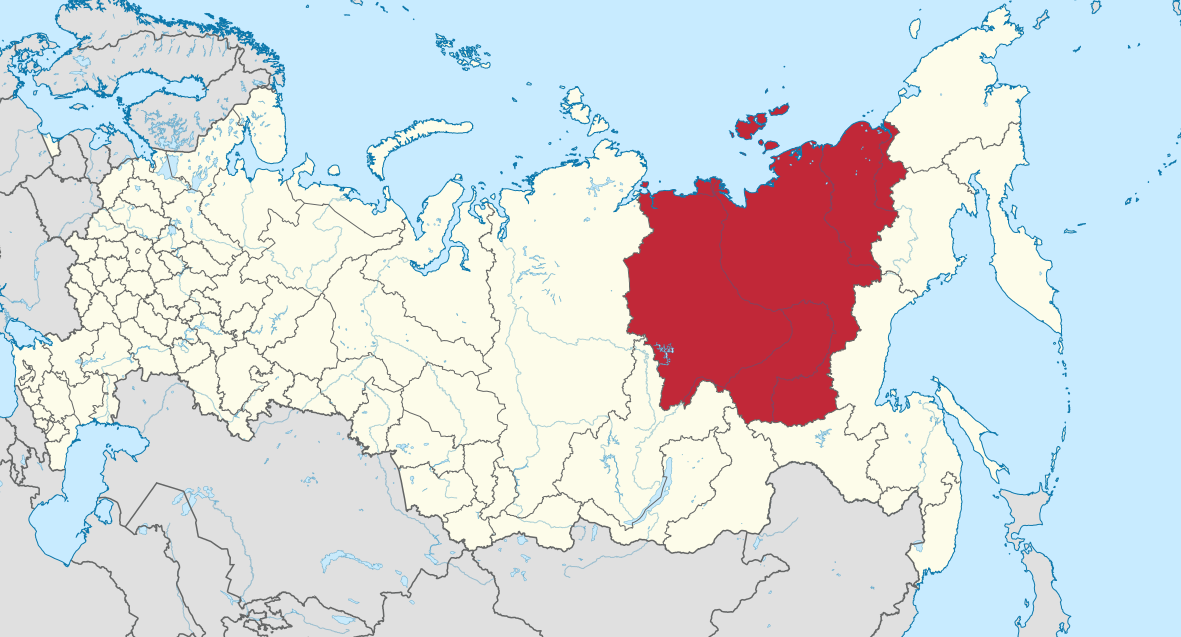
The Sakha Republic (Yakutia) is a unique and special in every way. First of all, Yakutia is the largest federal subject of Russia by its territory and covers three time zones (1/5 of Russian territory, the Sakha Republic territory equal to five times of France territory). Yakutia is a home to several indigenous ethnic groups of Siberian north with their traditional lifestyle, culture, and education.

1181px-Sakha_in_Russia.svg

from wikipedia.org

According to 2010 Census results, 403 nomadic families with 782 children live in the Sakha Republic. Reindeer husbandry is the main occupancy of nomadic families. In addition to traditional family education, there are 13 nomadic schools covering 180 children.

In extreme conditions of the Russian north, nomadic schools are designed to follow reindeer migration routes and provide access to education for children of native Siberians. For reindeer winter routes nomadic schools have buildings, for summer routes they use tents. These schools are supplied with compact computer, chemistry, physics, and biology labs. The curriculum includes classes of native language, Russian, national history, national culture, traditional ways of hunting, fishing, reindeer husbandry, environment protection, etc. Learning of the native language is one of the important goals since all languages of northern peoples are included in the UNESCO Atlas of the World’s Endangered Languages. UNESCO and local government play key roles in nomadic schools development.

index.php

from ysia.ru

A teacher of the nomadic school is required to speak a native language, to be able to teach several subjects for children of various ages, to know traditional nomadic way of life, and be ready to face severe life of the Arctic. In 2006, the Yakutia Teacher Training Institute has introduced a special two-year program (with an option of distant education) to train teachers of natural sciences and mathematics.

Some northern children of Russia attend boarding schools in towns away from their families and traditional way of life. Children have access to the radio, television, and, in some places, to Internet. Not all of these children would like to return and continue traditions. Some of them dream to live in town, to get a university degree, to travel, etc.

Today, an International Arctic School project is being developed by a group of experts from Yakutia and it is undergoing a process of discussion. The international arctic school is expected to provide a university level degree with international standards to students of arctic regions. It is proposed to build an environment-friendly school in close proximity to the native populations.

Notwithstanding many positive outcomes, Russia’s indigenous people continue to face serious issues, including transport, healthcare, etc. I believe that all native indigenous people of the north should be granted a special status; laws and programs shaping this status should be designed together with representatives of Evenk, Even, Chukchi, Dolgan, Yukagir and others to ensure their survival and development in the future.

imgresize.php

from news.iltumen.ru


http://insch.ru/stati/article_post/efimova-d.g.

http://www.wunrn.com/news/2009/05_09/05_18_09/051809_nomadic_files/Nomadic%20Schools%20in%20Siberia-Following%20the%20Reindeer.pdf

http://www.nlib.sakha.ru/knigakan/tematicheskie-kollektsii/kochevaya-shkola.html

http://sakha.gov.ru/node/133389

Sarah Spiegel's avatar

Gap Year Series, Part 1: Why?

In my last post I talked about Study Abroad and how crucial it is for students to gain international experience in the world we live in today. In this and the following posts in this series, I will talk about another kind of international experience for students—Gap Years. This post will focus on Gap Years in general and why they’re beneficial to American students. The next posts will focus on what universities are doing to encourage more students to take advantage of these opportunities and a specific example of an organization devoted to this cause.

I always found the idea of a gap year fascinating, probably because I have always loved to travel. When I heard of my cousins in England taking a year off before University, I was intrigued and also a bit jealous that they got to go off on worldly adventures for a year while I was applying for four (or more) years of sitting in classrooms directly out of high school. Gap years are not common in the US like they are in many countries abroad, although I wish they were. They are typically seen as something only the very rich can afford or an alternative option for an off-track student who is not ready to attend college yet. It’s pretty standard in the US to fast track kids straight to college and not let them take a breath until after that’s taken care of. In doing so, students shut themselves off from the world and only focus on their studies in order to get into a good college.

Gap years allow students to see the world outside of the classroom where they will have to live after they graduate from college. Not only do students “return to school more focused, self-reliant, aware and confident, but they also become part of the global movement to improve the world through their volunteering throughout the gap year.” After college, students rush to get jobs so travelling and learning about the world is not seen as important. Taking advantage of these programs between high school and college is really the best idea for most students. It would benefit them personally and also the greater population, by producing more worldly educated young adults.

Many see the year abroad as a release from the pressures of getting into a good college. Some high schools now hold gap year fairs to inform students about this option, and the number of companies that place students in gap year programs is increasing as well. Some of the growing interest in gap years might be because of the rising cost of higher education. Parents are less willing to pay for their kids to go to school and not know their purpose in life. Around 50% of students who begin four-year colleges don’t graduate within five years, and only 54% will graduate in six years. It’s important for kids and parents alike to make sure that where they go to school is the right place for them and they want to learn.

Since the pressure to get into college is so great, some students need to take a breath when they finally do get accepted. One recent graduate put it well when he said he needed time to “create a person rather than a college student” where he would get to recover from schoolwork and find himself. This also reflects the changing attitude about going away to college as a rite of passage. Some see college as merely a continuation of their very difficult high school experience. The gap between high school and college has shrunk in comparison with previous generations.

I’m of the strong opinion that gap years would be extremely beneficial to both students personally as a way for them to grow and learn about themselves and the world, as well as for American society as whole. These students will come back from their year abroad with a better understanding of the world around them and how they can be a productive part of it. As with Study Abroad, this kind of international experience is vital in today’s globalized world and if it were to become more commonplace in the US I think it could only have positive consequences.

Stay tuned for my next post about what colleges and universities are doing in order to encourage their students to take advantage of gap year opportunities and reverse the negative stigma associated with them!

Alyssa Buccella's avatar

An Effective Source for Change? A Look at Teach for America

Recently, I read a blog post by a classmate of mine regarding this classmate’s own personal experiences with Teach for America (TFA).  This personal account really resonated with me because I found it strikingly similar to my own struggles when I grappled earlier this year with the decision of whether or not to apply for a Teach for America position.

I too was captivated by the idealistic notion of committing my time to making a difference in the lives of underprivileged children.  A Teach for America recruiter expressed her excitement at my interest and offered me the very rosy sales pitch for why I should join.  As I began to do my own research and as I progressed further through my Master’s in Education gaining a better understanding of the education system and of various education policy debates along the way, I quickly became very disillusioned with the idea that I would actually be doing some good as a Teach for America recruit.  With each e-mail that the recruiter incessantly sent me following our conversation urging me to apply, which was also mentioned in my classmate’s blog post as excessive and caused her to perceive TFA as “more commercialized and less competitive,” I increasingly questioned my desire to join until I ultimately chose not to.  It is here that I wish to shed some light on why.

My major is Globalization and Educational Change, and I am interested in just that: change. Education can easily be used as a tool to reproduce the status quo, but whether it is in my own backyard or somewhere across the world, I am passionate about seeing education increasingly being used as a force for empowerment and self-fulfillment.  Ultimately, I am skeptical that Teach for America is contributing to change in the entire system of education in a positive way.

Teach for America is an organization that sees itself on the frontlines of “A Solvable Problem,” and that problem is the achievement gap. [1] TFA representatives believe that all children, even those in poverty, can achieve at the highest levels – despite the challenges they face – if provided the opportunity. [1] This is without question a cause worth believing in, but what do the statistics show?

The Institute of Education Sciences’ National Center for Education statistics cites Hispanics as the fastest growing sector of the United States population. [2] There is certainly a story to be told by looking at fourth grade and eighth grade scores on the National Assessment of Educational Progress (NAEP) from 1990 to 2009 for Hispanic students as compared to White students.  While the score for both groups overall have improved with time in mathematics, the achievement gap has largely remained unchanged. When looking at these groups nationally across all fifty states, Hispanic students have remained on average a steady 21 points behind in 4th grade and 26 points behind in eighth grade.  In reading, when comparing scores over time from 1992 to 2009, the picture is essentially the same with Hispanic students hovering right around a persistent average of a 25-point deficit in both fourth and eighth grade. [2]

In short, the achievement gap is maintaining a stubborn hold within our society, as it has persisted for almost 20 years, essentially unchanged.  Interestingly, Teach for America began in 1990 and has been operating ever since.  While one can argue that the achievement gap has not widened very much as evidenced above, it does not seem as though Teach for America is addressing some of the systemic ways in which our education system in the United States is failing certain populations of students.

I have long questioned whether our system could use more alternative routes into teaching, whether our standard methods of study and certification are ultimately leaving out large portions of individuals that, while they may not be able to afford to get a college degree or a master’s degree, could prove to be excellent in the classroom with some time and experience.  For example, Darling-Hammond, Holtzman, Gatlin, and Heilig (2005) explore how various pathways to certification affect the effectiveness of both TFA and non-TFA teachers in Houston, Texas.  The authors cite that alternatively certified teachers in Houston were particularly effective in raising students’ Aprenda scores, which is a standardized test given to students who receive reading and language arts instruction in Spanish.  Their rationale for this trend was that the Houston alternative certification program enrolls a very large number of Hispanic teachers, many of which are Spanish-speaking and may be better able to support the literary progress of Spanish-speaking students. [3] It is clear here that an alternative pathway to certification may prove to be very valuable in serving this population, especially given that a majority of students in Houston are Hispanic.

It may be argued that Teach for America is another one of these alternative pathways into teaching that ultimately places passionate and capable individuals in the classroom.  However, it is no secret that Teach for America recruits students at the top of their class from elite universities, as they have been criticized for becoming merely a stepping-stone for these elite students on their path to becoming something greater.  These recruits are then placed in ‘hard to staff’ districts to teach the most at-risk youth in the country.  Is this really changing at all the demographics of teachers that have access to the classroom?  While some of these recruits may be successful, others struggle to relate to their students and are unable to meet their specific needs.

The aforementioned article by Darling-Hammond et. al. (2005) also states that experienced teachers are significantly more effective than inexperienced ones, and that there is no instance in which an uncertified TFA teacher is as effective as a standard certified teacher.  I fear how teacher status would be affected by the assertion that no special training is needed to become a teacher and that one simply needs to be generally academically able and have strong subject knowledge to be successful.  Rather than staffing the most vulnerable classrooms with uncertified, and more importantly highly inexperienced teachers, I think we need to focus on the system as a whole and on relevant policies at all levels such as teachers’ pay, working conditions, and support.  We must create a climate in which a diverse pool of well prepared teachers are put into all of our classrooms and are there to stay for the long haul so that all students can benefit as they gain confidence and experience. [3]


References

[1] http://www.teachforamerica.org/our-organization/our-history

[2] http://nces.ed.gov/nationsreportcard/pubs/studies/2011459.aspx

[3] https://coursesite.lehigh.edu/pluginfile.php/1023185/mod_resource/content/1/LDH-teacher-certification-april2005.pdf

Bingyu Zhao's avatar

New Oriental: How to make private tutoring successful in China?

“At New Oriental, our mission is to inspire Chinese students of all ages to improve their lives and expand their horizons through a lifelong commitment to learning. By empowering students to achieve their potential, build self-confidence, and develop a global vision encompassing both traditional Chinese values and modern thinking, New Oriental is committed to training a new generation of business and community leaders.”[1]

—Mission statement of New Oriental—one of the most successful private tutoring companies in China

3068786_095457422701_2

 Recently, students in Lehigh’s International Education Policy class discussed the issues surrounding private tutoring, also called shadow education. The discussion focused on such issues as the phenomenon of private tutoring becoming worldwide, the equity implications of private tutoring, and the professional ethics of teachers who also work as private tutors. However, the situation of private tutoring is quite different in different countries. For example, shadow education functions successfully in Japan, while in other countries (such as Cambodia) private tutoring is not as successful. Although private tutoring has become a worldwide phenomenon, it is still heatedly debated.

After class, I continued to think more about private tutoring in China, and reflecting on how private tutoring has already been permeated into Chinese students’ common lives. Why do I say this? Because New Oriental—the most successful private tutoring company in China— has close relationship with Chinese students. New Oriental mainly focuses on the English language, and provides all tutoring services related to English examinations such as GRE, TOFEL, IELTS, and SAT. Since New Oriental was founded in 1993 in Haidian Distinct of Beijing, it had built 53 short-time language educational schools, 47 book stores, and 500 learning centers in 48 cities in China, and the 2011 statistics showed that there were about 15,000,000 students who had studied in New Oriental.[2] Now New Oriental is becoming more popular than the regular schools, and after connecting its success with the in-class discussion, I would like to highlight four points that make it successful:

 1. Addressing the needs of the Chinese society. New Oriental was founded when Chinese families and students began to be aware about the advantages of the Western education. At that time, the entrance exams such as GRE and TOFEL were seen as obstacles to pursuing education abroad and there was no doubt that the establishment of New Oriental helped those students prepare for the tests. With a good start, New Oriental began to expand its business to more areas, such as SAT training. With more and more Chinese students going to study overseas, New Oriental develops successfully

2. Offering new tutoring modes. “Speed Education” [3] is a strategy which New Oriental has implemented for many years. It means that most courses provided by New Oriental are short-term and last no more than twenty days during the holidays. At the same time, New Oriental learning centers are all over China, increasing access to tutoring services to students. Students don’t have to squeeze their own time from their busy school schedules; instead, they can choose any learning center which is near their homes. If there are still students who cannot attend the classes, they can choose to use online courses. Moreover, although the courses are short-term, the fees are very high. The high fees put pressure on students who are eager to make full use of every coin they pay. They have clear learning goals and concentrate on the entire courses, often resulting in totally different performances compared to their regular school classes. [3] At the same time, during the tutoring classes, teachers always tell some interesting stories about what happened to them in order to catch students’ attention, creating lively class discussions and avoiding boredom in their classroom. [3] Besides, in New Oriental, there is an interesting policy of grading for teachers. [4] In regular schools, teachers grade students; however, the roles change in New Oriental, where students grade and give feedback on each of their teachers’ performance. This policy guarantees the quality of courses and also is convenient for collecting suggestions from students.

3. Teaching the learning skills. Although New Oriental offers short-term courses, students receive plenty of information and curriculum content in the short period, which means that teachers have to make full use of every minute to deliver their knowledge. To make the class more effective, teachers choose to focus on the skills and not only the content of the teaching materials. [5] For example, for the reading questions in GRE, teachers will teach students how to exclude wrong answers and choose the right answers. When students participate in the exams, they have learned how to use the skills to answer the questions correctly. The higher frequencies of high scores on GRE or GMAT prove that those skills are more useful than the traditional teaching ways.

4. Raising the quality of teachers. Unlike those regular schools in China, the educational levels of New Oriental teachers are relatively higher and New Oriental has strict requirements for teacher recruitment. [3] Many teachers graduated from elite universities all over the world, such as Peking University, The Chinese University of Hong Kong, University of Pennsylvania, and others, thus creating an “elite team.” Besides, each teacher in New Oriental should have his or her own featured teaching method, [3] guaranteeing that every teacher is distinctive and thus ensuring unique learning experiences for students.

 Although New Oriental makes much contribution to the development of English in China, its commercial character is geared towards the generation of profit, which is also a reason of high fees. Rather than opening more learning opportunities for all students, New Oriental is only increasing opportunities for students who can afford the cost. This can future deepened social inequities in the area of education.

Furthermore, New Oriental is also criticized for problems in its leadership as reflected in such news titles as “Contradictions appear among administrative leaders in New Oriental”, “More and more teachers leave New Oriental,” and so on. According to the news reports, New Oriental has reached its success because of its collaborative leadership. However, some critics argue that as the company has become more successful and profitable, those leaders have become more arrogant and less collaborative, causing difficulties in reaching agreements and instead insisting on their own thoughts and ideas. [6] Moreover, many New Oriental teachers are becoming more famous and some students choose New Oriental just because they want to see the popular teachers. Those teachers think they bring much profit for New Oriental and they ask for higher salaries. If New Oriental refuses to meet their needs, they often choose to leave. It is a pity that some teachers have lost their original intention of being good teachers, they want to be more famous and earn more money instead.

Nevertheless, there is still a long way for New Oriental to go, and I also look forward to watching it develop in the future.


References

[1] http://english.neworiental.org/publish/portal59/

[2] http://en.wikipedia.org/wiki/New_Oriental

[3] http://blog.sina.com.cn/s/blog_467c6d2401000c3j.html

[4] http://www.neworiental.org/news/teacher/200410/1127378.html

[5] http://www.xdf.cn/info/201301/9266793.html

[6] http://www.gmw.cn/01ds/2002-04/24/02-ECA2111D6CF7873B48256BA50002064E.htm

Bingyu Zhao's avatar

Public school district system in China: Realizing a real equity or bringing a new threat to Chinese education?

In February 2014, Chinese Ministry of Education issued a scheme of school district system, which allows that students to attend neighboring schools without passing examinations. This policy aims at allocating student resources more equably. [1] Since China passed the first compulsory education law in 1986, Chinese education has experienced a lot of reforms, especially in public education. At the beginning, the compulsory education was only defined as “required” education; Chinese students still had to pay certain tuition and miscellaneous fees (including books and school uniforms). To help more students receive education, the revised 2006 education law stipulates explicitly that students will receive a nine-year compulsory education without any tuition and miscellaneous fees in public schools. This education policy ensures that more students attend schools, while also giving students a right to choose their desired schools. This creates a phenomenon of more students choosing to go to key schools [2] instead of regular schools, especially in urban areas. It is common that many key schools set up entrance examinations to select best students, and even ask for higher education fees for students with lower examination scores [3]. On the contrary, regular schools are facing a shortage of student resources, creating a serious imbalance between key and regular schools. In this context, the school district system has been put forward to alleviate this imbalance.

Interestingly, in the development of Chinese education, “advocating for students to go to neighboring schools” is not new. To illustrate it, the China Education Online (CEO) has published a diagram to show the whole process of Chinese education [4]:

— In 1986, the Chinese first compulsory education law states: local governments set up elementary schools and middle schools to ensure that children can receive education in their neighborhood.

— In 2006, the revised compulsory education law states: local governments should guarantee school-aged children can receive education in schools which are near to the places of their official residence.

— In 2010, the “National Long-term Plan for Education Reform and Development” states: to adapt to the urban and rural development, local governments should regulate the school distribution to make it convenient for students to attend neighboring schools.

All the relevant educational laws and regulations mention that students should choose neighboring schools to receive education.

This new school district system emphasizes that students can attend neighboring schools without examinations, which would release pressure on students. At the same time, for those students whose homes are near key schools, they don’t need to compete with other students any more. Moreover, to avoid losing student resources, local governments will also strengthen the efforts to increase the quality of schools in order to balance the school facilities and quality of teachers in different schools. [1] It is hoped that, as a result, parents won’t try to send their children to key schools; and children won’t have to experience the intense competition in their early ages. To some degree, this policy creates a relatively equitable and healthy educational environment.

However, under the schools district system, one of the problems has caught people’s attention. The revised 2006 compulsory education law mentions that students can attend schools near their official residence, which means that students can attend any schools near their homes. The problem is two-prong. First, rich families may want to guarantee that their children receive best possible education and do not hesitate to spend plenty of money in order to buy houses near key schools. [6][7] In Chinese newspapers, news about “extremely high-priced school district housing” has been reported frequently and it is very common that parents buy school district houses in order to send their children to good schools. Second, poor families may be renting houses, which may prevent their children from attending neighboring schools. In other words, equitable access to quality education is still a problem. When children are rejected by schools because of the residential status, the educational system is not equitable any longer and has lost its own original intention. This problem may become a threat for Chinese education unless the government makes some measures to change it.

U472P886T1D101890F12DT20140221150501

Unlike other countries where school district system has been used for years, China still needs better implementation mechanisms. Nevertheless, this system is a good attempt to reform Chinese education and it does bring certain advantages. Will it bring the real equity on public education? Or will it become a new threat? I believe we can find answers in the future.


References

[1] http://xiaoxue.eol.cn/zxrd_9631/20140218/t20140218_1074810_1.shtml

[2] Key schools:  Usually those with records of past educational accomplishment – were given priority in the assignment of teachers, equipment, and funds. They also were allowed to recruit the best students for special training to compete for admission to top schools at the next level. (Wikipedia) 

[3] Tsang, C.M. (2001). School choice in the People’s Republic of China.

[4] http://www.eol.cn/html/jijiao/xiao/msrx/index.shtml

[5] http://www.cbpp.org/cms/?fa=view&id=2783

[6] Wu, X., (2011). The household registration system and rural-urban educational inequity in contemporary China. Population Studies Center.

[7] http://english.people.com.cn/business/8578128.html


Angel Oi Yee Cheng's avatar

Widespread Culture of Private Tutoring in Hong Kong

The course “International Education Policy” under the Master’s Program of Comparative and International Education at Lehigh University has broadened my view in various ways. One of them is the area of private tutoring, which has also been referred to as “Shadow Education” by Dr. Mark Bray.[1] Dr. Bray is the UNESCO Chair Professor of Comparative Education in the Comparative Education Research Centre at the University of Hong Kong whose research focuses on private supplementary tutoring.[2]Before taking this course, I had an impression that private tutoring primarily existed in Southeast Asian countries. However, I have learned that it has been very common in many parts of the world, including Europe and the United States, but just in different forms. It reminds me of many interesting scenarios about private tutoring in Hong Kong, which I will examine in this blog.

Mainly, there are two types of private tutoring in Hong Kong. One is held at home and the other one is held in the education centers, which operate as businesses. For the former one, numerous online websites serve as a bridge between students and private tutors to match the requirements or criteria of both parties.[3]  For the latter one, there are significant numbers of education centers with a wide variety of choices for the public, including classes in musical instruments, dancing, artwork, languages, sports, martial arts, or even actuarial science. Some people may refer to these classes as enrichment programs. Evidently, many learning centers also offer classes in academic areas, like English, Mathematics, Chinese, while some of them purposely assist students tackle local or overseas public examinations, including SAT and TOEFL.  

Many factors contribute to the flourishing industry of private tutoring in Hong Kong. First, Hong Kong’s examination-oriented education system has put too much emphasis on the students’ academic results, which can alter their future academic and professional trajectories. The recent shift from two to one public examination due to education reform from the British to American model further accelerated the explosion of private tutoring as students have much more pressure to only have one chance at succeeding on the exam.[4] However, being a good student does not mean that you can be successful in these examinations. What students need are the techniques and strategies to predict accurately the topics or questions in the upcoming exams according to the pattern from the past papers, as it is almost impossible for students to study all of the materials that teachers provide in the curriculum. By paying tuition for private tutoring, students hope to perfect the specific skills that they cannot learn in public schools because regular schoolteachers are deprived of comparable resources or the time to do that.[5]

Second, Hong Kong parents have the mentality of pushing their children to achieve excellently in academics due to the great influence of Confucianism.[6] Because the birth rate of this city is one of the lowest in the world,[7] “tiger parents” often place all their hopes in one child to become a “Dragon” – an almighty creature in Chinese culture.[8] Before the babies are born, mothers already think about which kindergartens, primary, and secondary schools their children would need to get in, so that they could attend the top universities and have good jobs at the end. Parents also believe that private tutoring could assist their children in learning extra information, so that they could succeed on public examinations. In addition, parents expect their children to become competent in all areas, including languages, art, music, sports, and martial arts. They do not want them to lose at the starting point. As a result, they force their children to enter this vicious cycle of competitions and occupy their free time with many private classes – no matter whether they like it or not, often as early as only one or two years old. Sometimes, kids are tired and cannot enjoy their childhoods due to excessive external study. We can imagine how much academic stress Hong Kong’s next generation needs to bear, especially those who fail in this system. This pressure has been blamed for a growing suicide rate among students with poor academic record.[9]

Third, being a private tutor in Hong Kong can be a lucrative career. I used to be a part-time private tutor for primary school students when I was an undergraduate student to help cover living expenses. Some tutors can even make a living from tutoring services. Recently, Hong Kong has experienced a new phenomenon of some private tutors from education centers becoming famous celebrities like kings or queens. The most successful one is Richard Eng who has become a multi-millionaire! He founded Beacon College and he is considered to be the firstcelebrity tutor in Hong Kong. He wears lipstick for photo shoots and all classes are broadcast live through closed-circuit television.[10] With this career, he is able to drive a half-a-million-dollar Lamborghini car as well as dress himself up with brand-name clothing and manicured hair. [11]

5. private tutor billboard

6. private tutor billboard

Fourth, there is a lack of governmental regulations of private tutoring and many tutors operate no differently than entrepreneurs. The most fascinating phenomenon is the emergence of giant billboards in the most popular places where teenagers go. This creates the image of private tutors as pop stars. Besides, millions and millions of advertisements go online. Glossy brochures and impressive promotional videos are seen everywhere. Some tutoring schools will have full-page newspaper advertisements and television screens in railway stations and on buses to catch youngsters’ attention, claiming to transform failing students into A-grade pupils.[12]  Some tutors even have their own teams of stylists, fashion designers and photographers to make them look perfect and attract students.[13] Lately, with the advancement of technology, students can have additional purchases such as personalized interaction with the star tutor or the tutor’s assistant via Facebook or email.[14]

3. private tutor billboard

1. private tutoring ad. on the bus

Research in other countries suggests that private tutoring is a manifestation of privatization in education. According to a recent study conducted by the Asian Development Bank and the Comparative Education Research Centre at the University of Hong Kong, private tutoring will aggravate social inequalities, divert needed household income into an unregulated industry, and generate inefficiencies in education systems. [15] Sadly, the private tutoring phenomenon also demonstrates how little confidence parents and students in Hong Kong have in public education to lead the achievement of our next generation.  


[1] Bray, M.(2009). Confronting the shadow education system: What government policies for private tutoring? Paris, France: UNESCO International Institute for Educational Planning.

[2] The University of Hong Kong (2014). Faculty of Education – About the Faculty – Professor BRAY, Mark. Retrieved on April 12, 2014 from http://web.edu.hku.hk/staff/academic/mbray

[3] Hon, H.N. (2010). Hong Kong’s Shadow Education: Private Tutoring in Hong Kong. The Hong Kong Anthropologist,  4 (10).

[4] Sharma, Y (2012, November 27). Meet the “tutor kings and queens”. The BBC. Retrieved on April 12, 2014, from http://www.bbc.com/news/business-20085558

[5] Lui, M. (2007, January 28). Hot for teacher in Hong Kong. Los Angeles Times. Retrieved on April 12, 2014, from http://articles.latimes.com/2007/jan/28/news/adfg-sexy28

[6] Ho, E.S.C., LAM, C.C., and WONG, N.Y. (2002). Parents’ Beliefs and Practices in Education in Confucian Heritage Cultures: The Hong Kong Case. Journal of Southeast Asian Education, 3(1), 99-114.

[7] The World Bank Group (2014). Fertility Rate, Total (Births per women). Retrieved on April 12, 2014, from http://data.worldbank.org/indicator/SP.DYN.TFRT.IN

[8] Ministry of Culture, P.R. China (2003). The Almighty Dragon. Retrieved on April 12, 2014, from http://www.chinaculture.org/gb/en_chinaway/2004-02/25/content_45896.htm

[9] Takoaka, N. (2013, December 12). Asian students still ace world rankings. Nikkei Asian Review. Retrieved on April  13, 2014, from http://asia.nikkei.com/print/article/8662

[10] Ng, Y.H. (2009, June 1).  In Hong Kong, Cram School Teachers’ Image Rivals Pop Stars’. New York Times. Retrieved on April 13, 2014,from http://www.nytimes.com/2009/06/01/business/global/01iht-cramside.html?_r=0

[11] Corren, A. (2009, November 10). Hong Kong’s ‘celebrity tutors’ turn millionaires. Cable News Netowrk. Retrieved on April 13, 2014 from http://edition.cnn.com/2009/BUSINESS/11/08/hong.kong.celebrity.tutors/index.html

[12] The Independent (2011, June 5). Exam-obsessed Hong Kong makes celebrity tutors rich. Retrieved on April 12, 2014, from http://www.independent.co.uk/life-style/examobsessed-hong-kong-makes-celebrity-tutors-rich-2293297.html

[13] Lui, M. (2007, January 28). Hot for teacher in Hong Kong. Los Angeles Times. Retrieved on April 12, 2014, from http://articles.latimes.com/2007/jan/28/news/adfg-sexy28

[14] Sharma, Y (2012, November 27). Meet the “tutor kings and queens”. The BBC. Retrieved on April 12, 2014, from http://www.bbc.com/news/business-20085558

[15] Asian Development Bank (2012). ADB Study Highlights Dark Side of ‘Shadow Education’. Retrieved on April 12, 2014, from http://www.adb.org/news/adb-study-highlights-dark-side-shadow-education

Sarah Glickstein's avatar

SAT Blues

Taking the SATS were the most stressful part of my high school career. I had always been a high achieving student, constantly getting A’s and increasing my involvement in as many extracurricular activities as I could. But I knew that I would not be able to apply to my dream colleges if I didn’t master the dreaded SAT. I was fortunate enough to be able to take an SAT class with other students – three hours every week that was meant to teach us how to take the test. I ended up doing quite poorly on the test after that class, and decided to take it again in the beginning of my senior year with no class, tutor, or preparation. I got the same exact score. With my frustration mounting and college applications due asap, I knew that my dream schools were no longer within reach. And of course, being the overly dramatic high school senior that I was, I equated my SAT score with my future success and happiness.

It is difficult for me to make sense of the College Board’s decision to drastically change this test in 2016. This new test will have different vocabulary words, focusing on “high utility” words that appear in more contexts. It will be shortened to three hours with an optional essay “in which students will be asked to analyze a text and how the author builds an argument.” These essay scores will be separate from the other sections of the SAT, unlike the current test that has a required 25-minute essay where students must argue a position. This new test out of 1600 will have a 65-minute critical reading section with 52 questions, a 35-minute written section with 44 questions, and an 80-minute math section with 57 questions. How the College Board came up with these calculations…I will never be able to understand.

In addition, every test will contain a passage from a US founding document. As if the test wasn’t unfair enough for non-US citizens, here the College Board goes again, making it even more discriminatory.

lygsbtd.wordpress.com

lygsbtd.wordpress.com

David Coleman, the president and chief executive of the College Board, spearheaded the process of revising the SAT. He was also one of the key architects of the Common Core state curriculum standards across the nation, and argued that the College Board’s vision of the SAT should parallel that alignment. These changes are being implemented, in theory, because standardized tests have become too disconnected from the work of high school students, and are not preparing students for the information that they may encounter in college. Rather, tests are too full of “tricks” to raise scores and are too stressful for students. While I do agree with this sentiment, I do not see how the foreseeable changes will fix this problem.

Another internal change coming is that the College Board will partner with Khan Academy to provide free test preparation materials to students, hoping to create a more transparent test between students, teachers, and guidance counselors. I can see the benefit of this plan, as standardized tests are meant to be an equalizer in the first place, so it is unfair that some are able to afford “insider secrets” while others must blindly take this test. However, I believe that SAT tutors will quickly adjust to this new test, continuing to offer their test taking tips and services at a high fee for only the wealthy to afford. But any step towards transparency would be a good one to take.

Recently there was a NY Times article about a former Lehigh student, now very successful journalist, who feared getting into Lehigh because of his SAT scores. Because he had previous generations of Lehigh alums within his bloodline, he was able to secure a spot in his graduating class. As a student who once believed that all of my hard work in school was worthless because of my low score on this exam, this article was important for me to read. This article proved that the higher your income bracket, the higher your SAT test scores, and that one’s scores had zero correlation with future success. While this is all very reassuring, it is still hard for me to relive my SAT days. My brother will be affected by these changes in 2016, and I am curious if these changes had affected me, would I have done better? Would my college applications have yielded different acceptance results? I can only wonder.

coe406's avatar

Senior Year Reflections on Teach for America

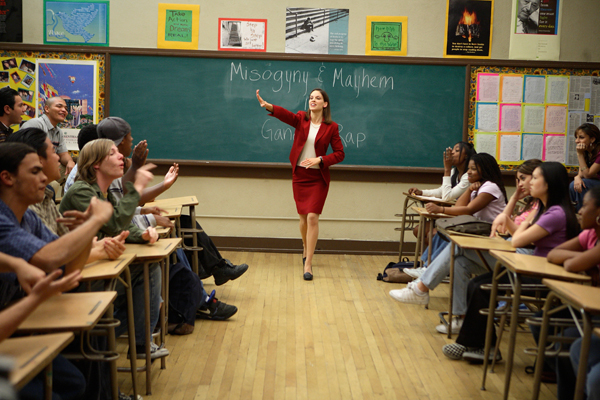
Ever since I first learned about Teach for America, I knew I wanted to participate. Social action, teaching, working with underprivileged kids…I wanted to be Hillary Swank from Freedom Writers. I thought this could be my chance at sculpting young minds through education, which I already know is a powerful socialization tool.

It was not until this year that my praise and glory of TFA shifted. After receiving countless emails from TFA recruits on campus, I decided to meet with one. She, of course, represented everything that is positive and optimistic about TFA: someone whose life was changed by the amazing and talented group of kids and staff that she worked with for two years. Clearly this program changed her so much that she is continuing to work for TFA as a recruiter. But getting multiple emails a week was a bit much, and made TFA seem more commercialized and less competitive.

Throughout this year I have continued to hear more and more criticisms of the TFA program. I’m sure they have always been out there, but I think that I turned a blind eye so that my idealistic program could live on as a part of my future. Recently at Macalester College in Minnesota, a TFA Truth Tour presentation took place with a panel of teachers and former Corps members exposing the truth about TFA’s educational policy. According to Neja Singhal, a former corps member, “…if more college students actually knew what TFA was doing at the policy level, they would not be applying to be a corps member. They would never want to be a part of this organization.” TFA seems to equate student leadership skills with teaching skills – a very sellable message to high achieving students, but not necessarily the reality. During Singhal’s experience, many of the teachers in her assigned school were laid off as TFA teachers were entering, possibly due to the high turnover rate for TFA members.

“They know that we are basically being told by TFA ‘do not rock the boat, smile, be good, do your work, get the tests scores up, be good with admin, but don’t cause any issues because then you’re going to mess up TFA’s name.” (Singhal)

Many news articles disagree with these criticisms, highlighting the powerful impact that TFA can have on teachers and students alike. In the past month, a group of observers from various media outlets observed Nicholas Boatwright’s class: a TFA corps member teaching mathematics. The observers were astounded with Boatwright’s teaching abilities, noting how much these kids respected him, looked up to him, and were improving their scores. Boatwright admitted that he had never thought about being a teacher before getting into this program, despite the amazing experience that he is having.

Why would someone enter into a teaching program if they did not intend to be a teacher?

It is certainly true that Corps members do not receive as much training as certified teachers. In the article and study, Does Teacher Preparation Matter by Linda Darling-Hammond, Deborah J. Holtzman, Su Jin Gatlin and Julian Vasquez Heiling of Stanford Univeristy, findings suggest that teachers “consistently produce significantly stronger student achievement gains than do uncertified teachers.” There is a clear relationship between teacher education and teacher effectiveness – one that I am not convinced TFA is committed to understanding.

In Teach for America and the Politics of Progressive Neoliberalism by Randall Lahann and Emilie Mitescu Reagan, TFA is categorized as an example of “progressive neoliberalism,” holding all of the criticisms of neoliberal education. This article also presents the concern over whether TFA “can truly operate as a corrective agent to the market, given that corps members only receive five weeks of pre-service teacher preparation before entering the classroom as full time teachers.” Though I am not a mathematician, I do not think that those five weeks are equivalent to the amount of weeks required to get an actual teacher certification.

If you had asked me a year ago to describe Teach For America, I would have made you watch Freedom Writers and told you what an inspirational, motivational, and life changing program it is. It used to be a dream of mine to participate in this program. However, as a senior witnessing so many of my classmates applying to this program for all of the wrong reasons and being accepted, my perception has changed. It seems as though TFA has turned into a program that students apply to if they have no other job prospects. Rather than commit because of a love and attraction to teaching, many of my friends have applied simply because they do not know what else to do with themselves next year.

I do think that TFA has great intentions and attracts some of the best students nation-wide. But those are the students who are natural-born teachers. And since I am not certain that I want to become a teacher, the critiques of this program are clouding what I once thought was idealistic.