Sarah Glickstein's avatar

Bilingual Blues

While most college seniors venture to an all-inclusive resort for their last spring break, I decided to take a more rugged approach and backpack through Europe (quite the opposite of all inclusive I might add). It turns out that many people fear the cold of Norway, Ireland, Belgium and Denmark in early March, making it the perfect opportunity to downplay my experience as a tourist. I have never been to Europe before, but I have been to Asia, Africa and South America…not the norm, I’m aware.

In each of the four countries that I visited, I traveled with ease on public transportation, ordered food by speaking in English at restaurants and asked numerous people for directions, simply expecting that they would understand and want to help…and everyone did.

My first trip to Europe made me realize the power of bilingualism, specifically the power of bilingual education. In the European Union there are 24 official languages, and the European Commission has declared a long-term objective to “increase individual multilingualism until every citizen has practical skills in at least two languages in addition to his or her mother tongue.” It is clear from my recent visit that the majority of European citizens are bilingual, learning their second language in school starting at a very young age. And it is not enough to say that Europeans are just bilingual – speaking English in addition to a native language seems to be a given, with additional languages taught alongside English.

The story of the United States is very different from that of the EU. The United States federal government has a long history of eradicating bilingual programs in the hopes of “acculturating” or “saving” certain diverse populations. In the mid-19th century, the US Bureau of Indian Affairs established “a series of English-only boarding schools” in attempt to stamp out native Indian languages. In the beginning of the 20th century, anti-German hysteria caused systematic closings of German language schools. Up until the mid-20th century, Mexican-American students in Texas were segregated from white students in schools. And these trends are continuing. Latino students in Hempstead, Texas were recently told that they would be punished for speaking Spanish in class, and that Spanish would be permanently banned at school.

In 1998, Californians voted to pass a measure called Proposition 227 that placed restrictions on bilingual education. The state government was convinced that “California’s language diversity…was a problem to be eradicated, rather than a resource to be developed.” This is a huge issue in California especially where the Latino population is expected to surpass the white population as the single largest ethnic group in the state. This debate continues on in many states. In New Mexico, House Majority Leader Rick Miera sponsored the “State Seal for Bilingual and Bilterate Graduates” act which “certifies that the recipient is proficient for meaningful use in college, career or to meet local community language need in a world language other than English.” New Mexico continues to fight for the rights of multilingual citizens, and is seen as a leader in multilingual education.

Though New Mexico and various other states in the US are making progress towards more intentional bilingual education, the United States still has a long way to go. The majority of US citizens are not bilingual, and are lucky that English is spoken all over the world. To me, this is more than just a language debate – it is also an identity debate. According to NY Times reporter Peter Teffer, foreign languages can foster social inclusion, diversity and intercultural dialogue. The identity that languages form for children and young adults involves interactions in relationships and communities. Especially given our globalizing world, “languages are a crucial asset for mobility and jobs.”

I’m not sure which is worse: taking away the ability for students to speak their native language in schools or not providing all students with a bilingual education from the start. As this debate continues throughout the world, I can only hope that the United States begins to see value in bilingual education, and works to make changes to the education system in order to accommodate these powerful globalizing forces.

Pablo's avatar

A Tale of Two Cities: Urban Schools and the Lived Reality of Decentralization

“Let’s get a true, fair funding system of all the schools of Pennsylvania, not for one district or another. It’s not fair right now, OK?” Pennsylvania governor Tom Corbett’s words on January 22 came in response to a new state initiative designed to redistribute state funding for education on the basis of need.

Corbett’s move to support the initiative—thought by some to be an election-season pivot three years overdue—addresses a basic issue in the provision of government education: poor regions have fewer economic resources available to drive their educational systems. Financial inequities follow, and funding from higher levels of government is needed to address the chasm in provision.

Decentralization

The fortunes of urban school districts rise and fall on state funding. Yet, since the 1970s, a globalizing trend toward deemphasizing central government expenditures has created a philosophical tension with what University of Wisconsin-Madison scholar Michael Apple termed the “lived realities of real schools.” Structural adjustment—the economic model of decentralization and privatization (designed to lower taxes and free corporate finance for greater market investment)—results in decreased funding from central governments and greater dependence on local resources.

For most urban public schools, high poverty rates mean that local resources are highly limited, and when decentralization also chokes funding from above, uncomfortable contrasts emerge between urban districts and their suburban counterparts. Those contrasts are stark enough to drive even conservative market idealists like Tom Corbett back into the fold of centralized redistributive practice.

An example from Pennsylvania itself illustrates those contrasts.

Two cities: Philadelphia and North Penn school districts

Philadelphia City School District, Pennsylvania’s largest school district, lies just a few miles away from the suburban North Penn School District. Yet, the short commute from urban to suburban sets the two districts worlds apart.

According to data from the 2010 census, median household income in North Penn School District is twice that of Philadelphia City School District: $72,474 per household in North Penn vs. $36,251 in Philadelphia. With half the median income, Philadelphia’s schools need additional funding if their students are expected to meet the same learning standards.

Public data drawn from the National Center for Education Statistics shows how wealthy suburbs comfortably access regional wealth to leverage higher per-student expenditures in the absence of state spending. Philadelphia, a district whose low-income enrollment stands at 77%, derives 35% of its funding from local revenues (with the remaining shortfall made up by state and federal funding), while North Penn, a district with low-income enrollment of 16%, is able to garner 82% of its budget from local revenues and still invest 12% more per student than the city of Philadelphia. The suburb’s lower overall tax rate combined with a higher median income frees up substantial local funding for education.

Public investment

According to Pennsylvania state data, over the ten-year span of time from 2000 through 2010, Philadelphia was steadily outspent by North Penn by an average of 13% per year:

Philadelphia

North Penn

Difference

2009-10

$13,272

14,821

12%

2008-09

12,449

14,586

17%

2007-08

11,963

14,191

19%

2006-07

11,738

13,731

17%

2005-06

11,491

13,380

16%

2004-05

10,834

11,977

11%

2003-04

10,458

10,983

5%

2002-03

9,299

10,318

11%

2001-02

8,748

9,724

11%

2000-01

8,304

9,237

11%

For teachers dedicating their professional labors to these underfunded schools in Philadelphia’s high-risks neighborhoods, compensation is proportionally lower. Classroom teachers in 2012 earned an average of 10.5% less than their suburban counterparts:

Philadelphia

North Penn

Difference

Elementary teachers

$68,177

$75,840

11%

Secondary teachers

$68,015

$74,934

10%

Test data and The Public School Advantage

Test data between the two districts reflects the financial reality. According to data from Pennsylvania’s Department of Education, a gap of 25% which stood between proficiency scores between the two districts in 2010 has since broadened to nearly 30%.

2010

2012

Change

Math

Reading

Math

Reading

Math

Reading

North Penn

84.21

72.83

80.56

73.27

(3.65)

0.44

Philadelphia

58.02

49.39

50.60

43.79

(7.42)

(5.60)

North Penn Advantage

26.19

23.44

29.96

29.48

3.77

6.04

Data points such as these make it difficult for urban schools to argue their case. In 2010, with a 12% gap between urban and suburban spending, the gap in proficiency was 25%. Dollar for dollar, outputs in Philadelphia are significantly lower than they are in North Penn.

According to neo-liberal and libertarian “school choice” advocates, public schools are failing because of low-quality instruction, not funding, and the test scores are thought to reflect it. Since it is open knowledge that students in private schools outperform their public school counterparts on the National Assessment of Educational Progress (NEAP) standardized test, why not simply privatize the system? Libertarians, arguing in favor of privatization on the principle that competition drives economy and increases outputs, find support in these test scores.

The problem with this assumption is that the same NAEP data used to make the this case in reality counters it. Private school advocates and University of Illinois professors Christopher and Sarah Lubienski stumbled upon an inconvenient truth while working with NAEP data. In their book The Public School Advantage: Why Public Schools Outperform Private Schools, the authors write that, much to their surprise, America’s public schools, after disaggregating the data for the populations they serve, consistently outperform private and charter schools.

While the authors have various theories for explaining what they term “the public school advantage” (and they generally attribute this to teacher quality and public accountability), their findings regarding public sector outperformance seem to refute the school choice movement’s standardized test argument. Although private schools provide healthy alternatives for parents who have concerns unaddressed by public schools, a system-wide public-for-private exchange does not suggest any more promising outcomes. In the end, there is no statistical evidence that privatizing urban education will improve student learning.

“It’s not fair right now, OK?”

Public schooling remains the engine of American education, and that engine will not run without adequate funding. For urban schools saddled with providing quality education in low-income districts, revenues from central government remain of vital importance. In this light, Corbett’s January 22 conclusion on limiting state funding for urban schools is well-founded: “It’s not fair.”

Pablo's avatar

Is Equity at Stake in Private Schooling? (Part 1 of 2)

For those watching the educational development media, the rising clamor around “school choice for the poor” has been difficult to miss. The argument goes like this: “There are many low-cost private schools in the world that do better than public schools, and the poorest of the poor are using these schools—so let’s support them.”

In a November article in the Spectator, British educator and Cato Institute scholar James Tooley once again raised the case for private education, arguing that educational rights activist Malala Yousafzai is in fact arguing for private education, not public education. His contention, which was unsupported by any interview with Malala herself, was subject to considerable criticism. That Tooley’s pro-private school piece made its way, openly unsubstantiated, into a major media source like the Spectator, evidences the editorial board’s sense of public interest in the private school advocacy movement.

Tooley is at the spearhead of a major attack on public schools worldwide, an attack driven by disappointing public sector performance, high teacher absenteeism, and frequent reports of corruption and scandal. These proponents of private schools, often backed by libertarian NGOs such as the Cato Institute, argue for a wide array of measures to promote private school alternatives, with options ranging from simply tolerating the existence of private schools to fully disbanding public education and replacing it with private education.

In this post and the following, we will look at private schooling from the vantage-point of equity.

Equity: outputs, not inputs

A central refrain amongst the many justifications for private schooling centers on equity: Private schools give kids a better shot than what they would have otherwise, so taking away public schools decreases equity.

In education, “equity” refers not to making all schools look the same (which would be “equality”) but to helping all children have the same opportunity to succeed. Certainly, beautiful, well-resourced schools and strong teachers increase the odds of success, but, as comparisons of international test results between expensive U.S. schools and their Asian counterparts have shown us, bigger inputs don’t always produce bigger results. In educational development, equity—not equality—is the goal.

But do private schools increase equity? Many have argued long and hard from exactly the opposite perspective.

Private schools as stratifying agents

The arguments against private schooling vary, but most intersect in one way or another with the central premise that private schools lead to increased stratification in society. While no two public schools are the same, inasmuch as they reflect the society in which they are geographically located—thus the de facto “re-segregation” found in many inner-city schools—private schools further stratify the student population. In 2010, Alegre and Ferrer, two researchers at Universitat Auton ma de Barcelona, used data from the Programme for International Student Assessment (PISA) test to argue that the more market-driven a nation’s educational system is, the more stratified it becomes. Rather than acting as a melting pot, drawing together students from diverse social classes and racial or religious backgrounds, private schooling has the opposite effect, self-sorting students by the same variables that mark the boundaries of diversity. Those arguing against the proliferation of private schools argue that economic classes cluster together by schools, with students’ families following their friends, leaving private schools to those unable to afford private education.

Evidence like that produced by Alegre and Ferrer points to the reality that, within a nation’s boundaries, private schools allow inequity to persist and, as private schooling grows, the gaps between the educational opportunities for the wealthiest and poorest grows ever wider.

Looking at equity through a national lens reveals difficult realities for private schooling. The international lens, however, paints a different picture.

Private schools and international equity

Ironically, while private schools can increase stratification nationally, they can also function to decrease stratification internationally. Elite private schools in economically-disadvantaged nations often offer world-class education, with students performing on-par with their counterparts in wealthier nations. While not all children can earn a world-class education in developing countries, at least some of the nation’s young are able to earn the caliber of education needed to prepare globally-competitive professionals.

Test data from Latin America and elsewhere illustrate this point. Most private Latin American international schools following the American educational model test their students against U.S. schools using NWEA’s Measurement of Academic Progress (MAP). In spring of 2012, students in grades 8-10 in these private schools—in a region generally lagging the United States in international comparisons—scored at or above the average scores achieved by U.S. schools. This outperformance is consistent with historical trends.

Elite Latin American private schools

United States norm group

Latin American Private school outperformance

Grade

Math

Reading

Writing

Math

Reading

Writing

Math

Reading

Writing

8

235

222

223

235

222

221

0

0

2

9

239

226

223

236

223

222

3

3

1

10

240

224

223

237

224

223

3

0

0

Ideally, the public sector in Latin America would provide internationally-equitable educational quality as well. However, until this happens, private schools provide a mechanism for providing on-par or above-par educational access for students in these countries.

And the academic equity advantage is not only found in elite schools. Using India and other economically-disadvantaged nations as test cases, Tooley, in his book The Beautiful Treeproduces extensive data from standardized tests to show that even poorly-resourced “low-fee private schools”—schools which cater to families who live in impoverished slums—private schools consistently outperform public schools, bringing children closer to the performance of peers in privileged nations.

Until significant changes transpire in government schools in Latin America, India, and elsewhere, private schools provide something that government schools do not: access to higher-quality education in economically-disadvantaged nations not provided in government schools.

Equity for all students?

Due to the higher test performance found in private schools which cater to the poor, Tooley asserts that the low-fee private school option, in fact, brings greater educational opportunity, even to “the poorest of the poor”. We’ll examine this claim in our next post.

Pablo's avatar

Low-Fee Private Schools: An Equity Conundrum (part 2 of 2)

Reading the headlines from India’s educational news, one could understand if educational planners hardly know whether to rejoice or weep.

On one hand, progress is evident. According to World Bank data, primary enrollment has risen to 90% and secondary enrollment to 63%—an overall enrollment growth of 50% since the early 1990s. The 2012 ASER report concluded that school facilities have seen marked improvement over the last three years since the inoduction of India’s Right to Education Act (RTE).

Yet, the situation remains bleak. MIT researchers in 2010 found that teacher absenteeism in India has consistently hovered at 25% for 15 years with no signs of improvement, and classroom productivity fares no better, with 50% of teachers found sleeping, reading the newspaper, or otherwise not teaching. The 2012 ASER report found that reading and mathematics scores have steadily declined over the last three years, and, despite improvements in facilities, 43.5% of rural schools still have no working toilets.

Parents, what would you do if these schools were your “free” option?

Indian parents have long turned to private schools to escape the steady disappointment of India’s public school sector. British educator and India education scholar Geeta Kingdon found in 2007 that growth in the private school sector in India accounted for 96% of all primary enrollment growth between 1993-2002; the 2012 ASER report noted that such schools today account for nearly 40% of India’s enrollment—and the enrollment numbers continue to rise at a rate of 10% annually.

The private sector is a crucial partner in India’s provision of education. Since the introduction of RTE in 2010, this partnership has in many ways been further strengthened. RTE requires that 25% of all seats in private schools be vouchered-out to less-privileged students at no cost to the parents. Low-income parents have queued up at these private schools across the country, hoping to land their child in one of these all-expenses-paid seats.

For the lucky parents who lottery their way into elite private schools, these public-private partnerships offer a new hope at economic advancement. For those who don’t manage to snap up one of these free seats, there are still other options, thanks to low-fee private schools.

LFP schools: Increased academic opportunity for some…

Low-fee private (LFP) schools, avidly promoted by school choice advocates such as James Tooley, offer opportunities for parents at an extraordinarily low cost. Throughout his considerable body of research, Tool continually finds that these fees aren’t just low—they’re super low, designed to be affordable even to families who live in the nation’s burgeoning slums.

The schools, many of which are not registered with the Indian government—despite RTE requirements to do so—offer on-time teachers and on-task classrooms. Their test outputs, as multiple studies have shown, are modestly-to-substantially higher than those of nearby public schools, despite the fact that such schools are often staffed by untrained and minimally-paid teachers.

LFP schools advertise better academic equity, and Indian parents are moving to them in droves, fleeing the unsolved problems in government schools.

…but not for all

A central problem with LFP schools is that, despite their low cost, they remain out of reach for the poorest of the poor. Canadian researcher Prachi Srivastava, who coined the term “low-fee private school”, summarized the research on LFP school affordability in her 2013 book, Low-fee Private Schooling: aggravating equity or mitigating disadvantage? Srivastava concludes that claims of the affordability of LFP schools for the poorest of the poor have been exaggerated.

Some of the most emotionally compelling research on LFP school affordability is offered the 2010 work by Joanna Härmä. Researching the affordability of rural LFP schools in the Indian province of Uttar Pradesh, Härmä concluded that the school fees, while low, were simply out of reach for the poorest two quintiles of Indian society and that parents chose public schools because they simply couldn’t afford even the lowest-priced LFP schools. She concluded, “No poor families reported LFP schooling as being affordable without ‘cutting their bellies.’”

The continuing research of Srivastava and her colleagues in a growing number of urban slums and poor rural regions around the world has challenged Tooley’s claims to affordability. LFP private schools, while affordable for many of the world’s poor, simply aren’t affordable enough.

An equity conundrum

LFP schools offer a fascinating look into the basic conundrum surrounding lower-cost private schools around the world. It is true that private schools offer parents options for escaping failed government schools: from the moderate out-performance seen in LFP schools to the wild out-performance seen in elite private schools (as discussed in the previous post), private schooling offers children a chance to achieve at higher levels than those found in their local government schools, increasing academic equity in low-income nations by bringing these children closer to their counterparts in high-income nations.

Yet, this opportunity isn’t accessible to all. LFP schools, which cater to the bottom end of the economic spectrum, are unable to fit the budgets of the poorest of the poor. In nations like India, where education is a chief agent for upward mobility, and income disparities between the poor and wealthy continue to rise, the affordability of private schools plays a role in persistent inequities.

James Harding's avatar

Getting into Harvard. The American dream, and other things you need millions for

college_consulting

You can’t ignore the increasing crossover and interconnectedness of Academics and Economics. The relationship between these two are becoming increasingly publicized as mirror images or exclusively linked, but not in the ways you’d think.

The stronger your financial position, the higher the chances you’ll get into an ‘elite’ education institution. The more ‘elite’ institution, the greater the chance you’ll really achieve wealth/status. Many writers have explored this phenomenon; however, none more influential than Ron Unz’s latest article “The Myth of American Meritocracy.”

The article reveals the incredible extent that socio-economical strength dictates ‘success’ under the facade of elite academics to drive the now perceived illusion of work effect and the American Dream. Ron Unz exposes, however frightfully, that it’s not meritocracy being rewarded by seemingly high levels of education and therefore social success, but simple politics and economics. Admissions into universities is not a race for premier student selection of the brightest, most highly trained, and highly disciplined students on the planet, but rather a hand-picked demographic unbelievably slanted toward finances and political background.

This current covert system and policies only perpetuate and further establish what is a modern day cast system furthering the economic divide and perpetuating the social elitism. Distribution of wealth and its perpetuation links universities to further lope-siding the status quo while hiding behind the idea of a ‘well rounded individual.’

‘The Myth of American Meritocracy’ reveals prejudices in methodology of following trends, mountains, and valleys of the discriminated minorities of their time.

Harvard’s endowment is now over 30 billion dollars and the Admissions Department that gives such huge support to squash, rowing, and legacy members does nothing but perpetuate the ‘education’ of the best to keep investing in their future. The higher the social capital the better!

Private tutoring, entry fees in sports clubs, prep testing, entrance into private boarding schools, and high end resources go a long way in supplying a better advantage for admissions. Unz also says “its nice if your dad plays polo with the Admissions Director.”

I’ve always thought America truly has a university for everyone. But unfortunately it’s also becoming increasingly apparent that each individual should only strive to small measures higher than their current social status.

To me, the article and the American education system has a mix of ‘the death of the American Dream,’ the rise of neo-liberalism, and the illusion of how this all makes sense. Ivy Leagues seemingly deal in capital. Initially, Unz describes that Harvard dealt purely in academic capital but this obviously has drastically shifted. It now reflects less importance on academics and more on human, social, and economic capital than ever. ‘Does wealth dictate education or education dictate wealth?’ It seems that Unz isn’t confused.

A further example of this is seen in Mike Russel’s Massive Open Online Revenue Generating Entities, which talks about how elite colleges prioritize status over economics and as admissions reveal this isn’t done through academics.

Elite colleges are ultimately in the business of maximizing status, not revenue. Spending a lot of money on things that return a lot of status isn’t just feasible for these institutions—it’s their basic operating principle.”

American society has similarly made the dream of achieving these institutions beyond the reach of ‘us’ mere peasants.

Who Stole the American Dream? “Pulitzer Prize-winning investigative reporter Hedrick Smith reveals a series of events and decisions that have contributed to today’s disparity in wealth and political power. The country is divided sharply and extremely by money, by political power, and by ideology. We have enormous, gaping inequalities of income. And along with that, we have exaggerated and unequal political power exercised by corporate America and by the wealthy, particularly between elections, through masses of lobbyists working in Washington.”

–U.S. News.

Kate Lapham's avatar

Boyhood and Poverty Are Not Medical Conditions

Cross-posted from Open Society Voices

In the United States, boys are more likely to be diagnosed with Attention Deficit Hyperactivity Disorder (ADHD) than girls, and children covered by Medicaid insurance, an indicator of poverty, are one-third more likely to be diagnosed. This is according to new research from the Centers for Disease Control (CDC) on children aged 4 through 17 years old in the United States.

There is significant variation in diagnosis rates by state, which is unusual for other types of learning difficulty, and opinion is divided on how diagnosis rates differ according to race. Some researchers believe that children from minority groups in urban areas, particularly African American children, are disproportionately diagnosed with ADHD. Although rates of diagnosis have increased as a whole, another study in the peer-reviewed journal JAMA Pediatrics finds the rates of diagnosis increasing more rapidly for white children in high-income families, but concedes there has been a significant increase in the diagnoses among African American children as well.

The interaction of socio-economic status, race, and ADHD diagnosis are complex. Qualitative research indicates that some parents have sought ADHD diagnoses to provide their children with the edge of extra time and drug therapies that enhance concentration. There is also a thriving black market in ADHD drugs as study aids on college campuses. On the other hand, there is evidence that children from minority groups are more likely to be placed in special education or separate classrooms with a non-academic track. Thus, a diagnosis of ADHD can ease the path to higher education and subsequent opportunities for some, while possibly limiting it for others.

Regardless of race or class, the drugs used to treat ADHD are stimulants like Adderall and Ritalin. These drugs can help children who suffer from ADHD. However, the guidelines for diagnosis are loose and set to become looser in the fifth edition of the Diagnostic and Statistical Manual of Mental Disorders to be released in May. While ADHD is a real condition, there is substantial debate in the medical community about what constitutes a level of the disorder requiring medication. The drugs used to treat ADHD are powerful and relatively new. We do not know the consequences in later life for children and teens—whose brains are still developing—of using these drugs now. With such loose guidelines, unsettled professional debates about ADHD and appropriate therapies, and wide availability of drugs, there is ample room for parents and teachers to seek a diagnosis and prescription, when flexibility and additional support in the classroom might also work as solutions.

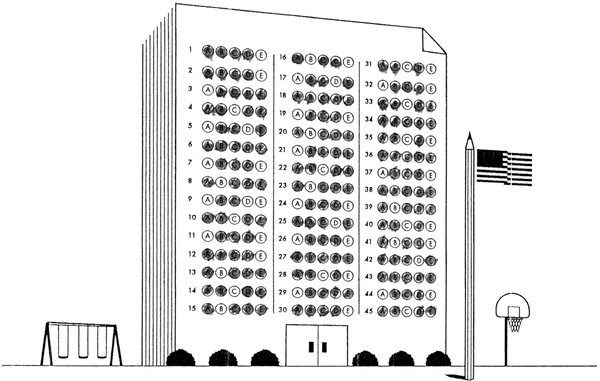
The collision of health and education policy leads to the results revealed in the CDC study outlined above. To understand how we have arrived at such a huge increase in ADHD diagnosis, we must look at both health and education policy. Of course, parents will have an understandable desire to provide the best opportunities for their children. At the same time, the accountability movement has pushed schools to increasingly focus on the reading and math needed for the standardized tests. A rigid focus on test readiness, and the subsequently narrow definition of success in education, puts children who have difficulty sitting still for long, test-driven lessons at a disadvantage.

Although easy to measure, this type of schooling comes at the high cost of failing to support the whole child with educational experiences that encourage cognitive, social, and personal development. This is particularly true in school districts without the budgetary resources to support both test preparation, and a wider, richer range of educational experiences. These are also the types of educational experiences that support the values of diversity, citizenship, and open society.

Provision by the state of early childhood programs, and individualized support for children who have difficulty in school, are expensive. Although both have been proven to provide good results, budgetary incentives in the current economic environment in school districts work against them. Economists like James Heckman have proven that funds invested in high-quality preschool programs yield significant savings in social services later on. However, the costs and savings of these programs are often realized at different levels of government, which can make the initial funding difficult to allocate.

Finally, ADHD drugs are widely available, and their cost is borne by insurance companies and parents, rather than the school system. They are marketed to both doctors and the general public, and there is a strong incentive for pharmaceutical companies to sell these drugs. Like any company in the private sector, they make profits for shareholders by producing a competitive product. This can encourage research leading to advances in science and therapies for children who need them. However, profit motive should not be confused with a public policy response in either health or education, just as purchasing power should not be confused with citizenship.

The collision of these health and education policy trends, with private sector interests also in the mix, risks leading to a fragmentation of services, perverse budgetary incentives, and poorer outcomes for society as whole. This is particularly the case for those most marginalized and least able to navigate this complexity.

Right now, we run the risk—through our health and education systems—of turning boyhood and poverty into medical conditions. This will carry real and damaging implications for education in the United States. The incentives of private companies, along with rigidly defined education goals driven by a free-market agenda, may be conspiring to do a grave disservice to our children through the over-diagnosis and over-medication of ADHD. When medication and test preparation are in danger of replacing rich, supportive educational experiences, we deny children their right to education and risk profoundly damaging our societies now, and in the future.

Fauzia Nouristani's avatar

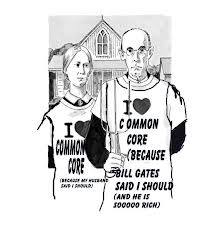
Common Core Standards

commoncore
For the past few decades public education in the United States has been the subject of major political debates and ideological revisions. One of the most controversial, a product of the National Governors Association and the Council of Chief State School Officers is called the Common Core Standards. The Common Core Standards (CSS) cover K-12 language arts & math. The proponents of the Common Core claim that mastery of these standards ensures that graduating high school students are ready to enter college and the workforce. But there are more things at stake with the common core standards than student success. Introduced in June 2010, the Obama Administration made the adoption of the Common Core Standards a requirement by August 2010 for states competing for a share of the dwindling federal funding for education. Why the rush to implement them?
The answer: it’s not about the students. It’s about the money to be made. David Coleman, one of the architects of the new standards, co-founded a non-profit called Student Achievement Partners to specifically promote the CCS. He’s also the head of the College Board and its cash cows, the SATS and AP program. The vastly profitable standardized testing industry receives multi-million dollar support from a variety of sources—chief among them the Bill and Melinda Gates Foundation. A staunch supporter of measures and programs that attack teacher unions and promote charter schools, the Gates Foundation also advocates for an increased role for standardized testing.
The Gates Foundation (along with other private foundations) has funded David Coleman’s College Board to the tune of 31 million dollars. It also has granted over six million to promoting the Common Core Standards. Its partner in the venture, General Electric, has donated a generous 18 million. What these groups have in common is a privatizing agenda that seeks to funnel public money into corporate hands.
But while advocates of the Common Core standards claim they will ensure student success, they don’t seem to care much about students at all. In his presentation at the New York State Education Building in April 2011, David Coleman declared that teachers must tell students: “When you grow up in this world you realize people don’t give a shit about what you feel or what you think.” With an education system geared toward teaching to standard-driven tests, there’s no need for children to learn to think critically or creatively. Is this healthy for a democracy?
Notwithstanding substantial financial backing, the Common Core Standards have come under fire. Diane Ravitch, a Research Professor of Education at NYU and former US Assistant Secretary of Education, states:

President Obama and Secretary Duncan often say that the Common Core standards were developed by the states and voluntarily adopted by them. This is not true. They were developed by an organization called Achieve and the National Governors Association, both of which were generously funded by the Gates Foundation. There was minimal public engagement in the development of the Common Core. Their creation was neither grassroots nor did it emanate from the states…standards are being imposed on the children of this nation despite the fact that no one has any idea how they will affect students, teachers, or schools. We are a nation of guinea pigs, almost all trying an unknown new program at the same time.

Stephen Krashen, an emeritus professor of education at USC says, “The mediocre performance of American students on international tests seems to show that our schools are doing poorly. But students from middle-class homes who attend well-funded schools rank among the best in the world on these tests, which means that teaching is not the problem. The problem is poverty.”
Journalist Valerie Strauss has also spoken against CCS. She writes in the Washington Post that when it comes to Common Core Standards, early childhood education experts and educators were not part of the process.

The promoters of the standards claim they are based in research. They are not. There is no convincing research, for example, showing that certain skills or bits of knowledge (such as counting to 100 or being able to read a certain number of words) if mastered in kindergarten will lead to later success in school. Two recent studies show that direct instruction can actually limit young children’s learning. At best, the standards reflect guesswork, not cognitive or developmental science.

Standards for public education are a fine idea. But when they serve as a Trojan horse to hide a profit-making agenda, we should beware of bureaucracies and private foundations bearing gifts. The common core standards demand a vast increase in testing—and testing isn’t free: school districts must now provide funds for new computers, new software, trainings, teacher hours, and grading services. Students who could be learning new things are instead only learning how to take a series of tests. The question is who will pay for this testing—and who benefits—our children or corporations?

sokuntheapen80's avatar

Low Teacher Salaries Harm Public Education in Cambodia

Corruption

The Khmer Rouge regime (1975-1979) left the Cambodian education system in ruins. Millions of people were killed, including the majority of educated people, scholars, professors, and teachers. Schools were destroyed, libraries leveled, and books burned. Notwithstanding the efforts by the Cambodian government and international development agencies to rebuild the educational systems since the 1980s, the tragedy of Khmer Rouge continues to haunt public education today.

Teachers have played a central role in the education re-building efforts, yet they remain grossly underpaid. According to official statistics, in 2010-2011 there were 88,133 public school teachers in Cambodia, receiving wages in the range of just $50.00 to $100 per month. With this wage they have to teach a minimum of 16-18 hours per week. According to a Cambodia Independent Teacher Association (CITA) study from 2010-2011, primary school teachers received $50 per month with required teaching of at least 16 hours per week, lower secondary school teachers received $75 per month, and upper secondary school teachers received $100 per month. The study also showed that the wages increased by 120% for the primary teachers, 60% for the lower secondary teachers, and 20% for upper secondary teachers so that they could afford a decent standard of living (for example, basic food cost is placed at least $19.80 per month).

With wages at their current levels, teachers struggle to survive. More than 90% of teachers work second jobs in order to support their families. After school hours, many female teaches often sell snacks and phone cards on school campus, while male teachers work as motorbike taxi drivers or other jobs  in order to supplement their incomes.

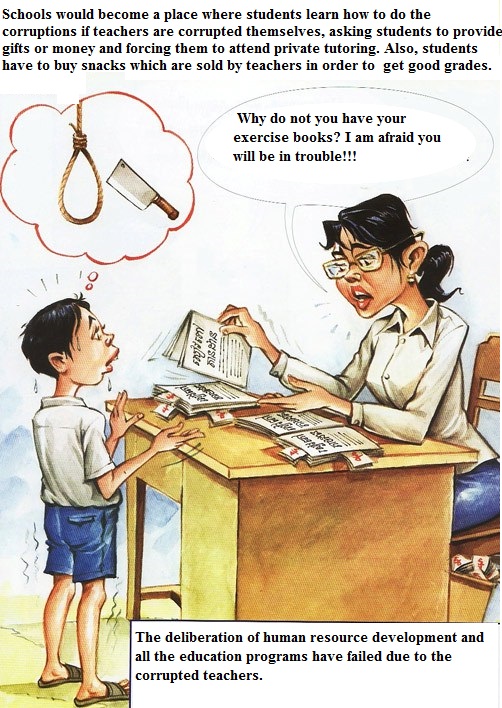
One of the main sources of additional income for many teachers is private tutoring.  One student said: “I can’t pass the test if I don’t take a private tutoring class.” In private tutoring, teachers provide answers to the tests in order to attract more students to pay them. Some students have to drop out of school because they are unable to afford tutoring and subsequently fail their exams (IRIN, 2008). From my own experience as a high school student in Cambodia, I had to take private tutoring classes in order to prepare for the mid-term, final, and national exams. Those sessions were not provided in the formal classroom, but through private tutoring.

To prepare for university exams, we needed “special private tutoring,” which was conducted by the teachers who were involved in issuing the exam questions. We often discussed how important it was to take tutoring with particular teachers who had been known to be involved in the college entrance examinations every year. However, I could not afford it. And so couldn’t many other Cambodian students.

Private tutoring is not the only additional income tool for underpaid teachers, however. Teachers involved in college entrance exam and high school exam also earn money by selling question and answer books before the exams. Usually, one day before the exam the books are available for purchase on the streets almost everywhere especially in main cities. Every year before the national exam day, groups of students buy the question and answer books in order to help them during the exam day and, worse still, the students even pay the teachers during the exam so that they can open the books for the answers. This culture is well known by all but it does not seem to change, despite the many negative repercussions for students and wider society as a whole. Who should be leading the change and how?

Because teachers receive low wages, corruption has become the norm and quality education in unaffordable to many students. This raises many questions. In order to provide a better quality of education, should the first priority of government be aimed towards supporting and motivating the teachers? How could communities support the teachers? And, what have UNICEF, UNESCO, the World Bank, and other international agencies done for Cambodian teachers since they began to work in the country?

Iveta Silova's avatar

(De)Grading Schools: The PennCAN’s Scam

school grading

Last month, public schools across Pennsylvania received a report card. Their grades made the news. In Lehigh Valley, most public schools failed the grade, with Allentown schools ranking 486 out of 490 (and receiving an F overall) and Bethlehem schools ranking 377 (and receiving a D). More affluent Parkland school district fared better, receiving A for its middle schools and B- for high schools.

The local media picked up these “news” very enthusiastically. Their message was loud and clear: our public schools are failing and need to be urgently reformed. Yet, most media spread the “news” without any critical analysis of either the idea of school “report cards” itself, the organization spearheading this initiative, the methodology used to grade schools, or the motives behind school grading. So here is some of the missing analysis.

Let’s first have a quick look at the organization issuing “report cards” to public schools and districts across Pennsylvania – a K-12 education advocacy nonprofit “The Pennsylvania Campaign for Achievement Now” (or PennCAN). Formally launched in 2012, PennCAN is a part of a broader CAN network – The 50CAN – which currently operates in five states (Minnesota, Maryland, New York, Pennsylvania, and Rhode Island) and plans to reach half of the country by 2015. The 50CAN aims to “to restore the American dream one school at a time” through the implementation of the following three policy principles:

  • greater choices
  • greater accountability
  • greater flexibility.

In other words, the 50CAN’s solution to “reforming” public education is to promote school choice, link teacher evaluation to student academic outcomes, expand alternative mechanisms of serving in the teaching profession, and provide school principals with greater control over school staffing and budget. The 50CAN message is straightforward:

 “Close chronically failing schools” and turn them into charters.

The PennCAN’s most recent “achievements” include the support of the Educational Improvement Scholarship Credit and an attempt to reform Pennsylvania’s charter school law. The enactment of the Scholarship Credit brought a $50 million tax credit for businesses that give scholarships to low-income students (from failing schools) to attend private or out-of-district public schools. Simultaneously, the PennCAN has lobbied for “creating an independent charter school authorizer, increasing fiscal and academic accountability for charter schools, and studying problems with charter funding.” While the attempt to reform Pennsylvania’s charter school law has been unsuccessful so far, the PennCAN says it will continue to press lawmakers to reform the charter school law.

With this clear privatization logic driving the 50CAN’s reform campaign, it is not surprising that the organization has turned to school grading as its main advocacy tool. Using student achievement scores, the 50CAN assigns letter grades (A through F) to each public school and district in a state in four categories (including performance gains, overall student performance, student subgroup performance, and achievement gap). While the official rationale is to “provide families and communities with a clear benchmark for how their child’s school or district performs,” school report cards do much more. They (de)grade public schools, thus contributing to the rhetoric of crisis and generating reform pressure to turn public schools into private charters. This is a common strategy of “naming, shaming, and blaming” public schools (e.g., see also an Australian case) without addressing the broader systemic problems such as tax policies favoring the wealthy, residential segregation, immigration policies, lack of health insurance, and many others. As Larry Cuban notes,

“Directing attention to only fixing schools [is] a strategy that is both politically attractive and economically inexpensive compared to the uproar that would occur from attacking those who enjoy privileges from leaving those policies and structures untouched.”

Finally, the 50CAN’s engagement in the business of fixing private schools is driven by important financial motives. Given that education is now the second largest market in the U.S. – valued at US$1.3 trillion – it is not surprising to see the massive mobilization of education entrepreneurs, investors, and private donors around federal funds for education. The 50CAN’s supporters include the Walton Family Foundation, the Bill & Melinda Gates Foundation, Google, and William Penn Foundation, among others.  For many of these supporters, education is simply a commodity and schools represent new investment opportunities.  At the end of the day, it is about advantageous “market deals,” “education transactions,” and “adding value to education portfolio companies.” It is not necessarily about preserving education as a public good.

Increasingly, investment schemes become successfully disguised as “idealized political activism” – an argument that David Sirota makes in a short video below. Perhaps, this is what the 50CAN’s political activism is all about. A scam. The 50CAN’s scam. Or, in the case of Pennsylvania, the PennCAN’s scam.

Viktoriia Brezheniuk's avatar

I am Accepted to Oxford and Cambridge Universities. What is Next?

cartoon

Imagine you are one of the “supposedly” smartest, most hardworking, and not less importantly luckiest people who were accepted to an elite university in either the United Kingdom or the United States of America. You received an acceptance letter to a masters program of your dream. What’s next? The next step is to find funding in case you were not awarded a rare scholarship or financial aid.

Recently, my friend from Ecuador was accepted to a masters program in both Oxford and Cambridge Universities. He posted this news on Facebook and “likes” started to exponentially increase and the words of congratulations quickly filled up his wall. In one of the comments he voiced a concern that the cost of the program coupled with college fees and living expenses is $72,000 and he is looking for funding opportunities.

According to the UN, the average GDP per capita in Ecuador is $4,205. Roughly calculated, it would take more than 17 years for an average Ecuadorian to earn enough money to afford Oxford education if that person will not eat and will live on the streets for 17 years. One might think that those prices are for citizens of the UK, well, according to UN data, GDP per capita in the UK is $35,422. For a superhuman in the UK who does not eat and have no other life goals other than saving for an elite education, it would take 2,5 years to save money to attend Oxbridge. For the sake of comparison, a citizen of Somalia would need 327 years to earn enough money to study at Oxford.

One might disagree with my usage of GDP per capita and roughly generalized conclusions. Well, I do not necessarily draw any conclusions. I simply want to raise several questions: Why do those masters-level degrees cost so much? Who can afford going to those universities? What does it say about values in our society? Does education provide opportunities for a better life for all or reproduces social inequalities and class division that exist today?

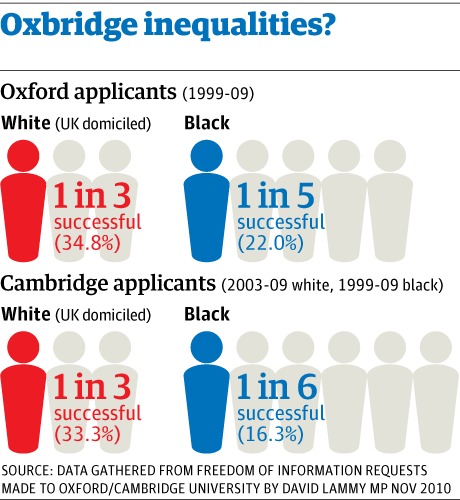
An article published in the Guardian shows a clear picture of the divide between the predominantly “white” upper and middle class applicants accepted to Oxbridge over the poor “black” (see the graph below).  In fact, Oxford’s student body consists of 89% upper and middle class while in Cambridge 87.6% represent top three socio-economic groups.

Oxbridge_Inequality_0712-gif

In “Creating a Class: College Admissions and the Education of Elites,” Mitchell L. Stevens raises important questions about the ways in which prestigious colleges in the United States increasingly accept students based on their ability to pay.

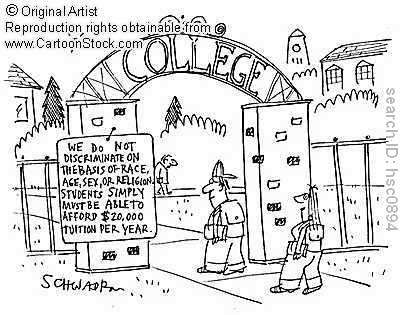
Attending elite universities somehow gives you a mark of quality. You join crème de la crème of the academia or society in general. It somehow validates your opinion and makes your voice heard. While growing up, I always thought of elite universities as the places where talented and smart students study. I did not know that in many cases your purchasing power defines whether you are talented or smart. It is not hard to see how elite universities “create” or “recreate” social structures that favor elitism, which is exactly the opposite to true purposes of education.