Alyssa Buccella's avatar

Student Protests as a Force for Change: The Case of Venezuela

Venezuela

The photo depicted above was shared on a social media website one week ago by a dear friend of mine, with the caption below it reading: “It is an unexplainable pain: your country is slipping through your fingers and there’s nothing you can do to stop it.  You can only hope it pulls through. SOS Venezuela”.

This post is in response to the protests against the government in Venezuela that have been ongoing since early February, the largest to sweep the country in the last decade [1].  After spending five months living and studying abroad in Milan, Italy with her and understanding where she came from and how much it means to her, to see her express such concern over what was happening in her native country was heartbreaking.  This experience resonated with me and made me want to know more so I could gain a better understanding, so I immediately contacted her to discuss the matter and her perspective on it.  She was more than willing to share with me because she feels strongly that while she is in the United States the most important and positive contribution she can make to the struggle is spreading information and raising awareness.  Just one day prior to my conversation with her, a friend of hers in Venezuela was taken by the National Guard for peacefully protesting, was beaten by a guard, and then held for four hours before ultimately being released.  The protests are indeed violent with 13 protesters dead, at least 150 injured, and more than 500 arrested since the protests began [1][2].  Understanding the struggle is both eye opening and thought provoking in a number of ways.

The protests were initiated by students on a campus in the city of San Cristóbal, in the western state of Táchira [3] and spread to the capital, Caracas, on the 12th of February when the student movement organized a peaceful march there [1].  Venezuela is cited as having the fifth highest murder rate in the world, and widespread insecurity and crime, as well as a report of a female student of an alleged rape attempt, sparked students’ demands for increased security measures against violence.  Further, while Venezuela is Latin America’s largest exporter of crude oil, with the world’s largest petroleum reserves, it faces 56% inflation and major goods shortages in essential basic items such as milk, sugar, and toilet paper [1][4].

While students initiated the movement initially, it has swept across the country and the protests now have a middle class majority making demands with the nationwide effort being called “La Salida” or “The Exit”[1][4].  Prominent members of the political opposition group have stepped forward to join the protests including former mayor Leopoldo Lopez, currently in jail awaiting trial for instigating violence, and Maria Corina Machado, a member of parliament [1].  Current President Nicolas Maduro only narrowly defeated Henrique Capriles, elected leader of the opposition, a mere ten months ago [4].  Politics in Venezuela are severely divided and have been all throughout the 14-year presidency of Hugo Chávez, Maduro’s predecessor and mentor [3].  While the opposition leader was initially opposed to the marches, he has since voiced support for and has emphasized peaceful demonstrations [1]

Collectively, protestors have a number of demands.  First, they wish to see the release of leader Leopoldo Lopez from jail as well as a number of other student demonstrators that have been detained [4].  Further, the government has been heavily criticized for the excessive violence it has used in response to the student movement, evidenced by its sending of the National Guard into residential areas, accusations of beatings and torture of arrested protestors, and the rising toll of deaths and injuries that have together been called a violation of human rights, much of which is denied by the government [3].  Protestors want pro-government groups to disarm and to address the aforementioned issues that are plaguing the nation, and attention has been called to a blockage by the government of media sources leading demonstrators to demand the free flow and more reliable sources of information within the country.  Even more extreme members of the opposition want Maduro to step down from office [1][4].

President Maduro refuses to step down and has accused the United States of backing the political opposition in staging a coup [1].  After Maduro forced the removal of three American embassy staff from the country, the United States responded by ordering three Venezuelan diplomats to leave the U.S. [5].  While the United States has a long history of disagreement with the Venezuelan government, it is still the country’s main importer of oil.  Despite this conflict, Maduro is encouraging dialogue with the United States and has been quoted as having said in a speech that “U.S. society needs to know the truth about Venezuela” [5], however it is interesting to consider what “truth” he wishes to convey on an international stage especially given the reported heavy censorship of media within his own country and the denial of much of the violence that is occurring.

Learning more about the current state of unrest in Venezuela and a movement that began first and foremost with students, really led me to reflect on the role of education as a force for change.  As I think about college campuses around the United States today, I cannot help but feel that civic engagement is not as high as it may have been at other points in our country’s history.  While at the level of discourse surrounding education in the United States critical thinking skills are hailed as desired and necessary for innovation and progress, I am skeptical of whether youth in the United States today are encouraged to follow through with these critical skills when it comes to a number of political and social issues.

Education can be just as easily used as a force that maintains the status quo as it can as one for change.  It is intriguing to consider the conditions under which one force takes over the other, and what other factors might contribute to students’ feelings of empowerment to incite change in their own societies.

References

[1]http://www.bbc.co.uk/news/world-latin-america-26335287

[2]http://www.cnn.com/2014/02/24/world/americas/venezuela-protests/

[3]http://www.nytimes.com/2014/02/25/world/americas/in-venezuela-middle-class-joins-protests.html?hpw&rref=world&_r=1

[4] http://www.reuters.com/article/2014/02/24/us-venezuela-protests-idUSBREA1N14E20140224

[5] http://www.nytimes.com/reuters/2014/02/25/world/americas/25reuters-venezuela-protests.html?rref=world&module=Ribbon&version=origin&region=Header&action=click&contentCollection=World&pgtype=article

Viktoriia Brezheniuk's avatar

Occupy the Ministry of Education: Ukraine on the Path to European Education

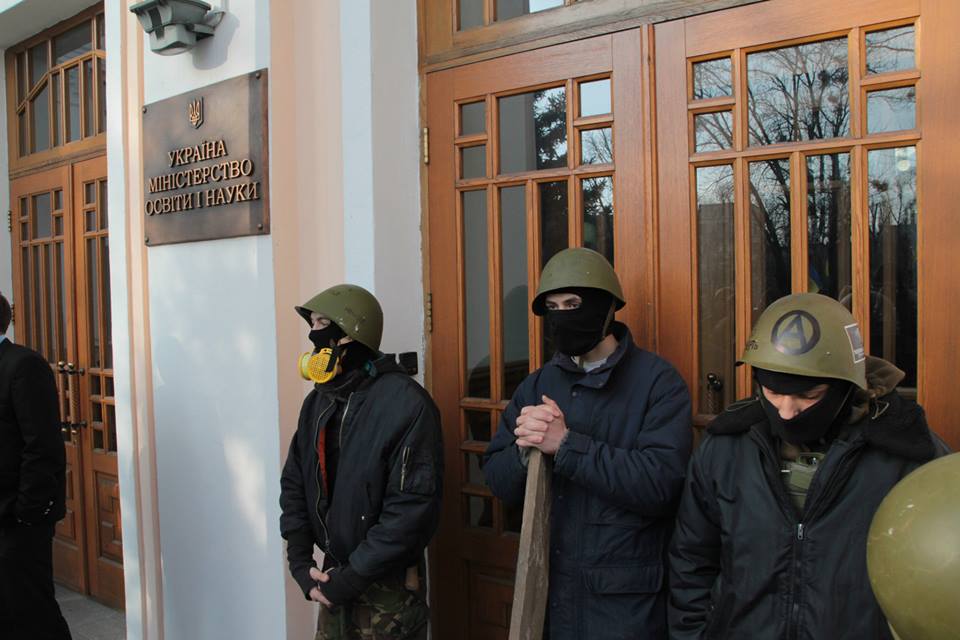
Euromaidan has shown the prospect of a new life to all the Ukrainian people. We have witnessed the power of community action and a possibility of a real change. And Ukrainian students are not willing to let this chance slip! On February 21st, around 200 students occupied the Ministry of Education and Science in Kiev. It started with a peaceful protest with the demand of the resignation of the current Minister of Education Dmitro Tabachnik and his deputy Yevgen Sulima – the two government officials routinely criticized by the student protesters during the last few years.

Students’ patience wore out when Minister Tabachnik did not support them standing up for their rights on Maidan and instead commented that  “students have to attend classes in order to receive scholarships, and after 3 pm they are free to do whatever they please.”  When students entered the building of the Ministry in order to start the negotiations in regards to the new candidate for the post of the Minister of Education, the officials began leaving their work places and refused to discuss students’ demands. Irritated by such an attitude, student activists made the decision to stand up for their rights in a more radical way.

blog photo 1

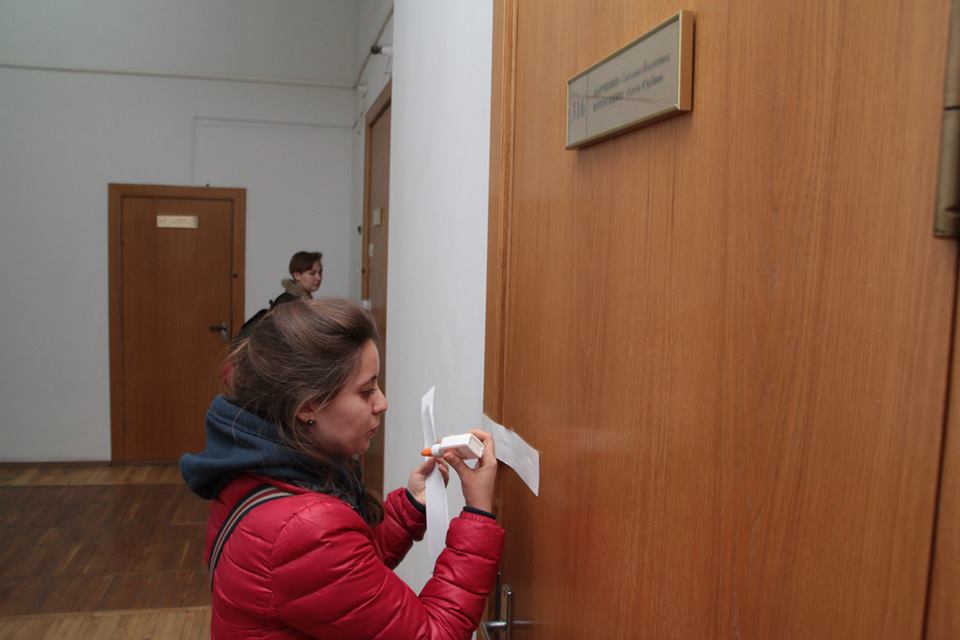
It did not take the students long to tape the office doors, bring in enough food and water to sustain themselves inside the building, and even appoint security people around the Ministry of Education.

blog photo 2

Shortly after, Facebook and Youtube  featured a video in which a student reporter voiced the opinion of the protestors:

“In the past four years we have witnessed incredible increase of corruption, centralization of education, the destruction of autonomy of education institutions, academic environment of Ukrainian intellectual community and the possibility of integration into European environment of higher education and scientific research. We are systemically observing the deterioration of problems in the sphere of welfare of students and teachers. During the administration of this Ministry we have witnessed the decrease of student scholarships, an attempt to increase the GPA for student scholarships in order to not pay them. This is absolutely an anti-social and anti-student policy of the Ministry! Hence, Verkhovna Rada has to consider the resignation of Tabachnik! As of tomorrow, all students will stop giving bribes. Ukraine has to adopt a new and quality European education!”

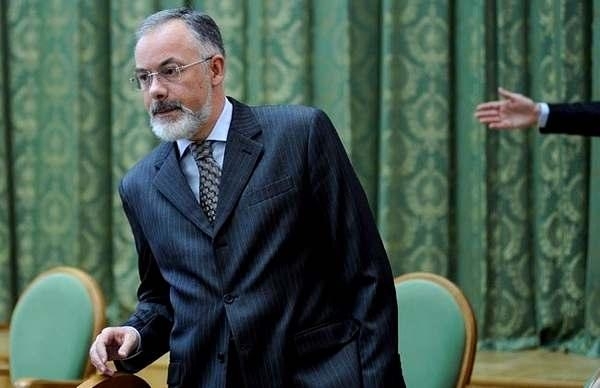
The deputy Minister of Education Oleksiy Dniprov claimed that such destabilization of the work of the Ministry may cause a delay in paying out the scholarships and salaries of teachers. He also argued that “the demands of the activists, or the ‘students’ as they call themselves, are political, and unfortunately, are out of the competence of the Ministry.” However, the actions of the students had an almost immediate result: Verkhovna Rada has fired Tabachnik – twice. On February 23rd, 236 deputies supported the idea of removing Tabachnik from his post.  The next day, when the second voting process took place due to the suspicion of illegitimacy of the first one, the resignation was supported by 249 deputies.

blog photo3

This is only the first step. Only one of the demands of the students has been satisfied and they are not willing to give up. Who is going to take Tabachnik’s post?  The students are demanding that the people who will become heads of the Ministry of Education in the new government have to be experts in their professional area, be respected in the academic world both in Ukraine and in Europe, and initiate a reform plan that will be agreed upon by all the interested parties in the Ukrainian system of education.  In addition, activists proposed three candidates for the position of the Education Minister: the president of Kyiv-Mohyla Academy Serhiy Kvita, the rector of Kyiv Politechnical Institute Mihailo Zgurtovskiy, and a deputy Liliya Grunevich.

The students are not content with the current development of the situation, since the Cabinet of Ministers proposed a new candidate on February 24th – a deputy of the fraction “Svoboda” (eng. “Freedom”) Irina Farion. The students refused to give up the building of the Ministry of Education to Farion because “she has absolutely no skills for or experience in education policy-making and during her work in the Committee on Science and Education she has not taken on any leadership role.”

Now the power to shape the direction in which the Ukrainian education is going to develop belongs to the student activists who will only open the doors of the Ministry to the person who deserves it and who will lead Ukrainian education towards the European standards. Thousands of students are impatient to know who it is going to be.

Sarah Glickstein's avatar

The Hot and Steamy Debate about Sex Education

According to the National Conference of State Legislatures, there are only 22 US states, including the District of Columbia, that require sex education to be taught in public schools. Though sex education has been a controversial topic for years, it has recently been catching the eye of reporters in a slightly different context as before. It seems that events this year have prompted some student pushback on legislation against comprehensive sex education in the classroom, making this a type of youth movement within the field of education policy.

Just this week in Kansas, recent legislature bills were proposed that would require students to obtain parental signatures before receiving sex education in schools. Law enforcers sought an “opt-out policy,” where students and/or parents could decide not to partake in sexual education classes. The proposal currently reads: “No board of education of any unified school district shall provide instruction on health and human sexuality to a student, unless written consent has been received from a parent or legal guardian.”

Parents seemed to be outraged by the potential for their students to learn sexual information, while college students felt quite the opposite. On Monday, college students from all over Kansas came together to lobby against the bills, highlighting the importance of sex education in schools. Students argued that parental consent for this type of education would be difficult. How can a student approach their parents about this issue? Why should kids be put under this pressure to learn valuable information? There should be a safe place for students to talk about these sensitive topics other than their homes, where parents may censor what their children are exposed to. The argument continues over whether the school board should make decisions on sex education or whether it should be up to the legislature. It seems that this piece of a student’s education remains up in the air.

This issue is not just affecting Kansas. This week in Kentucky, about 50 high school students rallied at the capital to voice their concerns and demand more comprehensive sex education, claiming that it would “reduce dating violence and prohibit discrimination against gays and lesbians.” It has been proven that effective sex education can delay the initiation of sex, reduce the frequency, reduce sexual partners, and increase contraceptive use. This is especially important for Kentucky, a state that has the eighth highest teen pregnancy rate in the United States and spends almost $150 million for teen pregnancy related costs. Kentucky’s youth are actively fighting against a traditionally conservative General Assembly, taking control over their own education as well as the education of many others.

A third state that has been in the news about a similar issue this week is Tennessee, where lawmakers have been ridiculing students at the University of Tennessee-Knoxville for hosting “Sex Week.” Sex Week features “a series of lectures about sexuality and sexual health, discussions about sexual violence, dance classes, a drag show, an art show and a poetry slam.” There are also discussions about abstinence and safe sex practices. In past years, state lawmakers have cut state funding to the university because of this week, and students had to rely on private fundraising to keep their vision alive. The week remains a hot topic: students and alumni believe that it is important in providing information, advocacy and resources to the students, and lawmakers believe that the school is wasting their money on provocative and unnecessary causes.

As a student who was lucky enough to grow up with comprehensive sex education, I can definitely see its value. Schools should serve students in more than just a traditional academic sense: students need to learn about situations that they will face as they enter into adulthood. Of course, this topic must be handled with delicacy and care, as it stirs up many sensitive political and religious views. The fact that the youth are speaking their minds around the country proves that we, the student generation, want to learn about this information, and think that others deserve to learn it too.

Sex education is an important part of a student’s overall learning process, and has a great potential to influence students’ future decision making. I am happy to see that youth are taking a stance against these state legislatures and lawmakers. Youth movements around the country are definitely making some noise about these issues, driving change and hopefully creating a generation of more tolerant young adults. My only hope is that those with the funds and power put their political differences aside and see that this type of education is necessary in schools.

Viktoriia Brezheniuk's avatar

“Bolonka for Sovok:” Panacea or Catastrophe?

“Russian Gambit,” “Conspiracy Theory,” “From Mirror-World,” “Irrelevant Offer,” “Creativity or Cretinism,” “Bologna Sauce,” “Bologna Mafia,” “Bologna creates puppets,” “ “Caste system,” and, finally, “Bolonka for Sovok” (“Bolonka” is a Russian slang for Bologna and “Sovok” is a slang term for the USSR)…  These titles crowded the Internet in 2003 when the Russian higher education system lost to the Anglo-Saxon one as a result of the imposed “panacea” from the “more civilized” systems—the well-known Bologna system.  The question is: was this widest and most comprehensive reform in European Higher Education history in fact a panacea or a catastrophe for the post-Soviet countries?

01

The blindfolded teachers thrown into the pit of the unknown after decades of well-functioning Soviet education system and the students unaware of the meaning of dozens of new terms and notions were expected to rapidly get a grasp of the reform, but many failed to embrace it. School administrators who were used to preach collective values were now forced to adjust to individualized learning and the promotion of commercial values. They did not turn out to be the strongest supporters of the reform either.  Being a witness (and fortunately not a victim) of the Bologna reform myself, I would gladly hold a poster “Rich parents-for everyone” together with hundreds of students across Europe protesting against detrimental consequences of the Bologna system in 2005.

The European Integration to Higher Education (2005) reports three major reasons for post-Soviet countries joining the Bologna process: international academic mobility, emerging knowledge economy, and changing patterns of power and influence.

By all means, international academic mobility is critical. Post-Soviet nations cannot exist outside of the information age. The Soviet Union has been participating in international exchanges since the 1960s. In 1991, there were more than 102 thousand foreign students in Soviet universities, and the number of international students coming from former Soviet Union countries grew by 40% in the year 1993 alone. Currently, there number of post-Soviet students studying abroad is rapidly growing. The opportunity to receive a foreign diploma is primarily granted to them by various exchange programs, such as FLEX, Global UGRAD, Muskie, Fulbright, and others.

When the Bologna declaration was initially signed by 29 European ministers in 1999, one of the core declared objectives was to remove the obstacles to student mobility across Europe, and more broadly support the mobility of students, teachers, and researchers. Without offering “a full ride” like the above exchange programs, Bologna pushed national education systems of post-Soviet countries from equality to elitism. Now, the unique opportunity to have one’s degree recognized by European institutions is accompanied by the need for the students to cover the cost of education on their own.  I wonder how many post-Soviet students can afford European education considering that the average PPP per capita in post-Soviet states is US$10,450 as of the year 2012. Moreover, how many of them will actually travel to Europe to study and not choose their itinerary for touristic purposes? Sociologists are pessimistic in their assessment.

35abfc33ff74b8c159fcd4e92323219c7cb56bb6

The second reason for joining the Bologna process was the fact that knowledge has become the major factor of production giving the highest return for investment. According to the policy-makers, a different (neoliberal) approach promises to give a “common European answer to common European problems.” There is little doubt that the Bologna system can meet the challenges that Europe is facing. However, projected on the post-Soviet space, it can only result in the degradation of education rather than progress. The famous “Sputnik moment” of 1957 showed the strength of the Soviet education, which the whole world recognized.  Before the beginning of the 21st century, the Soviet values in education that brought the Union to the highest level of success remained stable: collective work, relatively distant relationships between a student and a teacher, thorough approach to the selection of material.

New reforms changed the core of the process of knowledge acquisition. They promoted deep individualization of student learning supported by the credit system and the ability of a student to calculate credit hours and shape his or her schedule on an individual basis. In this context, every student’s “knowledge database” started to look like a puzzle where the pieces having no logical connection were not chosen by a professional educator. Since the new aim of education became score accumulation, most students would happily follow the path of least resistance with class choice. The credit in the section “Ancient history” could easily be satisfied with a class “Coins of Khan Dynasty” and nothing outside of it. Exciting? Yes, but one might argue the practical significance of the choice. What students also witnessed was impersonalization of educational services that fit into the scheme “buy-sell” and were completely alien for post-Soviet mentality.

images (1)

Finally, post-Soviet countries are expected to react to the shift from “hard power” (territory, military, natural resources) to “soft power” (competitive economy and pro-active diplomacy.) Bologna presented a chance to capitalize on “the countries’ most precious national resource – human capital.  The existence of competitive economy is based on the principles of transparency, decentralization, and accountability. None of the above components currently exist in the majority of post-Soviet states. Education at all levels is plagued with bribery (only in Russia citizens pay up to US$520 million in bribes annually, according to International Higher Education journal). Centralized management and ineffective bureaucratic practices added to the massive corruption do not represent a favorable environment to the success of the offered shift.

I am not writing this blog to argue for preserving the Soviet education system intact. Nor am I denying the presence of positive aspects of the Bologna reform, such as the possibility granted to the “chosen ones” to receive quality European education. However, many problems persist.  Reforms are indeed due, but they have to be realistic, meaningful, timely, and well-planned. Post-Soviet space should not jeopardize national educational traditions in the interest of modernization. The last thing that post-Soviet students and educators need is a fairy tale of academic success that is not only outside of their reach, but also outside of their value system.


Sarah Glickstein's avatar

Snow Days, not Snooze Days

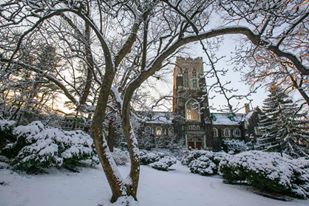
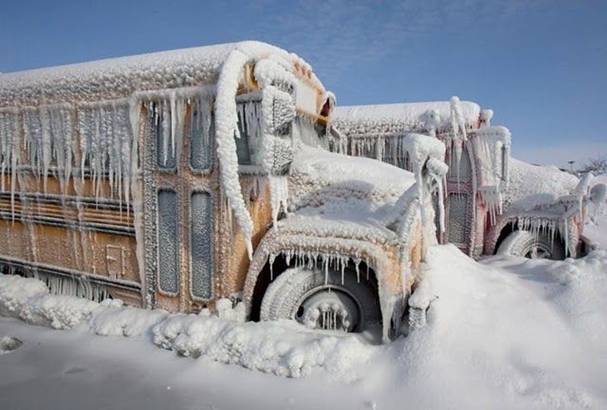
I dread the day when I have to explain to my children what a snow day was. I picture myself saying, “Believe it or not, snow days happened pretty regularly. We would get a call in the morning that school was canceled and jump with excitement knowing that we had a free day to relax, drink hot chocolate, watch movies and play in the snow.” Though in coming to college I thought that snow days were a joy of the past, I was surprised to learn that almost every year at Lehigh, school had shut down for at least one day due to some kind of inclement weather. This year, this trend has culminated in four total shut downs due to snow so far. Ironically, as I sit in my room catching up on piles of work on the fourth snow day of the year, I can’t help but think about how these days affect education policy, and wonder how the use of technology and online teaching will change “snow days” forever.

The entire country has been greatly affected by inclement weather this winter, with many schools around the country losing upwards of 10 days due to snow. As this has never happened before, many states began to take action, holding virtual classroom sessions, uploading digital lesson plans, and requiring students to complete online assignments to stay on track. Some teachers have become even more creative, developing hash-tags and using video chats and Google hangouts to host virtual presentations. This year in Illinois, a state that was hit extremely hard this winter, teachers and students are holding virtual discussions, using technology to their advantage. Similar trends are occurring in Ohio, as policy has changed to say that districts can make up as many as three snow days per year through online lessons. In fact, about 150 Ohio schools have created what they call “Blizzard Bags,” which prepare academic sessions for inclement weather that students can complete through technology at home. Many districts are content with this decision because it prevents days from being removed from summer vacation at the end of the school year.

Part of the reason that schools are so intent on continuing learning and not missing a day is due to funding and standardized testing requirements. In many states, aid is based on actual attendance, and states can lose funding for every day that they fall short on these attendance standards. Dick Flanary, the deputy executive director for programs and services for the National Association of Secondary School Principals, said that “day-to-day school attendance won’t typically affect a school’s finances…but it can lead to cuts if test scores sink, if students or teachers miss a chance to shine or if schools can’t fulfill a grant obligation based on instructional time.” The argument seems simple: that if students are snowed out of school, their learning will be jeopardized.

At first glance, “e-learning” or “tele-school” seems like an ideal option. Students will have the ability to learn from anywhere, not just inside of a school building. But can there ever be a substitute for a teacher? Will these “e-days” just lead to further discussions of online learning as an alternative for traditional learning? And will the pressure to perform on testing to secure funding remain the most prominent argument for these anti-snow days?

Beyond these questions, I think that this discussion brings up many questions of equality and access that many school districts would have to confront to enact such policies in the future. If schools are mandating that students complete assignments online, that means that they must have technology available at home. While it is true that some districts provide technology to every student, this is certainly not the norm. Ironically, I believe it is those more impoverished and underprivileged areas where not every student has access to technology that could benefit from increased learning days the most. Even if students are granted technology from the district, it does not mean that they will have Internet access at home, and would probably have to find an Internet café or similar alternative during the snowstorm. One of the main reasons for canceling school is so that students and teachers will stay safe. This would be compromised if requiring students to trek out in the snow to find Internet so that they could complete assignments – it appears kind of counter-intuitive.

It seems that there is increased pressure to not miss a day of school, which inevitably brings up tough questions of funding, equity, and equal access to technologies. I sincerely hope that policy makers realize that learning does not always have to happen in a classroom. Sometimes the best learning happens on those days spent in your pajamas, baking cookies, watching movies and taking a break from school-stresses.

Pablo's avatar

Is Equity at Stake in Private Schooling? (Part 1 of 2)

For those watching the educational development media, the rising clamor around “school choice for the poor” has been difficult to miss. The argument goes like this: “There are many low-cost private schools in the world that do better than public schools, and the poorest of the poor are using these schools—so let’s support them.”

In a November article in the Spectator, British educator and Cato Institute scholar James Tooley once again raised the case for private education, arguing that educational rights activist Malala Yousafzai is in fact arguing for private education, not public education. His contention, which was unsupported by any interview with Malala herself, was subject to considerable criticism. That Tooley’s pro-private school piece made its way, openly unsubstantiated, into a major media source like the Spectator, evidences the editorial board’s sense of public interest in the private school advocacy movement.

Tooley is at the spearhead of a major attack on public schools worldwide, an attack driven by disappointing public sector performance, high teacher absenteeism, and frequent reports of corruption and scandal. These proponents of private schools, often backed by libertarian NGOs such as the Cato Institute, argue for a wide array of measures to promote private school alternatives, with options ranging from simply tolerating the existence of private schools to fully disbanding public education and replacing it with private education.

In this post and the following, we will look at private schooling from the vantage-point of equity.

Equity: outputs, not inputs

A central refrain amongst the many justifications for private schooling centers on equity: Private schools give kids a better shot than what they would have otherwise, so taking away public schools decreases equity.

In education, “equity” refers not to making all schools look the same (which would be “equality”) but to helping all children have the same opportunity to succeed. Certainly, beautiful, well-resourced schools and strong teachers increase the odds of success, but, as comparisons of international test results between expensive U.S. schools and their Asian counterparts have shown us, bigger inputs don’t always produce bigger results. In educational development, equity—not equality—is the goal.

But do private schools increase equity? Many have argued long and hard from exactly the opposite perspective.

Private schools as stratifying agents

The arguments against private schooling vary, but most intersect in one way or another with the central premise that private schools lead to increased stratification in society. While no two public schools are the same, inasmuch as they reflect the society in which they are geographically located—thus the de facto “re-segregation” found in many inner-city schools—private schools further stratify the student population. In 2010, Alegre and Ferrer, two researchers at Universitat Auton ma de Barcelona, used data from the Programme for International Student Assessment (PISA) test to argue that the more market-driven a nation’s educational system is, the more stratified it becomes. Rather than acting as a melting pot, drawing together students from diverse social classes and racial or religious backgrounds, private schooling has the opposite effect, self-sorting students by the same variables that mark the boundaries of diversity. Those arguing against the proliferation of private schools argue that economic classes cluster together by schools, with students’ families following their friends, leaving private schools to those unable to afford private education.

Evidence like that produced by Alegre and Ferrer points to the reality that, within a nation’s boundaries, private schools allow inequity to persist and, as private schooling grows, the gaps between the educational opportunities for the wealthiest and poorest grows ever wider.

Looking at equity through a national lens reveals difficult realities for private schooling. The international lens, however, paints a different picture.

Private schools and international equity

Ironically, while private schools can increase stratification nationally, they can also function to decrease stratification internationally. Elite private schools in economically-disadvantaged nations often offer world-class education, with students performing on-par with their counterparts in wealthier nations. While not all children can earn a world-class education in developing countries, at least some of the nation’s young are able to earn the caliber of education needed to prepare globally-competitive professionals.

Test data from Latin America and elsewhere illustrate this point. Most private Latin American international schools following the American educational model test their students against U.S. schools using NWEA’s Measurement of Academic Progress (MAP). In spring of 2012, students in grades 8-10 in these private schools—in a region generally lagging the United States in international comparisons—scored at or above the average scores achieved by U.S. schools. This outperformance is consistent with historical trends.

Elite Latin American private schools

United States norm group

Latin American Private school outperformance

Grade

Math

Reading

Writing

Math

Reading

Writing

Math

Reading

Writing

8

235

222

223

235

222

221

0

0

2

9

239

226

223

236

223

222

3

3

1

10

240

224

223

237

224

223

3

0

0

Ideally, the public sector in Latin America would provide internationally-equitable educational quality as well. However, until this happens, private schools provide a mechanism for providing on-par or above-par educational access for students in these countries.

And the academic equity advantage is not only found in elite schools. Using India and other economically-disadvantaged nations as test cases, Tooley, in his book The Beautiful Treeproduces extensive data from standardized tests to show that even poorly-resourced “low-fee private schools”—schools which cater to families who live in impoverished slums—private schools consistently outperform public schools, bringing children closer to the performance of peers in privileged nations.

Until significant changes transpire in government schools in Latin America, India, and elsewhere, private schools provide something that government schools do not: access to higher-quality education in economically-disadvantaged nations not provided in government schools.

Equity for all students?

Due to the higher test performance found in private schools which cater to the poor, Tooley asserts that the low-fee private school option, in fact, brings greater educational opportunity, even to “the poorest of the poor”. We’ll examine this claim in our next post.

Pablo's avatar

Low-Fee Private Schools: An Equity Conundrum (part 2 of 2)

Reading the headlines from India’s educational news, one could understand if educational planners hardly know whether to rejoice or weep.

On one hand, progress is evident. According to World Bank data, primary enrollment has risen to 90% and secondary enrollment to 63%—an overall enrollment growth of 50% since the early 1990s. The 2012 ASER report concluded that school facilities have seen marked improvement over the last three years since the inoduction of India’s Right to Education Act (RTE).

Yet, the situation remains bleak. MIT researchers in 2010 found that teacher absenteeism in India has consistently hovered at 25% for 15 years with no signs of improvement, and classroom productivity fares no better, with 50% of teachers found sleeping, reading the newspaper, or otherwise not teaching. The 2012 ASER report found that reading and mathematics scores have steadily declined over the last three years, and, despite improvements in facilities, 43.5% of rural schools still have no working toilets.

Parents, what would you do if these schools were your “free” option?

Indian parents have long turned to private schools to escape the steady disappointment of India’s public school sector. British educator and India education scholar Geeta Kingdon found in 2007 that growth in the private school sector in India accounted for 96% of all primary enrollment growth between 1993-2002; the 2012 ASER report noted that such schools today account for nearly 40% of India’s enrollment—and the enrollment numbers continue to rise at a rate of 10% annually.

The private sector is a crucial partner in India’s provision of education. Since the introduction of RTE in 2010, this partnership has in many ways been further strengthened. RTE requires that 25% of all seats in private schools be vouchered-out to less-privileged students at no cost to the parents. Low-income parents have queued up at these private schools across the country, hoping to land their child in one of these all-expenses-paid seats.

For the lucky parents who lottery their way into elite private schools, these public-private partnerships offer a new hope at economic advancement. For those who don’t manage to snap up one of these free seats, there are still other options, thanks to low-fee private schools.

LFP schools: Increased academic opportunity for some…

Low-fee private (LFP) schools, avidly promoted by school choice advocates such as James Tooley, offer opportunities for parents at an extraordinarily low cost. Throughout his considerable body of research, Tool continually finds that these fees aren’t just low—they’re super low, designed to be affordable even to families who live in the nation’s burgeoning slums.

The schools, many of which are not registered with the Indian government—despite RTE requirements to do so—offer on-time teachers and on-task classrooms. Their test outputs, as multiple studies have shown, are modestly-to-substantially higher than those of nearby public schools, despite the fact that such schools are often staffed by untrained and minimally-paid teachers.

LFP schools advertise better academic equity, and Indian parents are moving to them in droves, fleeing the unsolved problems in government schools.

…but not for all

A central problem with LFP schools is that, despite their low cost, they remain out of reach for the poorest of the poor. Canadian researcher Prachi Srivastava, who coined the term “low-fee private school”, summarized the research on LFP school affordability in her 2013 book, Low-fee Private Schooling: aggravating equity or mitigating disadvantage? Srivastava concludes that claims of the affordability of LFP schools for the poorest of the poor have been exaggerated.

Some of the most emotionally compelling research on LFP school affordability is offered the 2010 work by Joanna Härmä. Researching the affordability of rural LFP schools in the Indian province of Uttar Pradesh, Härmä concluded that the school fees, while low, were simply out of reach for the poorest two quintiles of Indian society and that parents chose public schools because they simply couldn’t afford even the lowest-priced LFP schools. She concluded, “No poor families reported LFP schooling as being affordable without ‘cutting their bellies.’”

The continuing research of Srivastava and her colleagues in a growing number of urban slums and poor rural regions around the world has challenged Tooley’s claims to affordability. LFP private schools, while affordable for many of the world’s poor, simply aren’t affordable enough.

An equity conundrum

LFP schools offer a fascinating look into the basic conundrum surrounding lower-cost private schools around the world. It is true that private schools offer parents options for escaping failed government schools: from the moderate out-performance seen in LFP schools to the wild out-performance seen in elite private schools (as discussed in the previous post), private schooling offers children a chance to achieve at higher levels than those found in their local government schools, increasing academic equity in low-income nations by bringing these children closer to their counterparts in high-income nations.

Yet, this opportunity isn’t accessible to all. LFP schools, which cater to the bottom end of the economic spectrum, are unable to fit the budgets of the poorest of the poor. In nations like India, where education is a chief agent for upward mobility, and income disparities between the poor and wealthy continue to rise, the affordability of private schools plays a role in persistent inequities.

Sharky's avatar

The Unending Lithuanian Educational Reforms: Student Vouchers

Continuing the topic on Lithuania’s educational reforms from my last post, I will take a more detailed look at the student voucher policy for financing education in Lithuania. But first, some background on how the concept originated, what student vouchers are, and what are the pros and cons of the student voucher policy.

History

The origins of the student voucher idea can be traced back to 1792, when Thomas Paine, a British economist, proposed a “voucher scheme” – a special allowance of 4 pounds per year for each child up to the age of 14 – in order to finance education. The first education financing policy that most closely resembled student vouchers was implemented in the state of Vermont, in 1869. This policy allocated funding for rural families who wanted to send their kids to schools in other regions, essentially giving them school choice; a similar policy was adopted in Maine soon after, in 1873. Finally, the first one to define and describe the modern concept of student vouchers in detail was the American economist Milton Friedman, in his article on “The Role of Government in Education” in 1955. Even though the US is the biggest proponent of free market principles, and even though it has the two oldest student voucher policies in VT and MA, the policy is not widely implemented throughout the country today, with only 12 states employing a partial student voucher policy.

Concept

Despite the different definitions and implementations of student vouchers, the basic common premises behind the concept are the following:

  1. School choice – allowing parents, as the “true customers of the service of education”, to choose freely to which school to send their children.
  2. Competition between schools – introducing more effective implementation of funds, improving the quality of education, and creating a wider variety of educational options.
  3. Higher degree of parental involvement – increasing the personal interest of parents in the educational process and making them more responsible for their children.
  4. Better access to education for underprivileged and special-needs families.

The first two premises are highly influenced by free market principles, extending competition and efficiency to the realm of education. However, there are many criticisms of using economically based market principles in education, leading to controversy and debate.

Pros and Cons

The debate on student vouchers as an educational financing policy can be summarized in the list of pros and cons below.

Pros Cons
More effective allocation of funds in schools due to competition In the long term, only the popular schools benefit, while the least popular ones incur higher costs
Increased transparency of educational financing, due to the elimination of individualized subsidies and the need for lobbying Due to the need to attract as many students to a school, administrators and teachers are more willing to “give more slack” to underperforming students or even create fictitious students to maintain funding
Increased quality of education due to competition The intended increase of quality of education due to competition might backfire, especially when the options of schools to choose from are limited
Emergence of private schools and the ability of public schools to learn better practices from the private sector Underprivileged or special needs students might still not be able to choose better private schools due to their entrance requirements
Increased variety of schools in terms of informal education options Higher curricular freedom of private schools might undermine the national educational goals and strategies
School choice Increased social inequality
Increased response of school administrators to the needs and wishes of students and parents Any fluctuations in student numbers and, hence, funding, creates a feeling of instability and employment uncertainty for teachers
Higher parental involvement in the educational process of their children

Lithuania

The student voucher educational reform was introduced in Lithuania starting 2001, with a voucher of 1521 LTL (~570 USD) per student. This amount has more than doubled to 3800 LTL (~1430 USD) for the 2012-2013 school year; however, this does not reflect the dramatic decrease in the numbers of students in schools in the emigration-age of post-global-financial crisis and free migration within the EU.

The effects of the student voucher policy in Lithuania are seen to be more negative, or insignificant, than positive. The main critics of the policy are teachers and teachers unions, who experience chaotic and unstable working conditions with the decline in student numbers, especially in rural areas. In small towns and villages, there are not enough schools that could benefit from competition, causing the disappearance of small schools and firing of teachers.

Moreover, the actual distribution of student voucher funds is questioned, as school administrators use the funds not for professional teacher training, but for general expenses, such as remodeling facilities or paying utilities. The current main allocation of student voucher funds – 95% for teacher salaries – is also questioned, with some political attitudes to completely abolish the student voucher policy.

All in all, it is very important to consider the specific context of a country when trying to implement such policies as student vouchers. It is reassuring that the policymakers of Lithuania are aware of all the pros and cons of student vouchers and that a critical debate on the issue is present.

Aftan Baldwin's avatar

The Current Debate on Universal Preschool in the U.S.

head start

It’s a common philosophy that, to fix the issues of the world, the world needs to invest in its youth, as they are the future. In President Obama’s 2013 State of the Union Address, he announced his plan to push for universal preschool across the US. He proposes $75 billion be spent on universal preschool in the next 10 years, through his 2014 budget that has yet to pass through congress. It calls for an almost 100% increase in cigarette tax to pay for the program.

This additional preschool funding would be in addition to the 50 year-old Head Start program. The Head Start program is a federally funded preschool program aimed at serving the children of low-income families. Its annual budget is around $8 billion; a majority spent directly on services and is primarily run through local nonprofit organizations. It was started in 1965 under the Johnson administration as part of the Great Society campaign, which was aimed at eliminating poverty and racial inequalities. Most of the children who are in Head Start range between the ages of three and five. Early Head Start is also offered for infants and toddlers.

The research done on the effectiveness of the Head Start program, and other high quality preschool programs, is very mixed. It’s often the private organizations that claim the effects of a quality preschool program wear off within a few years, while academics, on the other hand, believe there are many long-term effects that cannot be seen right away. James Heckmen, a Nobel Prize winner for economics, researches the disparities in achievement between children with low and high socioeconomic backgrounds. According to New York Times, his research “confirms that investment in the early education of disadvantaged children pays extremely high returns down the road. It improves not only their cognitive abilities but also crucial behavioral traits like sociability, motivation and self-esteem. Yet, the Organization for Economic Cooperation and Development (OECD) found that the government spends three times the amount on higher education as it does on preschool. Recently, the Daily Show with Jon Stewart exposed some of the bias hidden behind the research “findings.”

http://www.thedailyshow.com/watch/wed-march-6-2013/kindergarten-stop

JaneErvin

Jane Ervin is the current president and CEO of Community Services for Children, the nonprofit that runs the very successful Head Start program of the Lehigh Valley in Pennsylvania. In a recent conversation, she expressed her view of the public opinions on preschool and Obama’s plan. She believes that people are not interested in paying for children in poverty because it’s not their responsibility to help the teenage mothers or the illegal immigrants. What they do not understand is that these children will grow up and keep contributing to the culture of poverty rather than contributors to society. People are not brave enough to step up and fix the problems knowing the results will become visible in 15 or 20 years. Politicians won’t focus on it because there are so many other things that affect people’s lives. This has a negative impact on children and families who are out of sight, and therefore out of mind. It’s difficult to get people to care about children’s education when the economy is under attack. Jane believes everything will come down to the practicality of funding and ability to convince others of the importance of preschool education.

I think that Jane may be right. As we continue to compete with each other, we become only concerned with the things we have and the money we make. We are no longer concerned with those who fall behind and cannot pick themselves back up. And the gap is increasing. Jane reported that 26% of children are currently living in poverty in the Lehigh Valley. When she started at Community Services for Children six years ago, it was 20%. With the world’s population growing as rapidly as it is, we can no longer afford to not invest in our youth.

More to come in my next blog, on my talk with Jane Ervin!

Viktoriia Brezheniuk's avatar

I am Accepted to Oxford and Cambridge Universities. What is Next?

cartoon

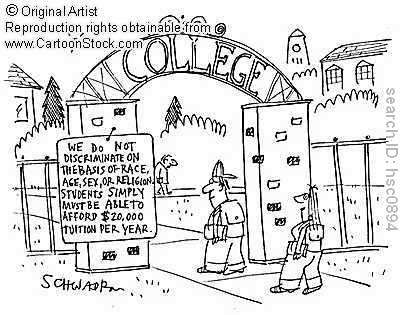
Imagine you are one of the “supposedly” smartest, most hardworking, and not less importantly luckiest people who were accepted to an elite university in either the United Kingdom or the United States of America. You received an acceptance letter to a masters program of your dream. What’s next? The next step is to find funding in case you were not awarded a rare scholarship or financial aid.

Recently, my friend from Ecuador was accepted to a masters program in both Oxford and Cambridge Universities. He posted this news on Facebook and “likes” started to exponentially increase and the words of congratulations quickly filled up his wall. In one of the comments he voiced a concern that the cost of the program coupled with college fees and living expenses is $72,000 and he is looking for funding opportunities.

According to the UN, the average GDP per capita in Ecuador is $4,205. Roughly calculated, it would take more than 17 years for an average Ecuadorian to earn enough money to afford Oxford education if that person will not eat and will live on the streets for 17 years. One might think that those prices are for citizens of the UK, well, according to UN data, GDP per capita in the UK is $35,422. For a superhuman in the UK who does not eat and have no other life goals other than saving for an elite education, it would take 2,5 years to save money to attend Oxbridge. For the sake of comparison, a citizen of Somalia would need 327 years to earn enough money to study at Oxford.

One might disagree with my usage of GDP per capita and roughly generalized conclusions. Well, I do not necessarily draw any conclusions. I simply want to raise several questions: Why do those masters-level degrees cost so much? Who can afford going to those universities? What does it say about values in our society? Does education provide opportunities for a better life for all or reproduces social inequalities and class division that exist today?

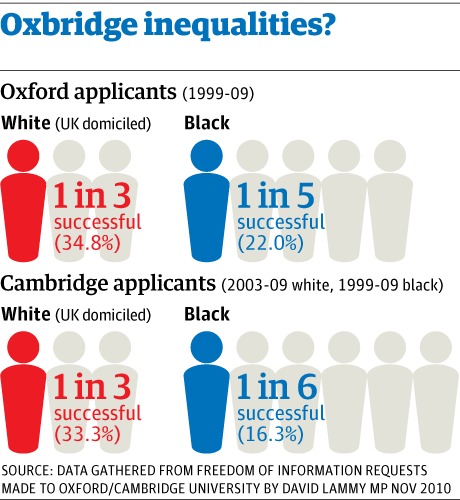
An article published in the Guardian shows a clear picture of the divide between the predominantly “white” upper and middle class applicants accepted to Oxbridge over the poor “black” (see the graph below).  In fact, Oxford’s student body consists of 89% upper and middle class while in Cambridge 87.6% represent top three socio-economic groups.

Oxbridge_Inequality_0712-gif

In “Creating a Class: College Admissions and the Education of Elites,” Mitchell L. Stevens raises important questions about the ways in which prestigious colleges in the United States increasingly accept students based on their ability to pay.

Attending elite universities somehow gives you a mark of quality. You join crème de la crème of the academia or society in general. It somehow validates your opinion and makes your voice heard. While growing up, I always thought of elite universities as the places where talented and smart students study. I did not know that in many cases your purchasing power defines whether you are talented or smart. It is not hard to see how elite universities “create” or “recreate” social structures that favor elitism, which is exactly the opposite to true purposes of education.