Sarah Glickstein's avatar

Preaching Preschool

During last Tuesday’s State of the Union Address, President Obama said, “Every dollar we invest in high-quality early childhood education can save more than seven dollars later on – by boosting graduation rates, reducing teen pregnancy, even reducing violent crime.” Of course, Obama’s emphasis on early education is not new but rather a reiteration of Obama’s previous push for more funding to provide pre-kindergarten education for every four-year-old in America.

Research stands behind the importance of pre-k education. Investments in early education are believed to raise long-term skill levels, increase graduation rates, create jobs, reduce the stress on low-income parents and reduce crime and poverty. I spoke with a current early childhood professional who concurs, stating that preschool provides a space where kids “learn how to learn.” Before the structured academics that children receive from their educational journeys, preschool teaches kids how to behave in school, get into a routine, and socialize with others. Learning how to be one child in a group full of fifteen, twenty or twenty five others is not an easy thing to learn, and must be introduced to children at an early age.

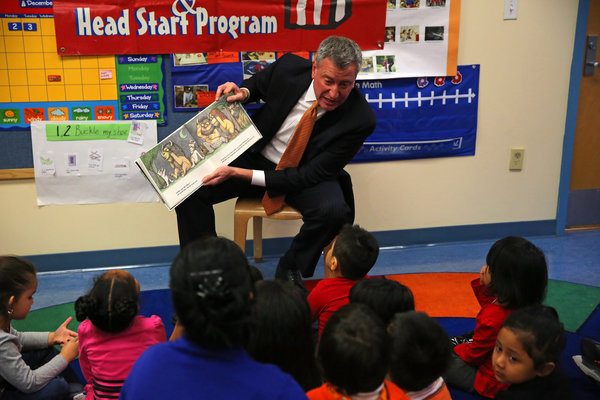
Over the past year, many states across the country expanded or created preschool programs, including Minnesota, Michigan, Montana, and Alabama. Republican Governor Rick Snyder of Michigan believes that this policy move is important because preschool is “a human need and an economic need,” and proceeded to increase spending by $65 million last year. Additionally, Bill de Blasio was elected mayor in New York City on the promise of universal prekindergarten education for all city residents. In a recent interview with Jon Stewart, de Blasio spoke of his five-year, $2.6 billion dollar plan to provide full day pre-k for every child in the city.
04PRESCHOOL2-articleLarge

Bill de Blasio was elected on a promise of universal prekindergarten. Nicole Bengiveno/The New York Times

Based on research and recent state legislation, it seems that the country is in general agreement that preschool for children is necessary for the further development and success of the nation. However, this is not such a beautiful picture in Washington D.C. In Congress, Republicans have opposed Obama’s $75 billion investment in preschool, stating that the policy is too top-down and should instead be the responsibility of local communities and state governments. I think that Republicans in general are resistant to new social programs that Obama proposes, using this as an example to generate opposition. Mandatory pre-k education seems to be a bipartisan cause, but remains divided in our nation’s capital. I find it ironic that Republican and Democratic centered governments alike are on board for preschool policy changes, but that this issue cannot come to fruition in Washington. The way I see it, members of Congress simply want to continue to disagree with social policies, regardless of the good that they imply.

Of course, an issue as such always comes back to a question of funding. The New York Times sites many ways that states are planning to cover preschool, ranging from sales tax increases to legalizing marijuana to casino revenue. However, it remains unclear how to pay for universal access to preschool education. Could it be that politicians are simply preaching preschool to attract voters? In particular, these policy changes would attract the working class and women, which are demographics that many politicians need to charm. Is this a policy move, or more of a political power move?

Growing up in what I consider to be a privileged community, preschool education is taken for granted. It is a given that parents will pay for their kids to go to preschool so that they can work, as it was unusual for my friends to have stay at home parents. Part of the reason that this issue is so highly debated in Washington is because high-income districts can afford preschool funding while lower-income districts would have a harder time enforcing this type of policy. Given the importance of preschool education, it is my hope that funding will move toward city/state/local authorities rather than fall on the responsibility of private incomes, with a focus in problem solving for those lower income areas. I think that the United States has been criticized enough for our faulty education system. This should be one step that policy makers need to put on their priority list – a seemingly simple step that can set up great future success for a nation.

While this is a hot issue right now in national news, it has major global implications. If the United States is a global leader, the policy decisions that we make will be under close surveillance by the rest of the world. Whether this preschool policy shift will bring more success to the U.S. is yet to be determined, but it does have the potential to change some negative perceptions of our education system. I do think that these changes will come from more state and local authorities, as those in Washington continuously seek power over policy. I will forever be a firm believer in preschool education, and hope to see it promoted and enforced by these more localized authorities in the next few years.

Pablo's avatar

Is Equity at Stake in Private Schooling? (Part 1 of 2)

For those watching the educational development media, the rising clamor around “school choice for the poor” has been difficult to miss. The argument goes like this: “There are many low-cost private schools in the world that do better than public schools, and the poorest of the poor are using these schools—so let’s support them.”

In a November article in the Spectator, British educator and Cato Institute scholar James Tooley once again raised the case for private education, arguing that educational rights activist Malala Yousafzai is in fact arguing for private education, not public education. His contention, which was unsupported by any interview with Malala herself, was subject to considerable criticism. That Tooley’s pro-private school piece made its way, openly unsubstantiated, into a major media source like the Spectator, evidences the editorial board’s sense of public interest in the private school advocacy movement.

Tooley is at the spearhead of a major attack on public schools worldwide, an attack driven by disappointing public sector performance, high teacher absenteeism, and frequent reports of corruption and scandal. These proponents of private schools, often backed by libertarian NGOs such as the Cato Institute, argue for a wide array of measures to promote private school alternatives, with options ranging from simply tolerating the existence of private schools to fully disbanding public education and replacing it with private education.

In this post and the following, we will look at private schooling from the vantage-point of equity.

Equity: outputs, not inputs

A central refrain amongst the many justifications for private schooling centers on equity: Private schools give kids a better shot than what they would have otherwise, so taking away public schools decreases equity.

In education, “equity” refers not to making all schools look the same (which would be “equality”) but to helping all children have the same opportunity to succeed. Certainly, beautiful, well-resourced schools and strong teachers increase the odds of success, but, as comparisons of international test results between expensive U.S. schools and their Asian counterparts have shown us, bigger inputs don’t always produce bigger results. In educational development, equity—not equality—is the goal.

But do private schools increase equity? Many have argued long and hard from exactly the opposite perspective.

Private schools as stratifying agents

The arguments against private schooling vary, but most intersect in one way or another with the central premise that private schools lead to increased stratification in society. While no two public schools are the same, inasmuch as they reflect the society in which they are geographically located—thus the de facto “re-segregation” found in many inner-city schools—private schools further stratify the student population. In 2010, Alegre and Ferrer, two researchers at Universitat Auton ma de Barcelona, used data from the Programme for International Student Assessment (PISA) test to argue that the more market-driven a nation’s educational system is, the more stratified it becomes. Rather than acting as a melting pot, drawing together students from diverse social classes and racial or religious backgrounds, private schooling has the opposite effect, self-sorting students by the same variables that mark the boundaries of diversity. Those arguing against the proliferation of private schools argue that economic classes cluster together by schools, with students’ families following their friends, leaving private schools to those unable to afford private education.

Evidence like that produced by Alegre and Ferrer points to the reality that, within a nation’s boundaries, private schools allow inequity to persist and, as private schooling grows, the gaps between the educational opportunities for the wealthiest and poorest grows ever wider.

Looking at equity through a national lens reveals difficult realities for private schooling. The international lens, however, paints a different picture.

Private schools and international equity

Ironically, while private schools can increase stratification nationally, they can also function to decrease stratification internationally. Elite private schools in economically-disadvantaged nations often offer world-class education, with students performing on-par with their counterparts in wealthier nations. While not all children can earn a world-class education in developing countries, at least some of the nation’s young are able to earn the caliber of education needed to prepare globally-competitive professionals.

Test data from Latin America and elsewhere illustrate this point. Most private Latin American international schools following the American educational model test their students against U.S. schools using NWEA’s Measurement of Academic Progress (MAP). In spring of 2012, students in grades 8-10 in these private schools—in a region generally lagging the United States in international comparisons—scored at or above the average scores achieved by U.S. schools. This outperformance is consistent with historical trends.

Elite Latin American private schools

United States norm group

Latin American Private school outperformance

Grade

Math

Reading

Writing

Math

Reading

Writing

Math

Reading

Writing

8

235

222

223

235

222

221

0

0

2

9

239

226

223

236

223

222

3

3

1

10

240

224

223

237

224

223

3

0

0

Ideally, the public sector in Latin America would provide internationally-equitable educational quality as well. However, until this happens, private schools provide a mechanism for providing on-par or above-par educational access for students in these countries.

And the academic equity advantage is not only found in elite schools. Using India and other economically-disadvantaged nations as test cases, Tooley, in his book The Beautiful Treeproduces extensive data from standardized tests to show that even poorly-resourced “low-fee private schools”—schools which cater to families who live in impoverished slums—private schools consistently outperform public schools, bringing children closer to the performance of peers in privileged nations.

Until significant changes transpire in government schools in Latin America, India, and elsewhere, private schools provide something that government schools do not: access to higher-quality education in economically-disadvantaged nations not provided in government schools.

Equity for all students?

Due to the higher test performance found in private schools which cater to the poor, Tooley asserts that the low-fee private school option, in fact, brings greater educational opportunity, even to “the poorest of the poor”. We’ll examine this claim in our next post.

Pablo's avatar

Low-Fee Private Schools: An Equity Conundrum (part 2 of 2)

Reading the headlines from India’s educational news, one could understand if educational planners hardly know whether to rejoice or weep.

On one hand, progress is evident. According to World Bank data, primary enrollment has risen to 90% and secondary enrollment to 63%—an overall enrollment growth of 50% since the early 1990s. The 2012 ASER report concluded that school facilities have seen marked improvement over the last three years since the inoduction of India’s Right to Education Act (RTE).

Yet, the situation remains bleak. MIT researchers in 2010 found that teacher absenteeism in India has consistently hovered at 25% for 15 years with no signs of improvement, and classroom productivity fares no better, with 50% of teachers found sleeping, reading the newspaper, or otherwise not teaching. The 2012 ASER report found that reading and mathematics scores have steadily declined over the last three years, and, despite improvements in facilities, 43.5% of rural schools still have no working toilets.

Parents, what would you do if these schools were your “free” option?

Indian parents have long turned to private schools to escape the steady disappointment of India’s public school sector. British educator and India education scholar Geeta Kingdon found in 2007 that growth in the private school sector in India accounted for 96% of all primary enrollment growth between 1993-2002; the 2012 ASER report noted that such schools today account for nearly 40% of India’s enrollment—and the enrollment numbers continue to rise at a rate of 10% annually.

The private sector is a crucial partner in India’s provision of education. Since the introduction of RTE in 2010, this partnership has in many ways been further strengthened. RTE requires that 25% of all seats in private schools be vouchered-out to less-privileged students at no cost to the parents. Low-income parents have queued up at these private schools across the country, hoping to land their child in one of these all-expenses-paid seats.

For the lucky parents who lottery their way into elite private schools, these public-private partnerships offer a new hope at economic advancement. For those who don’t manage to snap up one of these free seats, there are still other options, thanks to low-fee private schools.

LFP schools: Increased academic opportunity for some…

Low-fee private (LFP) schools, avidly promoted by school choice advocates such as James Tooley, offer opportunities for parents at an extraordinarily low cost. Throughout his considerable body of research, Tool continually finds that these fees aren’t just low—they’re super low, designed to be affordable even to families who live in the nation’s burgeoning slums.

The schools, many of which are not registered with the Indian government—despite RTE requirements to do so—offer on-time teachers and on-task classrooms. Their test outputs, as multiple studies have shown, are modestly-to-substantially higher than those of nearby public schools, despite the fact that such schools are often staffed by untrained and minimally-paid teachers.

LFP schools advertise better academic equity, and Indian parents are moving to them in droves, fleeing the unsolved problems in government schools.

…but not for all

A central problem with LFP schools is that, despite their low cost, they remain out of reach for the poorest of the poor. Canadian researcher Prachi Srivastava, who coined the term “low-fee private school”, summarized the research on LFP school affordability in her 2013 book, Low-fee Private Schooling: aggravating equity or mitigating disadvantage? Srivastava concludes that claims of the affordability of LFP schools for the poorest of the poor have been exaggerated.

Some of the most emotionally compelling research on LFP school affordability is offered the 2010 work by Joanna Härmä. Researching the affordability of rural LFP schools in the Indian province of Uttar Pradesh, Härmä concluded that the school fees, while low, were simply out of reach for the poorest two quintiles of Indian society and that parents chose public schools because they simply couldn’t afford even the lowest-priced LFP schools. She concluded, “No poor families reported LFP schooling as being affordable without ‘cutting their bellies.’”

The continuing research of Srivastava and her colleagues in a growing number of urban slums and poor rural regions around the world has challenged Tooley’s claims to affordability. LFP private schools, while affordable for many of the world’s poor, simply aren’t affordable enough.

An equity conundrum

LFP schools offer a fascinating look into the basic conundrum surrounding lower-cost private schools around the world. It is true that private schools offer parents options for escaping failed government schools: from the moderate out-performance seen in LFP schools to the wild out-performance seen in elite private schools (as discussed in the previous post), private schooling offers children a chance to achieve at higher levels than those found in their local government schools, increasing academic equity in low-income nations by bringing these children closer to their counterparts in high-income nations.

Yet, this opportunity isn’t accessible to all. LFP schools, which cater to the bottom end of the economic spectrum, are unable to fit the budgets of the poorest of the poor. In nations like India, where education is a chief agent for upward mobility, and income disparities between the poor and wealthy continue to rise, the affordability of private schools plays a role in persistent inequities.

Kate Lapham's avatar

Cleaning Up Tunisian Education

Cross-posted from Open Society Voices

The way we address corruption in education matters. Strategies that focus on monitoring or punishing specific instances of corruption are too often politically motivated and fail to address the root causes of corruption. If our goal is to fix the transparency gaps, perverse incentives, and contradictory or confusing regulations that lead to corruption, then we must take a systematic approach to monitoring corruption.

This spring the government of Tunisia asked the OECD to conduct a preliminary integrity scan of their education system as part of a bigger effort in the context of the OECD CleanGovBiz ini­tiative. The resulting report, Integrity of Public Education in Tunisia [PDF], identifies areas in the education system that might benefit from a more in-depth assessment or immediate policy responses.

An OECD assessment team visited Tunisia in May 2013. Using the Integrity of Education Systems research framework, which was developed and piloted in Serbia in 2012 with support from the Open Society Education Support Program, we assessed four dimensions of integrity: access to education, quality of education, sound management of staff and resources, and capacity for corruption detection and prosecution.

Public schools in Tunisia are having trouble providing quality education despite large investments in education and teacher salaries, according to international assessments and data on grade repetition. This, in turn, nurtures distrust in schools’ ability to fulfill their mission and fuels a need for and widespread acceptance of private tutoring. Tunisia reports the world’s 9th highest rate of private tutoring with up to 70 percent of Tunisian students participating, according to data from the Program for International Student Assessment in 2006.

The same assessment found that up to 54 percent of students were offered tutoring by their own classroom teachers—a serious integrity threat. In many cases, important parts of the curriculum are available only to students who can pay for private lessons.

Lack of school and teacher accountability perpetuates ineffective learning. In turn, these problems become more widespread, making it even more difficult for authorities to understand the extent of the corruption.

Integrity challenges confront universities as well. Tertiary enrollment in Tunisia continues to boom, but the admissions process fails to recruit qualified students or to ensure their field of study coincides with their choice and interests. This turns the focus of higher education from learning to obtaining a degree to fulfill bureaucratic requirements for future employment. It encourages cheating among students, paying teaching staff for grades, and similar abuses of academic ethics. The absence of integrity standards and adequate accreditation and evaluation mechanisms further promotes tolerance for malpractice which, according to the OECD, is widespread in the higher educa­tion system.

“Education reforms and integrity interventions should be aimed at the restoration of trust in the public education system of Tunisia, a system with great potential which Tunisians were once rightly proud of,” Mihaylo Milovanovitch, leader of the OECD assessment team, writes in the report.  

Other countries are confronting the challenges discussed in this scan as well. Tunisia might be in a favorable position to set a good example in deal­ing with them. It is one of the very few countries that have opened themselves up to an external integrity analysis of the public sector and of education in particular. This is an important step in taking informed decisions regarding the course of action against corruption,” says Mihaylo Milovanovitch, part of the OECD research team.

Understanding, prevention, and participation are the best ways to combat corruption in education. Specific recommendations include reforming the university admissions process, introducing a code of professional conduct for teachers, and improving the school inspection system. Furthermore, rather than taking a technocratic approach to change, it is important to engage students, parents, teachers, and the general public to make sure that reform becomes part of the fabric of the education and daily life.

http://www.opensocietyfoundations.org/voices/cleaning-tunisian-education

Sharky's avatar

The Unending Lithuanian Educational Reforms: Student Vouchers

Continuing the topic on Lithuania’s educational reforms from my last post, I will take a more detailed look at the student voucher policy for financing education in Lithuania. But first, some background on how the concept originated, what student vouchers are, and what are the pros and cons of the student voucher policy.

History

The origins of the student voucher idea can be traced back to 1792, when Thomas Paine, a British economist, proposed a “voucher scheme” – a special allowance of 4 pounds per year for each child up to the age of 14 – in order to finance education. The first education financing policy that most closely resembled student vouchers was implemented in the state of Vermont, in 1869. This policy allocated funding for rural families who wanted to send their kids to schools in other regions, essentially giving them school choice; a similar policy was adopted in Maine soon after, in 1873. Finally, the first one to define and describe the modern concept of student vouchers in detail was the American economist Milton Friedman, in his article on “The Role of Government in Education” in 1955. Even though the US is the biggest proponent of free market principles, and even though it has the two oldest student voucher policies in VT and MA, the policy is not widely implemented throughout the country today, with only 12 states employing a partial student voucher policy.

Concept

Despite the different definitions and implementations of student vouchers, the basic common premises behind the concept are the following:

  1. School choice – allowing parents, as the “true customers of the service of education”, to choose freely to which school to send their children.
  2. Competition between schools – introducing more effective implementation of funds, improving the quality of education, and creating a wider variety of educational options.
  3. Higher degree of parental involvement – increasing the personal interest of parents in the educational process and making them more responsible for their children.
  4. Better access to education for underprivileged and special-needs families.

The first two premises are highly influenced by free market principles, extending competition and efficiency to the realm of education. However, there are many criticisms of using economically based market principles in education, leading to controversy and debate.

Pros and Cons

The debate on student vouchers as an educational financing policy can be summarized in the list of pros and cons below.

Pros Cons
More effective allocation of funds in schools due to competition In the long term, only the popular schools benefit, while the least popular ones incur higher costs
Increased transparency of educational financing, due to the elimination of individualized subsidies and the need for lobbying Due to the need to attract as many students to a school, administrators and teachers are more willing to “give more slack” to underperforming students or even create fictitious students to maintain funding
Increased quality of education due to competition The intended increase of quality of education due to competition might backfire, especially when the options of schools to choose from are limited
Emergence of private schools and the ability of public schools to learn better practices from the private sector Underprivileged or special needs students might still not be able to choose better private schools due to their entrance requirements
Increased variety of schools in terms of informal education options Higher curricular freedom of private schools might undermine the national educational goals and strategies
School choice Increased social inequality
Increased response of school administrators to the needs and wishes of students and parents Any fluctuations in student numbers and, hence, funding, creates a feeling of instability and employment uncertainty for teachers
Higher parental involvement in the educational process of their children

Lithuania

The student voucher educational reform was introduced in Lithuania starting 2001, with a voucher of 1521 LTL (~570 USD) per student. This amount has more than doubled to 3800 LTL (~1430 USD) for the 2012-2013 school year; however, this does not reflect the dramatic decrease in the numbers of students in schools in the emigration-age of post-global-financial crisis and free migration within the EU.

The effects of the student voucher policy in Lithuania are seen to be more negative, or insignificant, than positive. The main critics of the policy are teachers and teachers unions, who experience chaotic and unstable working conditions with the decline in student numbers, especially in rural areas. In small towns and villages, there are not enough schools that could benefit from competition, causing the disappearance of small schools and firing of teachers.

Moreover, the actual distribution of student voucher funds is questioned, as school administrators use the funds not for professional teacher training, but for general expenses, such as remodeling facilities or paying utilities. The current main allocation of student voucher funds – 95% for teacher salaries – is also questioned, with some political attitudes to completely abolish the student voucher policy.

All in all, it is very important to consider the specific context of a country when trying to implement such policies as student vouchers. It is reassuring that the policymakers of Lithuania are aware of all the pros and cons of student vouchers and that a critical debate on the issue is present.

Aftan Baldwin's avatar

A Talk with Jane Ervin: CEO of One of the Most Successful Head Start Programs in the US

head-start1

I recently sat down to talk with Jane Ervin, the current CEO of Lehigh Valley’s Community Services for Children. They currently host the Head Start program in the area, one of the top 40 in the country. When Jane started with the NGO in 2007, the poverty rate for children in the Lehigh Valley was 20%. It has risen to 26% in just a few short years, and contributed to the shrinking economy.

The program itself, as most other charitable programs and organizations, is under heavy scrutiny by the government. Each Head Start program is reviewed every three years. If it does not meet the standards, the NGO will be forced to recompete for the money allotted to the program in their area. Their money will be taken away and US$5 million will be given to the NGO that wants to start the Head Start program in that community. According to Jane, there are training centers throughout the US that can provide assistance to the faltering programs, focusing on Early Head Start, Program Management, Community Engagement, and other areas. Jane and I did not get into detail on the effectiveness of these centers. Perhaps that is a conversation to be had later.

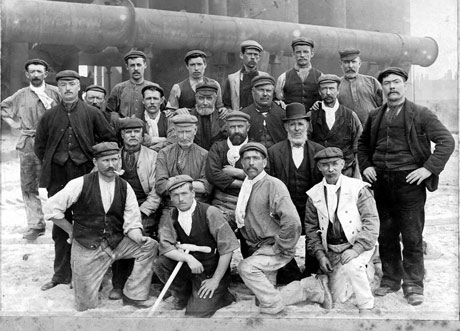
Jane’s ideal path for the increased investment in early childhood education lies with businesses. She first discussed the history of Bethlehem, the transforming culture and increased need for specialized employees. When Bethlehem Steel was in operation, only a high school degree was needed to ensure a living wage and the ability to send children to college. The Steel plant closed and jobs have become much more technical. Now there is an adjustment period, a similar scenario to other areas across the US.

Workers-at-Bethlehem-Steel-in-early-1900s

As noted in my previous blog on the Head Start Program, research tells of the tremendous value of early childhood education. Yet, we have to question why there is little investment in it. Businesses are focusing on the technical training required to fulfill their positions. Fewer and fewer are able to meet the requirements to begin this type of technical training and the jobs are either being sent to other countries or employees from overseas are coming to the US to do jobs we can’t. Jane proposes the more efficient solution of growing our own labor force. Her goal is to help businesses see the connection between early childhood education and the employees that will need to be hired in 15 or 20 years. She advocates for tailoring the education to meet the specific needs of a particular community and the businesses within that community.

While this may be beneficial for the businesses and the economy of that particular area, where is the choice for children and their families? Where is the equal playing field? If students are prepared for a specific job from a young age, what other choice will they have? What if they decide that isn’t where they want to be?

It’s an interesting debate I think, one we can look at cross-culturally. Universities within the US are filled with students studying in unpractical fields with no clue what to do after graduation. In a way, a great deal of our youth is lost because they are given too much freedom. In a country where you can “be whatever you want to be,” how do you decide? In China, social roles and college majors are chosen for the youth and futures are clearly defined. Are the Chinese finding more satisfaction out of life just because they feel they are fulfilling their predetermined niche in society?

As Head Start prides itself as a high quality childcare program, Jane is naturally an advocate for all children to have this available to them. In addition to suggesting the businesses invest long-term in their future employees, she also suggests these local businesses encourage their employees to seek out high-quality childcare for their children. Day cares and babysitters are not always enough. Parents are unable to identify and seek out high quality childcare and may be unaware of the long-term benefits. Perhaps she sees the connection between an understanding of the benefits of high-quality childcare and the willingness to invest in it. Her forerunner in the evaluation of a childcare program is Keystone S.T.A.R.S.. They rank the programs on a 1-4 star scale. As the S.T.A.R.S. scale has the potential to make a childcare program more marketable to families, there are no direct repercussions to the program for not being evaluated.

On the local level, Jane’s ideas have potential. For businesses to succeed, they need quality employees. What then is the role of the government? Should it not be ensuring children’s education reach the level needed to partake in the student’s choice of training, vocational or higher education programs? Is the goal of this nation to make money through the success of their businesses and economy is the goal for everyone to have the equal opportunity to find their own success?

Michael C. Russell's avatar

Public -Private Partnerships, the Pebble Mine, Propaganda, and Profits

Image

As education systems struggle to keep meet internal commitments and international goals, many are turning towards the private sector for assistance. These public-private partnerships, or PPPs, are designed to address low levels of educational access and poor quality. Patrinos et al (2009) place PPPs on a continuum that stretches from private management of school systems to the private sector developing curriculum with state actors.

It is this last aspect of PPPs that I would like to focus on for this post, specifically the curriculum developed by Alaska Resource Education. This organization operates as a PPP connecting the oil & gas industry, the mining industry, and the Alaska Department of Education & Early Development. AK Resource Ed. came to my attention when I was researching the Pebble Partnership, a group devoted to mining in the Bristol Bay watershed. Located in the Lake and Peninsula census region, the proposed mine would be over two miles wide and require damns larger than the Three Gorges Dam in China to store waste chemicals associated with the project (Kelty & Kelty, 2011). The mine has met with mixed reactions from local citizens, with community schools acting as one source of information on the scope of the mine.

The Pebble Mine partnership is one of the groups funding and supporting AK Resource Ed., which provides curriculum and geology kits to schools, including those in the Lake and Peninsula School District. The K-8 curriculum is divided into three sections: energy, forestry, and mining. While the curriculum is linked to the Alaska state standards, the lessons themselves are sympathetic to the goals of the organization’s funders. For example, as early as first grade students are being shown the benefits of mining, but there is little discussion of environmental or social impacts.

In one fifth grade lesson students are asked to develop a cost-benefit analysis of a fictional mine on land near their school. Students are broken up into groups that include foresters, hydrologists, and topographers that study the natural features of the land. They perform their rudimentary study and then determine how the mine can best be developed in regard to the natural landscape. For example, hydrologists may decide if a stream on the property should be avoided, or if that water should be used in the refining process.

In fairness, not developing the mine is an option, but one the lesson shies away from throughout the provided materials. The focus of the lesson is designing a mine with minimal environmental impact. While environmental degradation is obviously an important consideration, the lesson fails to examine the cultural or social impacts of mine development. In addition, there is no discussion of involving stakeholders or local citizens in the decision to develop the mine. The decision rests only with the mock scientists that serve as outside experts, representing a strictly modernist view of resource management. I worry that this will condition students to believe they have no say in the development of their land. Shouldn’t we be teaching students to think critically about development issues, instead of training them to blindly trust so-called experts?

The lesson describe above is especially problematic when you consider that of the forty-one mining lessons supplied by AK Resource Education, this is the only lesson that makes any mention of ecological services or non-extraction values of land. All other lessons focus on the benefits of mining and how mining can provide resources and jobs for communities. While employment in rural Alaska is important, the environmental and cultural risks associated with open pit mining in Alaska are significant and need to be addressed in any discussion of mining in the classroom.

In reflecting the values of the organization’s funders, AK Resource Ed. is typical among PPPs (Ball, 2007). Rather than teaching students to become active participants in the management of local natural resources, this curriculum seems designed to provide eight years of pro-development propaganda. While PPPs can provide much needed funding and support for struggling schools, educators have to careful that they’re not providing private-sector firmswith a captive audience for advertising.

(For more on PPPs, Olga Mun discussed their use in Kazakhstan here)

Image

sokuntheapen80's avatar

What is the function of standardized testing for Public Education in United States?

Image

“Testing, testing, testing, the children are crammed with testing,” said Mr. Milton Gaither, PhD (2013). I often heard that standardized testing is a mandate for students in most grades in public schools in America and I am wondering what is the role of standardized testing for children? What are the objectives of public education in the United States?
We all know that one of the objectives of education is to prepare students for academic success and good citizenship. It is well known that America is one of the wealthiest countries in the world. Yet there is still a high rate of poverty, unemployment, inequality, violence, and crime here. Although we must not take it for granted that education will solve everything, it’s obviously a tool for social change.
According to the Associate Press of Commercial Broadcast Television Network in Washington, DC (CBSDC/AP), 16% of Americans live in poverty and it increased from 49 million to 49.7 million in 2011.  Of those living in poverty, 20% are children. Based on the International Labor Organization (ILO) data, as of February 2013 there are about 16% of youth who are unemployed;this percentage is high compared to other OECD countries, according to Guardian.
Another shocking statistic is regarding crime in public schools in America. For example, during the school year 2009-10, 85% of public schools recorded one or more criminal incidents. There were about 33 students associated with violent deaths and an estimated 1.9 million crimes took place in schools. Meanwhile, gang activities and bullying are increasing in public schools, according to the National Center for Education statistics (2011).This context prompts a number of questions. Should the school curriculum be more meaningful and reflect current issues in America? What are the solutions for the state in reducing unemployment, crime, and promoting poverty reduction? Shouldn’t education be playing a better role? Is basic literacy and numeracy enough to make someone educated?
Education also aims to develop students’ behavior and put them on a path to success, in addition to hopefully settling social issues.  However, there is a disconnect between the school curriculum and the context of America. For example, standardized  testing in public schools is a mandate for the students in all grades. Basically, the students are trying to work hard just for the testing.
I would suggest that standard assessment test should be more meaningful than current standardized test.If we say that education aims to prepare students for success, then I would say that project-based assessment test is very useful for the students. According to the Globalschoolnet.org, project-based assessment is an effective tool to measure the performance and the growth of the students through their project-based learning. The assessment strategies include the multiple instruments such as performance, observations, evaluation, personal communications, quiz, and others. The function of the project-based assessment contributes to the future works of the students, for example, the project design, implementation, and evaluation.  I think the project-based learning is a better way of learning how to work and to achieve something with a clear mission in any field of work. The students could see their achievements at the end of the project.
In his blog, Andrew Miller recommends the formative assessment for the project-based learning, which includes exit slip, worksheet, and draft or quiz due often. The formative assessment is conducted as an ongoing process and keeps track of the project-based learning to make sure it is transparent for the students and the parents. It also measures the work toward the standard of each student’s performance.
In all, the standardized testing for almost all grades is a waste of time. We do not need to have standardized testing for most grades in public schools in order to improve basic literacy and numeracy for the students. The school curriculum should reflect the current context of America, yet the standardized testing tends to take a huge part in the curriculum. Because standardized tests are mandated, students have to spend the majority of their time  preparing for the test rather than learning many important things in the current context of America. On the other hand, the assessment test should be more useful for the students. The Project Based Assessment Test seems to be more meaningful than standardized test in terms of preparing students for their success and future lives.

Fauzia Nouristani's avatar

Politics, Gender and Education in Afghanistan

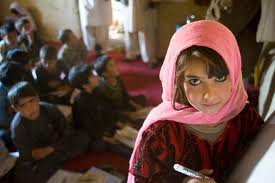
afgh.schoolLack of educational opportunity for Afghans, especially Afghan girls, has been a highly controversial topic that has been used as a tool to serve political agendas for both the Western powers and the Taliban. For the US and its allies, bringing education to children—and especially girls—became a propaganda tool to partly justify invasion and occupation of Afghanistan. For the Taliban, education has been seen more as a detested mechanism of Westernization and secularization of Afghan children. Taliban members in Afghanistan and Pakistan have fought it every step of the way, going so far as attempting to assassinate teenage activist Malala Yousafzai as she was returning home from school.

According to official (bipartisan) party line, one of the main reasons for the US-led invasion of Afghanistan was the Taliban’s mistreatment of women’s rights. Anyone watching or reading the news could not avoid the harsh images of Afghan women in full burqa being shot in a soccer stadium full of men. Girls not being able to attend school and many other violations of human rights were used to justify the war. During the rule of the Taliban, “young girls were forbidden to enter educational institutions after the age of eight” and anyone breaking this rule risked severe punishment or even execution. One would have thought the Western occupation of the country would be an improvement. And yet thirteen years later there isn’t much real improvement for the girls and women of Afghanistan.

The new constitution under Karzai’s regime states that men and women “have equal rights and duties before the law.” Implementing this progressive policy has not been the government’s priority, however. On many occasions Afghan girls have had acid thrown on their faces while they were on their way to school. This isn’t an isolated incident of violence towards children. As was mentioned above, “girls can go to school, but school buildings are unsafe and there are severe shortages of teachers, facilities and equipment. The new constitution guarantees women equal rights. However, continuing religious and cultural conservatism and a dangerous security environment are real obstacles to women’s participation in the economy, politics and society.”

Many promises were made by the Bush administration regarding support of education. On a visit to Kabul, Mrs. Bush promised millions of dollars and a long term commitment to education for Afghan women but unfortunately this “was not for Afghan public education (or women and children) at all, but to establish a brand-new, private, for-profit American University of Afghanistan catering to the Afghan and international elite.” The former finance minister and president of Kabul University stated: “You cannot support private education and ignore public education.” The aid money is given to American private contractors who have no real stake in education for the average Afghan but rather making a profit.

The Western media sensationalizes a young girl shot fighting for her right to education and assumes moral high ground— then at the same time the US government uses drones to kill these children. The Taliban, on the other hand, connects girls’ education, learning and knowledge, to westernization—as siding with the invaders and occupiers—thus feeling justified to kill and maim.

As Matthew Snow so eloquently states regarding Malala:

When the world should have viewed her as a child, they made her a symbol. Rather than caution her on diplomacy, the world encouraged her brazen outcries. Rather than protect her, the world exalted her. And when she thought the world was with her, the world made her a martyr. Now, as she recovers from nearly fatal gunshot wound that ripped through the throat that pushed so many strong words and cracked the skull that housed the mind she treasured above all her possessions, the world explains away their moral culpability and their complicity in the machine that nearly killed Malala Yousefzai.

Sharky's avatar

The Unending Lithuanian Educational Reforms: Restructuring of Schools

Image

As I am about to graduate from a private American university, I wanted to reflect on my motivations for coming to the US to study, in the first place. Five years ago when I moved here from Lithuania, I was seeking quality higher education and personal growth through immersing myself into the American college experience. Five years ago, I was running away from what I perceived to be a chaotic and uncertain situation in Lithuania’s educational system.

In the post-soviet period (starting in 1991), the Lithuanian educational system – along with most other spheres of life in the country – began long and fundamental reforms to reorient the country away from the failing Soviet ideas of communism to the Western ideas of democracy and capitalism. The most obvious western influences were coming from Lithuania’s desire to join the European Union (EU), which required Lithuania to fulfill specific European standards in healthcare, human rights, and economy, among other requirements. Most of the reforms, including the ones in the educational system, were directly related to these requirements. In retrospect, as a student who emigrated from Lithuania, I cannot help but wonder whether my country is just jumping from one ideological system – the communist one – to a new one – the neoliberal system – while constantly being influenced by some greater world powers. In my blogs, I will take a closer look at some of the educational reforms in newly independent Lithuania ranging from school restructuring and school financing through student vouchers to anti-LGBT amendments to the “Law on the Protection of Minors.”

I will start by reflecting on the chaos of the educational reforms that were referred to as “restructuring”.

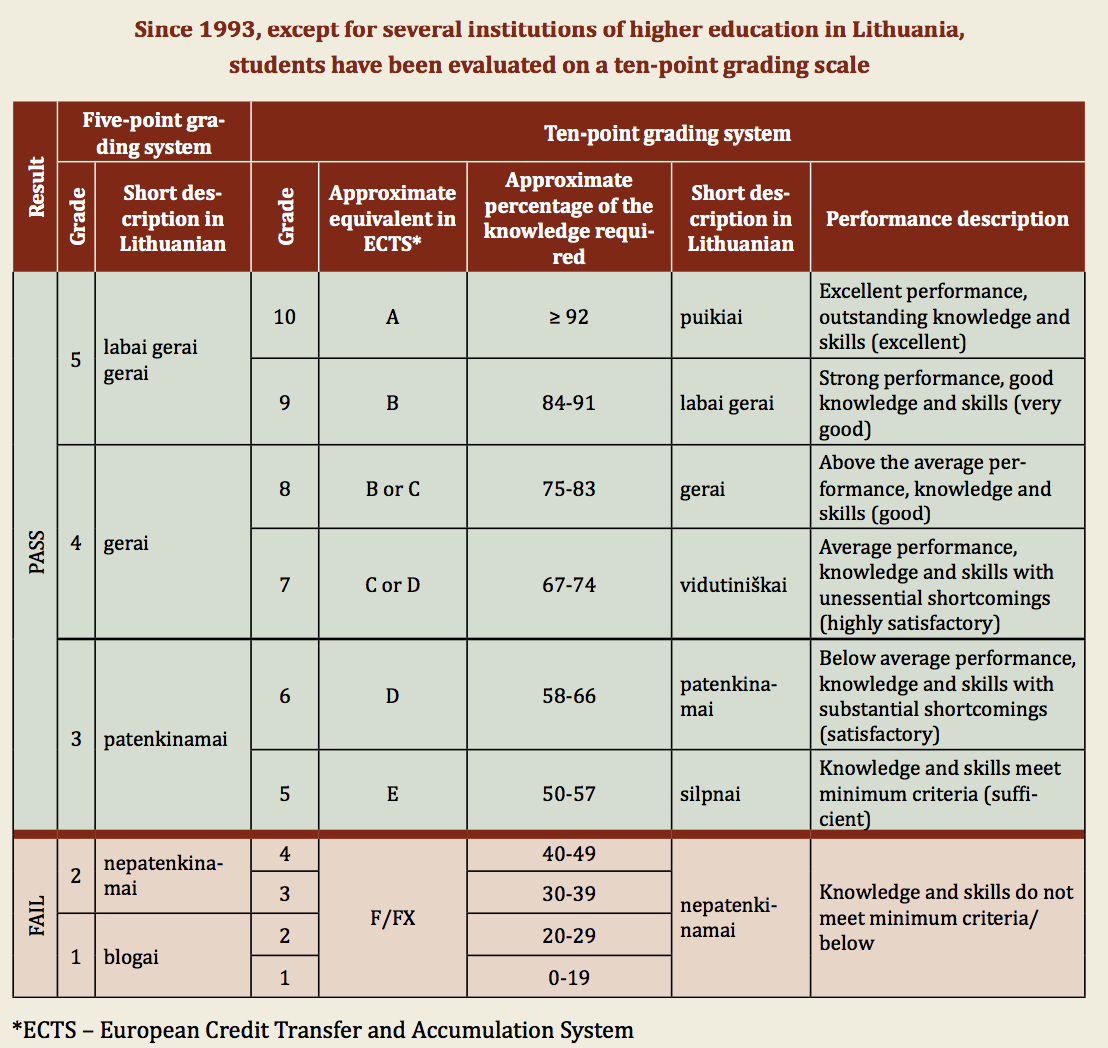
Because I was born only a few years before the collapse of the Soviet Union, I was basically part of the first generation of students to go through the educational system of newly independent Lithuania. I would always hear comparisons from my sister – who is twelve years older than me and went through the educational system of Soviet Lithuania – about how she used to receive grades on a 5-point scale instead of the newly established 10-point scale, or how everyone had to learn Russian as their one mandatory foreign language.

Image

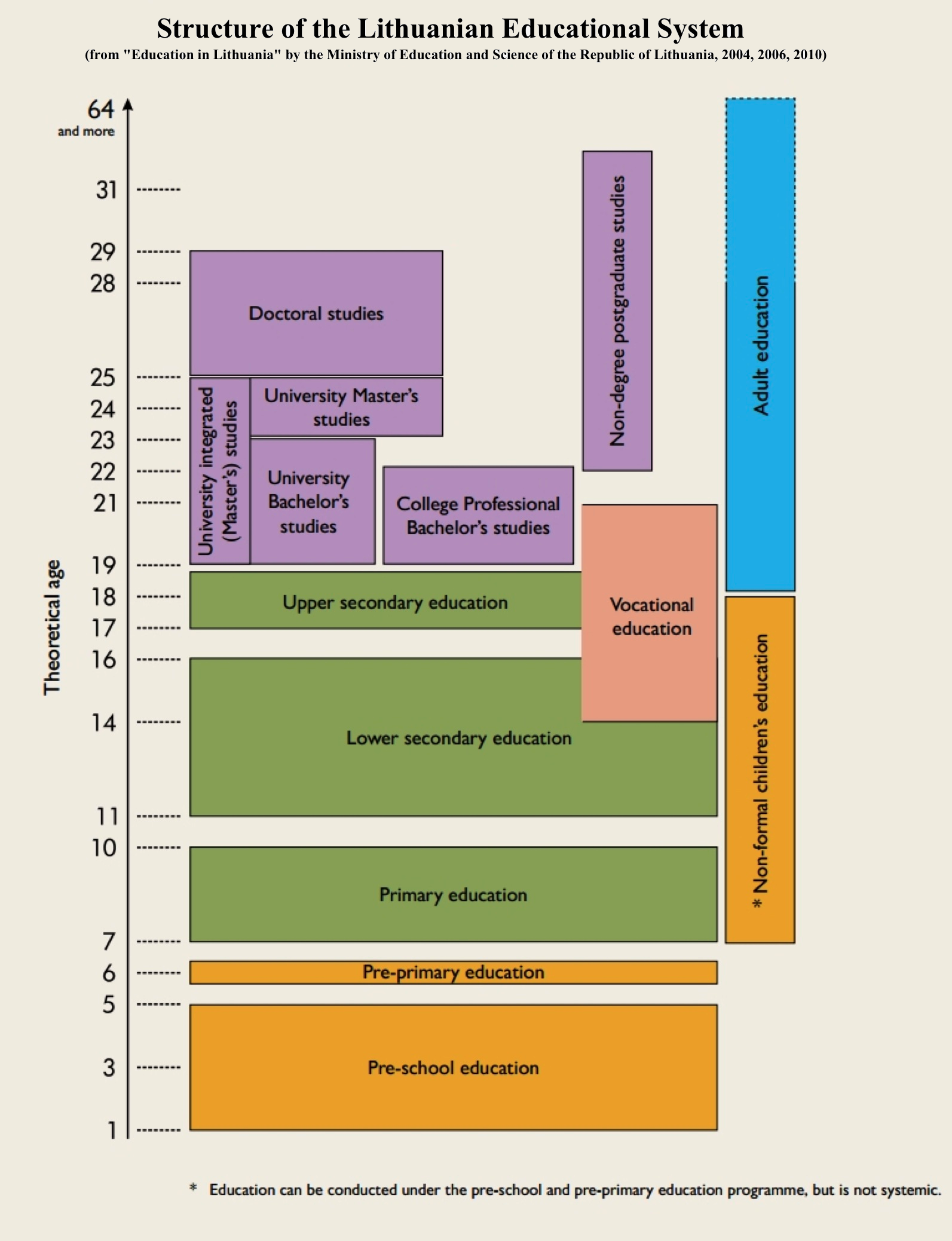
Russian was not even available in the schools that I attended and English has been my foreign language since first grade. It is hard for me to make comparisons of specific curricular or organizational details based only on the stories of others who experienced the Soviet educational system, yet I can still recall the great fuss of school restructuring through personal experience. These “restructuring” reforms were happening right before Lithuania finally joined the EU in 2004. In the case of my sister’s school, the official restructuring from a Soviet educational system to a Lithuanian one occurred at the start of the 1998 school year, which was my sister’s last year of school: back in the Soviet system, this would have been her 11th year, but with the new educational structure she was among the cohort that had to complete a newly added 12th year. So from the Soviet educational system of 11 grades Lithuania transitioned to the system of 12 grades – more similar to western models.

Image

I later attended this same school that was being restructured once again: from being a middle school (serving grades 5 through 8) it suddenly turned into a “general” school (serving grades 1 through 10) and even switched facilities with a different school – all of this in 2002. This whole new type of “general” schools was supposed to serve the students who wished to complete only the 10 mandatory years of education in Lithuania. The duration and definition of “primary”, “middle”, and “high” schools were also shifted around, in addition to the establishment of such new categories of schools as “general” schools or “gymnasiums.” In the near future, these “general” schools will be restructured yet again into “pro-gymnasiums.” I know – confusing! All sorts of complicated and chaotic things were changing that I did not understand (or care for) at the time, but all the moving of classrooms, students, and teachers was quite unsettling and discomforting for a student that should only be focusing on doing well in school. All of this was part of great educational reforms to establish a western Lithuanian educational system that have not stopped ever since.

Currently, many teachers, teacher union activists, and school administrators are disheartened by the unending reforms. Shortly after the economic upswing of having joined the EU, the problems of the educational reforms have been brought back up by the lingering effects of the global economic crisis. Teachers are being fired as student numbers dwindle, schools are being closed or merged (especially in rural areas), and administrators are fighting for funding in the shape of student vouchers. The neoliberal educational policies of Lithuania’s ministry of Science and Education that are introducing competition through “increased financial independence,” decentralized management of school funds, and freedom of school choice are causing chaos in the education system.

Perhaps competition in the spirit of neoliberalism is not very helpful in such a vital field of human life as education. Perhaps it is disruptive and discomforting for students to constantly have to adapt to new educational policies: after all, any educator knows that students need safe and stable environments to grow, develop, and learn. Perhaps that is why some Lithuanians silently and melancholically remember the stability of the Soviet era where everything – not just education – was much more certain and unchangeable, albeit it was also imposed on them against their will… Now, at least, there is freedom to discuss and debate education policies and choices. Similarly, the joy of their students’ achievements and the responsibility for any problems, too, are all dependent on what direction Lithuania decides to develop. The question is whether the global neoliberal experiment in education is the right direction for Lithuania.